End Credits Maker: Free Rolling Credits Online
Build rolling, end, and opening credits right in your browser. Add cast and crew names, roles, music, and a smooth cinematic scroll, then export your finished credits in minutes. No download, no account needed to start.

End Credits Maker: Free Rolling Credits Online Features
An end credits maker is an online tool that turns a list of names and roles into a scrolling or fading credits sequence you can add to the start or end of a video. EchoWave is a free credits maker that runs entirely in your browser: type or paste your cast and crew, pick a font and scroll speed, line it up with music, and export the credits as a video clip. There is nothing to install and no account needed to start.
What you can build with this credits maker
EchoWave handles the three credit styles people actually need. Rolling (or scrolling) credits move vertically up the screen, the classic look at the end of films and long-form videos. End credits sit at the close of a video and often pair a slow roll with a music bed, which is exactly what an end credits maker is for. Opening credits, also called a title sequence, introduce the main names before the story starts and tend to fade or cut between cards rather than scroll.
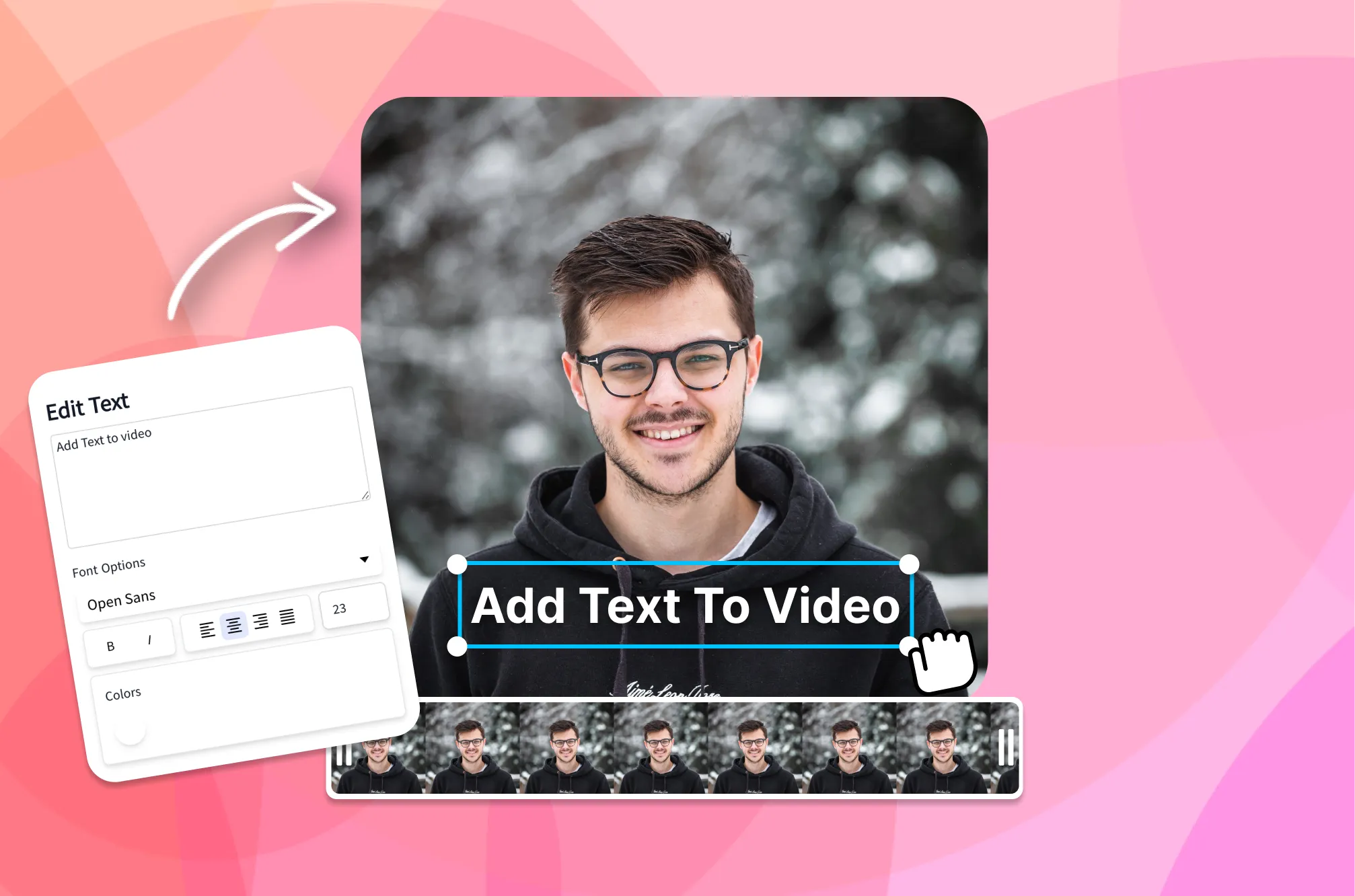
Because EchoWave is a full editor and not a single-purpose widget, you are not limited to a fixed template. You can stack credits over a background video or a solid colour, add a logo, fade the music in and out, and trim the timing frame by frame. If you only need a couple of static name cards rather than a moving roll, the add text to video tool covers that in a few clicks.
How the end credits maker works in detail
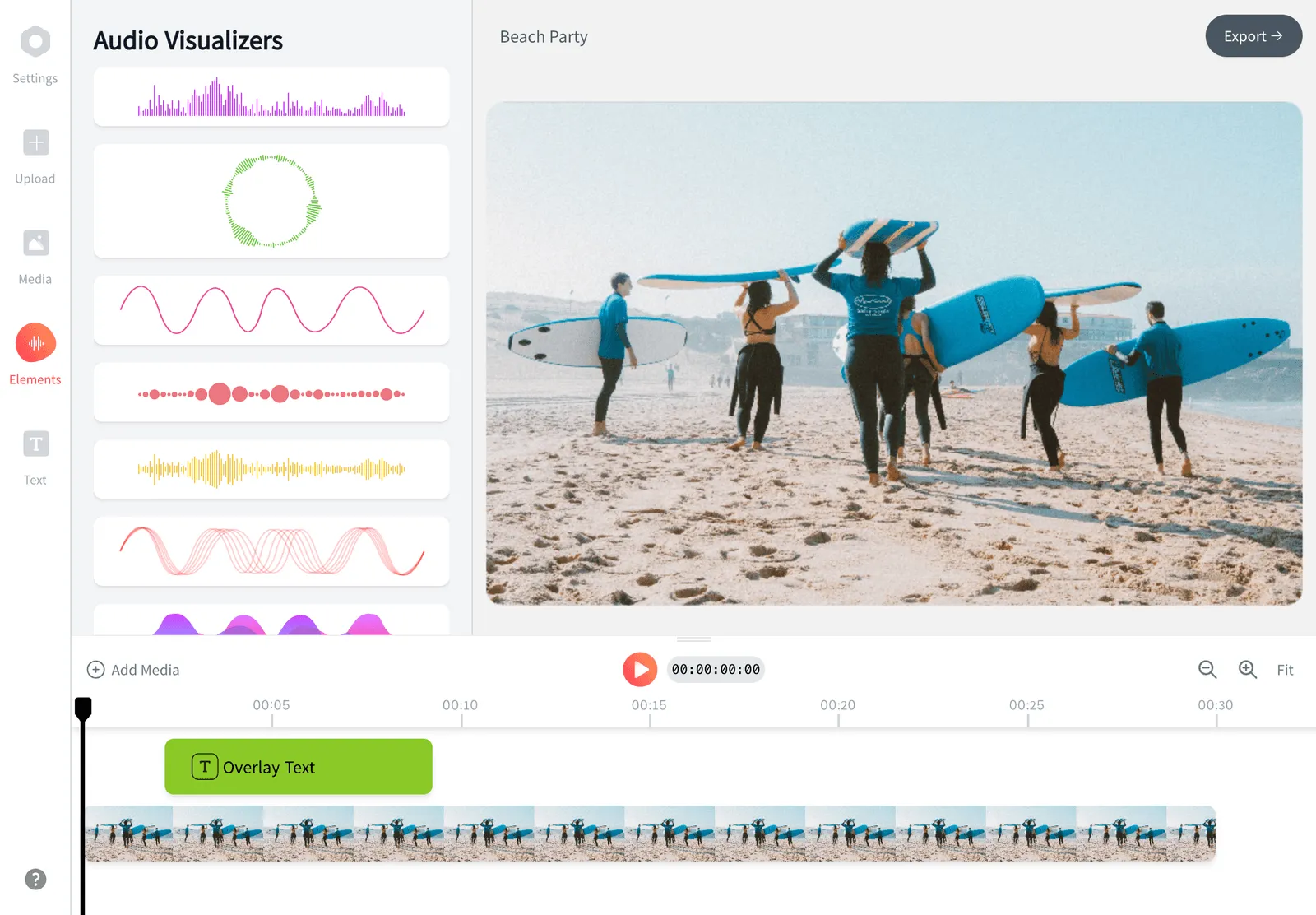
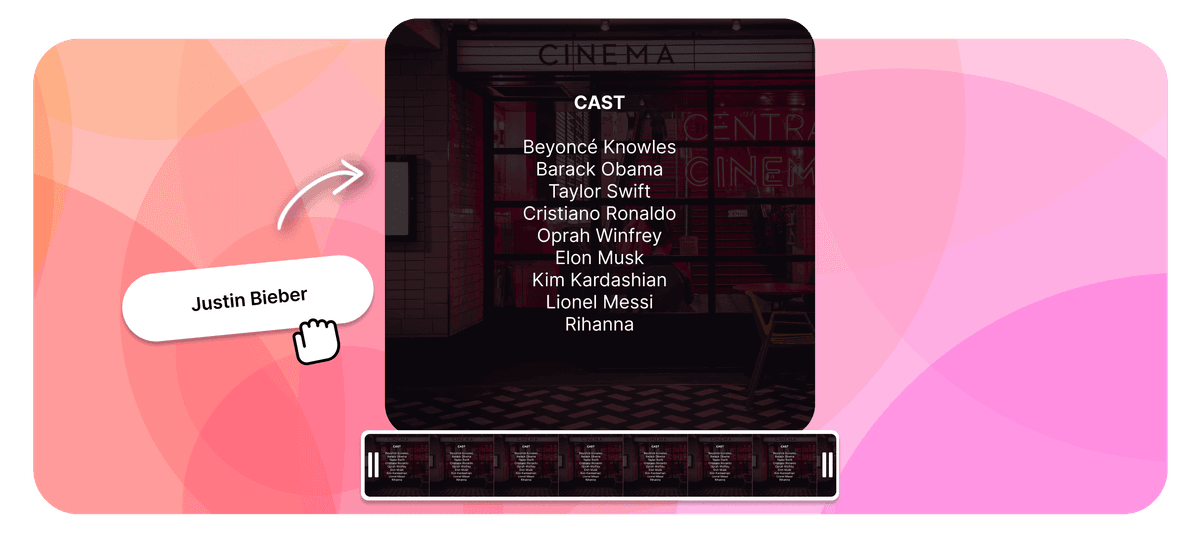
Start by opening a blank project or uploading the video you want to attach credits to. Drop a text layer onto the timeline and paste your credit list into it. Most editors format credits in two columns, role on the left and name on the right, or centred with the role above the name. EchoWave lets you set alignment, line spacing, and font weight so the columns stay readable while they move.
To make the text roll, you animate its vertical position from below the frame to above it over the length of the segment. Slow the animation down for a stately film roll or speed it up for a tighter social clip. You control exactly when the credits enter, how long they stay on screen, and when the music drops out, all on the same timeline. Preview as you go, then export when the timing feels right.
Supported formats, resolutions, and aspect ratios
EchoWave accepts common video inputs including MP4, MOV, WebM, and MKV, plus image backgrounds (PNG, JPG) and audio tracks (MP3, WAV, AAC) for your music bed. You export back to MP4 with H.264 video, which plays everywhere from phones to TVs and uploads cleanly to every major platform.
Pick the aspect ratio that matches where the video will live:
- 16:9 (1920x1080) for YouTube, a website, or a film that plays on a TV or monitor.
- 9:16 (1080x1920) for TikTok, Instagram Reels, and YouTube Shorts.
- 1:1 (1080x1080) for square feed posts.
Vertical credits need larger type and fewer columns because the frame is narrow, so plan on shorter lines and a slightly faster scroll on 9:16 than you would use on 16:9.
Fonts, scroll speed, and credit order
Movie credits lean on clean, legible typefaces. Helvetica and Helvetica Neue are the long-standing standard, with Gotham, Futura, and Avenir also common on modern titles. Keep the role and name in the same family, use weight and colour for hierarchy rather than mixing five fonts, and stick to light text on a dark background for the readable, cinematic look.
For scroll speed, a comfortable reading pace is roughly one screen height every four to six seconds. Faster than that and viewers cannot finish reading a line; much slower and the roll drags. Order credits by convention: lead cast first (often in order of appearance or billing), then the principal crew (director, producer, writer, cinematographer, editor), then department heads and the wider crew, with music, locations, and thanks near the end.
Where credits videos get used
Filmmakers and students use the tool to close short films, festival submissions, and reels. YouTubers add an end-credits roll to thank sponsors, editors, and collaborators. Wedding and event videographers credit the couple, the venue, and the team. Businesses run staff and partner credits at the end of brand films, and podcasters who publish video versions credit guests and producers. Anywhere a video needs a tidy, professional sign-off, a credits roll does the job. Used as a movie credits maker, an opening credits maker, or a closing credits maker, the same project handles every section without locking you into a fixed credits template.
Movie credits generator and rolling credits generator in one editor
EchoWave doubles as a movie credits generator and a rolling credits generator, so you do not need a separate credit maker for each style. Build animated movie credits, line up a rolling credits sequence, and drop in opening cards from the same timeline, then reuse the layout as your own template for the next project.
Privacy, pricing, and the watermark
Editing happens in your browser, so your footage and names are not handed off to a third party before you choose to export. EchoWave is free to use: you can build and preview a full credits sequence without paying. Free exports carry a small EchoWave watermark, which you can remove by upgrading to a paid plan. There is no credit card required to get started.
Device and browser support
The credits maker runs in modern desktop browsers including Chrome, Edge, Firefox, and Safari, with no plugin or app to install. A laptop or desktop gives you the most room to position text and fine-tune timing on the timeline, though you can review a project on a tablet. For precise, frame-level credit timing, a larger screen and a mouse or trackpad make the work far quicker.
How to make a rolling credits video
Follow these three steps to make your credits:
-
1. Open a project
Start a blank project or upload the video you want to credit. There is no software to download. EchoWave runs in your browser for fast, smooth video editing.

-
2. Add and animate your credits
Click "Text" to add your credit list, then pick a font and a credit style. Animate the text to scroll up the screen and set the speed, then add a music track.

-
3. Export your video
Preview the timing, then click export to render and download your rolling credits as an MP4 ready for YouTube, TikTok, or your film.
What creators say after trying EchoWave
Echowave is used by thousands of businesses around the world





Create movie-style credits online

About the EchoWave team
EchoWave is a browser-based video and audio editor built by Lemon Vault LLC since 2018. The people who build the editor write these guides and test every step in the production app before publishing.
Frequently Asked Questions
How do you make rolling credits?
Add a text layer with your cast and crew list, then animate its vertical position so it scrolls from below the frame up and off the top over the length of the segment. In EchoWave you set the start and end position, choose a scroll speed, and add music, all on one timeline.
How do I make end credits for free?
Use EchoWave as a free end credits maker: open it in your browser, paste your credits into a text layer, animate the scroll, and export. It is free to build and preview a full credits sequence. Free exports include a small EchoWave watermark, which a paid plan removes.
Is the credits maker really free, and is there a watermark?
Yes, you can create and preview credits for free with no credit card. Free exports carry a small removable EchoWave watermark. Upgrading to a paid plan removes it. EchoWave's dedicated quick tools for cropping, trimming, and compressing export with no watermark.
What font is used in movie credits?
Helvetica and Helvetica Neue are the long-standing standard for film credits. Gotham, Futura, and Avenir are common modern alternatives. Keep the role and name in one clean family and use weight and colour for hierarchy rather than mixing typefaces.
How fast should rolling credits scroll?
A comfortable reading pace is roughly one screen height every four to six seconds. Faster and viewers cannot finish each line; much slower and the roll drags. Vertical 9:16 videos usually need a slightly quicker scroll because the frame is narrower.
What order should credits go in?
Lead cast first, often by billing or order of appearance, then principal crew (director, producer, writer, cinematographer, editor), then department heads and the wider crew, with music, locations, and thanks near the end. Opening credits show only the top names.
Can I add opening credits as well as end credits?
Yes. Opening credits, also called a title sequence, usually fade or cut between a few name cards before the video starts, while end credits scroll at the close. You can build both in the same project and place them on the timeline where you want.
What are production babies?
Production babies are children born to cast and crew during a long shoot. Many films celebrate them in a dedicated part of the closing credits. The term reflects how a production can run for months or years.
What video formats and aspect ratios are supported?
EchoWave accepts MP4, MOV, WebM, and MKV video, plus PNG and JPG image backgrounds and MP3, WAV, and AAC audio. You export to MP4 in 16:9, 9:16, or 1:1 to match YouTube, TikTok, Reels, or a square feed post.
How long should movie credits be?
Closing credits typically run between three and ten minutes depending on cast and crew size, and major productions can run longer. For a short film or social video, a thirty-second to two-minute roll is usually plenty.
What key roles should I include in the credits?
Common roles include: - Director: oversees the visual storytelling and the cast and crew on set. - Producer: finances, hires, and coordinates the production. - Screenwriter: writes the dialogue, characters, and plot. - Cinematographer (Director of Photography): handles lighting, framing, and camera movement. - Editor: arranges the footage into a clear story. - Composer: writes the original score that sets the mood. - Sound Designer: creates sound effects, dialogue mix, and ambience. - Cast: the actors and actresses. Larger productions add many more crew and support roles.
Do I need to install any software?
No. The credits maker runs in modern browsers including Chrome, Edge, Firefox, and Safari with nothing to download. A laptop or desktop gives you the most room to position text and fine-tune timing on the timeline.
Ready to make a credits video? We have a free plan!
No credit card required, our free plan includes a small Echowave.io watermark.
Get Started →