How to Write Podcast Show Notes That Grow Your Audience
Podcast show notes are the written companion to an episode: the summary, links, guest details, timestamps, and call to action that live on your website and inside podcast apps. Done well, they turn a one time listen into a page that ranks in Google, gets surfaced by AI answer engines, helps people decide whether to press play, and gives you raw material for clips, newsletters, and social posts.
This guide shows you exactly how to write podcast show notes, with a reusable template, real word counts, the platform character limits that actually matter, timestamp formatting, an SEO checklist, and the mistakes that quietly cost you listeners. Everything here works whether you record solo, interview guests, or run a scripted show.
Quick answer: how to write podcast show notes
- Write a one or two sentence hook that sells the episode.
- Add a 100 to 200 word summary with your main keyword near the start.
- List three to seven specific key takeaways.
- Add timestamps or chapters for the major sections.
- Include a guest bio (under 75 words) and every link mentioned.
- Add the full transcript, or link to one, for accessibility and search.
- End with one clear call to action.
- Front load the first 100 characters, because most apps cut off there.
That structure works for the short blurb inside Apple Podcasts and Spotify and for the longer, link rich page on your own site. The two are not the same job, which is the single most useful thing to understand before you write a word.
What are podcast show notes (and what they are not)
There are three different pieces of text attached to most episodes, and people constantly confuse them:
- The episode description is the short blurb that shows inside podcast apps. It is read in the moment, on a small screen, and gets truncated fast.
- The show notes page is the fuller version on your website: summary, takeaways, timestamps, links, transcript, and internal links to related episodes. This is the page that earns search traffic.
- The transcript is the full word for word text of the audio. It powers accessibility, quoting, and on page search, and it makes your episode indexable.
You can publish the same core summary in all three places, then expand the website version with the parts that do not fit (or do not belong) inside a podcast app. Keep the app description tight and punchy. Let your site do the heavy lifting.
Show notes vs description vs transcript vs social caption
| Asset | Where it lives | Job | Length |
|---|---|---|---|
| Episode description | Inside podcast apps (Apple, Spotify) | Preview that earns the play | 50 to 150 words, hook in first 100 characters |
| Show notes page | Your website or blog | Useful, link rich, search friendly companion | 300 to 1,500 words |
| Transcript | Your website (or linked) | Accessibility, quoting, SEO, repurposing | As long as the audio requires |
| Social caption | Instagram, LinkedIn, X, TikTok | Hook for a clip or quote card | 1 to 3 short lines |
The character limits that actually matter in 2026
Guessing at length wastes effort. Here are the real constraints:
- The 4,000 character limit is the industry standard. Apple Podcasts and most hosts enforce roughly 4,000 characters for episode notes inside the RSS feed. That count includes hidden HTML, so a
<p>tag adds about 7 characters and<strong>adds about 17. Your visible text is shorter than the raw count. - The first ~100 characters are all most people see. Spotify, Apple, and other apps add a "see more" link after roughly 100 characters. Whatever is most important, your hook and primary keyword, has to come first.
- Only basic HTML survives. Episode notes reliably support
<p>,<a>,<strong>,<em>,<ul>, and<ol>. Some apps strip single line breaks and ignore styling, so do not rely on rich formatting inside the feed. - Your website has no such cap. The show notes page on your own site can run 300 to 1,500 words with full links, embeds, and a transcript. That is where you go long for SEO.
Apple's guidance is simple: podcast metadata should accurately represent the corresponding content. That is the right mindset everywhere. Useful, accurate, and never misleading.
A podcast show notes template you can reuse
Copy this structure for almost any episode. It maps cleanly to interview shows, solo episodes, and scripted narrative.
1. Episode title
Write a clear, specific title with the topic and (for interviews) the guest name. Put the words a listener would actually search for near the front. Add the episode number after, not before, the descriptive part.
2. Hook
One or two sentences that promise a payoff. This is the only line a casual scroller reads, so make it earn the click. State the problem the episode solves or the surprising thing the guest said.
3. Episode summary (100 to 200 words)
Expand the hook into a short paragraph: who is on, what problem is tackled, and what the listener walks away with. Write it in plain language and slip your primary keyword in naturally near the start.
4. Key takeaways (3 to 7 bullets)
List specific, concrete takeaways. Skip vague bullets like "great tips." Tell the reader exactly what they will learn, for example "a three step framework for pricing a freelance project."
5. Timestamps or chapters
Name what happens at each major moment so skimmers can jump in. Use mm:ss for short episodes and hh:mm:ss once you pass an hour:
- 00:00 Opening and context
- 03:20 Guest background
- 09:45 The core problem
- 18:10 The practical framework
- 31:40 Mistakes to avoid
- 42:00 Final advice and where to find the guest
6. Guest bio and links (under 75 words)
Include the guest's title, company, website, and the social profile they actually use. If they have a newsletter, book, course, or event, link it clearly and confirm the URLs with them before publishing.
7. Resources and links mentioned
Collect every tool, book, article, company, and prior episode referenced. Test every link before it goes live. A dead link is the fastest way to look careless.
8. Transcript
Embed the transcript on the page or link to a dedicated transcript page. It helps accessibility, gives you quotable text, and adds indexable content that helps the episode get found.
9. One call to action
Pick a single next step that fits this episode. Do not ask people to subscribe, review, join the newsletter, buy the course, share, and follow five accounts at once. One ask converts; six asks convert no one.
Four show notes formats (and when to use each)
Not every episode needs the same depth. Match the format to the show:
| Format | Best for | What it includes |
|---|---|---|
| Straight to the point | Short solo episodes (15 min or less) | Title, 50 to 150 word intro, bullet links, one CTA |
| Full story | Interview and flagship episodes | Long summary, host and guest bios, timestamped sections, transcript |
| Conversion focused | Monetized shows | Offer and affiliate links up top, credentials, timestamped topics, sponsor CTAs |
| Educational | Teaching and reference shows | Summary, timestamped lessons, suggested reading, cited sources |
The show notes workflow that saves the most time
1. Prepare a draft before you record
Start a blank show notes doc before the interview and drop in the guest bio, the expected topic, sponsor notes, research links, and the one promise you are making the listener. This keeps the recording focused and means half the page is written before you hit stop.
2. Mark moments while recording
When a strong quote, story, or lesson lands, jot the rough timestamp. This is your future timestamp list and your clip shortlist, captured for free in the moment.
3. Write from the edited audio, not the plan
The final cut rarely matches the outline. Write the summary, takeaways, and timestamps from the edited episode so they match what listeners actually hear.
4. Add search intent last
Ask what someone would type into Google or an AI assistant if they needed this episode. Work that phrase naturally into the title, summary, a heading, and the first paragraph. Do not stuff it. Clarity ranks better than repetition.
5. Build a repurposing pack
Before you move on, pull the reusable pieces while the episode is fresh:
- One short, quotable line
- One contrarian or surprising idea
- One practical checklist
- One 30 to 60 second audio moment for a clip
- One newsletter paragraph
- One LinkedIn or X post
That 60 second moment is the highest leverage asset you own. Turn it into a captioned, waveform driven video and it works on every feed where audio alone cannot be posted.

Repurpose show notes into captions, clips, and audiograms
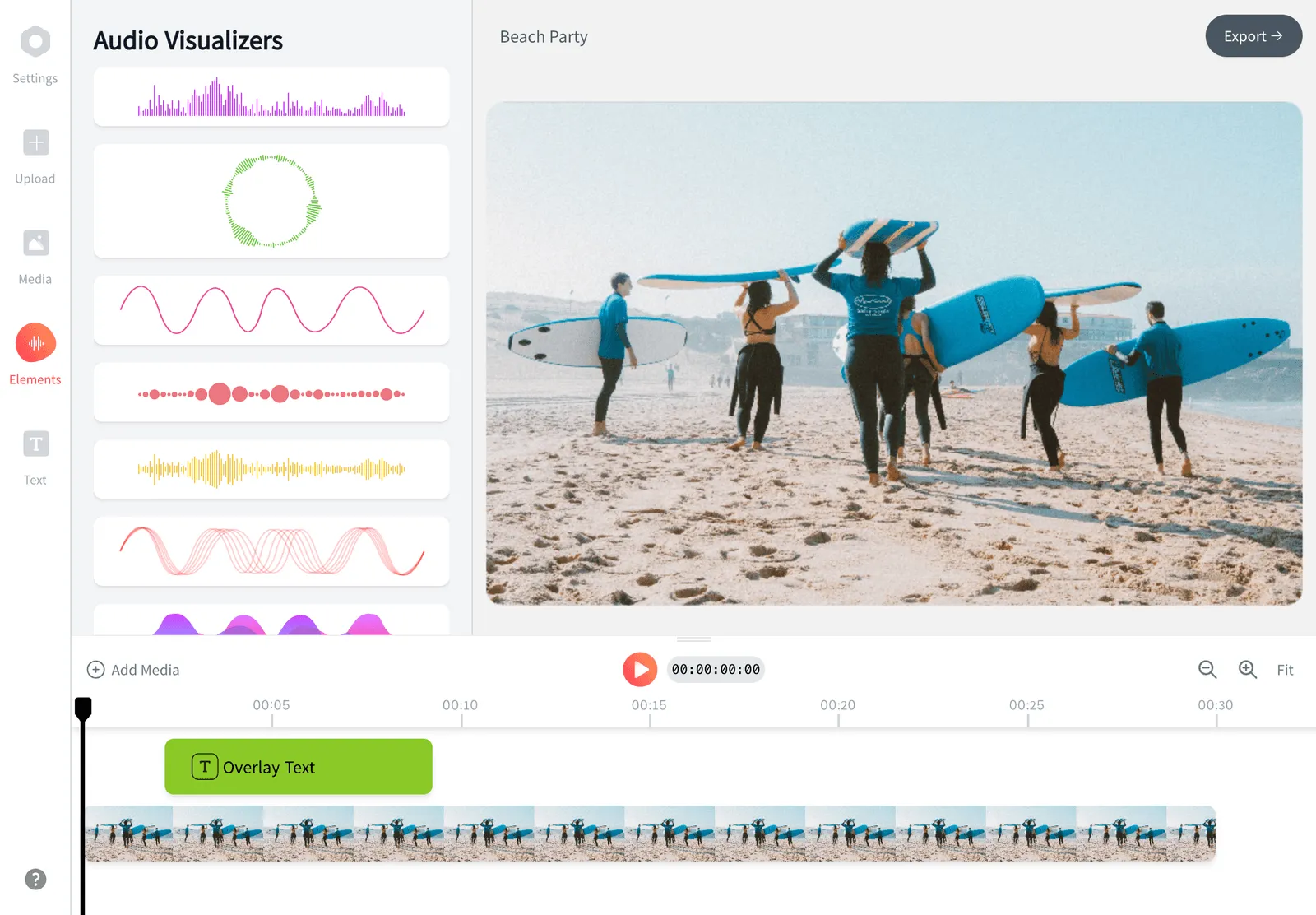
The best show notes double as a production brief, not an afterthought. Use them to pull quote cards, captioned video clips, timestamps, guest links, and newsletter summaries from the same episode. Turn your best audio moment into a shareable video in your browser with EchoWave's audio to video tool, audio waveform video generator, or audiogram creator.
What people are saying about EchoWave
Show notes SEO checklist
Show notes are one of the few ways a podcast becomes searchable, since audio itself is invisible to crawlers. Treat the page like a real blog post:
- Use one descriptive H1 that matches the episode and includes the topic.
- Put the primary keyword in the title, the first 100 characters, and one subheading, then stop.
- Write a unique meta description for the page (do not reuse the same one across episodes).
- Add internal links to related episodes and relevant guides on your site.
- Link out to reliable external sources when they genuinely help the reader.
- Add descriptive alt text to the episode artwork and any images.
- Never publish a thin page that is just an embedded player. Give crawlers and AI engines real text to read.
- Make the transcript crawlable on the page rather than hidden in a downloadable PDF.
- Name the guest and the topic in the first sentence so both readers and search engines get the context immediately.
Writing for AI discovery, not just Google
More listeners now find episodes through AI answer engines and in app search than ever before. The same habits that help SEO also help AI: clear questions answered in plain text, named entities (people, companies, tools), specific takeaways, and a transcript. If your page literally answers "what is the framework discussed in episode 42," an AI assistant can quote it. Vague, player only pages get skipped.
Common show notes mistakes
| Mistake | Better approach |
|---|---|
| Publishing only "In this episode we talk about..." | Add specific takeaways and the resources mentioned |
| Listing timestamps with no labels | Name what happens in each section |
| Burying the hook below a long intro | Put the most compelling line in the first 100 characters |
| Using the same CTA on every episode | Match one CTA to this episode's topic |
| Forgetting or guessing guest links | Confirm every link with the guest before publishing |
| Hiding the transcript in a PDF | Put the useful text on the page itself |
| Writing only for search engines | Write for the listener first, then optimize |
| Skipping the website page entirely | A page you control outranks and outlives an app blurb |
Real show notes examples worth studying
You do not have to invent a style from scratch. A few shows do this well and are worth a look:
- The Tim Ferriss Show uses long, timestamped notes with a thorough resources list, so a listener can jump to any topic and find every tool mentioned.
- Pod Save America keeps tight summaries inside the apps and pushes detailed resources to the website.
- The Science of Social Media and similar marketing shows lead with a strong hook and bold key phrases so the page stays skimmable.
The common thread: useful first, optimized second, and consistent every episode so listeners learn what to expect.
Turn the best moment into a video people actually share
Text show notes get found. Video clips get shared. The fastest way to grow a podcast is to take the 30 to 60 second moment you flagged in your notes and post it as a captioned video on Instagram, TikTok, LinkedIn, and YouTube Shorts. Most of those feeds will not accept a raw audio file, so you convert the clip into a video with a moving waveform, your cover art, and burned in captions for sound off viewing. You can do all of that free in your browser with EchoWave, no install and no editing experience needed.
Show notes are written, sharing is visual
Sources & further reading
- Subscriptions best practices, Apple Podcasts for Creators
- Podcast RSS feed requirements, Apple Podcasts for Creators
- Google Search Essentials, Google Search Central

About the EchoWave team
EchoWave is a browser-based video and audio editor built by Lemon Vault LLC since 2018. The people who build the editor write these guides and test every step in the production app before publishing.
Frequently Asked Questions
What are podcast show notes?
Podcast show notes are the written companion to an episode. They include a summary, key takeaways, timestamps, guest details, links to resources mentioned, a transcript, and a call to action. A short version lives inside podcast apps, and a fuller, link rich version lives on your website.
How long should podcast show notes be?
The episode description inside apps should be 50 to 150 words with the hook in the first 100 characters. The show notes page on your website can run 300 to 1,500 words because it carries the summary, timestamps, links, and transcript. Match length to the episode rather than padding.
What is the character limit for podcast show notes?
Roughly 4,000 characters is the industry standard for episode notes in the RSS feed, enforced by Apple Podcasts and most hosts. That count includes hidden HTML tags, so your visible text is shorter. Most apps also truncate with a 'see more' link after about 100 characters.
What should I include in my podcast show notes?
Include a hook, a 100 to 200 word summary, three to seven specific takeaways, timestamps for major sections, a guest bio under 75 words, every link mentioned, a transcript, and one clear call to action. Front load the most important line for the apps that truncate early.
How do you write a show notes hook?
Write one or two sentences that promise a payoff: the problem the episode solves or the most surprising thing said. The hook is often the only line a casual listener reads before the 'see more' cutoff, so make it specific and concrete rather than generic.
Do podcast show notes help with SEO?
Yes. Audio cannot be crawled, so the show notes page and transcript are how your episode becomes searchable. A unique title, a clear summary with your keyword near the start, internal links to related episodes, and a crawlable transcript all help the page rank and get cited by AI answer engines.
What is the difference between show notes and an episode description?
The episode description is the short blurb inside podcast apps, read in the moment and truncated fast. Show notes are the fuller page on your website with summary, timestamps, links, and transcript. The same core summary can appear in both, but the website version goes much deeper.
Should I include a transcript in my show notes?
Yes, when you can. A transcript improves accessibility, gives you quotable text, helps the episode get found in search and AI tools, and is reusable for clips and posts. Put it on the page itself rather than in a downloadable PDF so it stays crawlable.
How do I format timestamps in show notes?
Use mm:ss for episodes under an hour and hh:mm:ss for longer ones, and label each one with what happens there, for example '18:10 The practical framework.' Mark the moments while you record so the list is mostly built by the time you edit.
Where do podcast show notes appear?
The short version appears inside podcast apps like Apple Podcasts and Spotify, pulled from your RSS feed. The full version lives on your website or blog, where it earns search traffic and houses the transcript and internal links. Many creators publish in both places.
Can I use AI to generate podcast show notes?
Yes, AI tools can draft a summary, timestamps, and takeaways from your transcript in seconds. Treat the output as a first draft: fix names and links, add your hook and personality, and confirm the timestamps against the edited audio before publishing.
How do I turn show notes into a video clip to promote the episode?
Take the best 30 to 60 second moment from your timestamps and convert it into a video with a waveform, your cover art, and captions. Most social feeds will not accept a raw audio file, so a video clip is what actually gets shared. You can make one free in your browser with EchoWave.
Turn your best episode moment into a video Free, in your browser
Pull a clip from your show notes, add a waveform, cover art, and captions, and post it everywhere audio alone cannot go. No credit card required.
Get Started →