Podcast Questions List for 2026
A free podcast interview question list, organized by category, with follow-ups, a prep workflow, and the questions to avoid. Use the generator below to spark ideas, then make them your own.
Podcast Questions List for 2026 Features
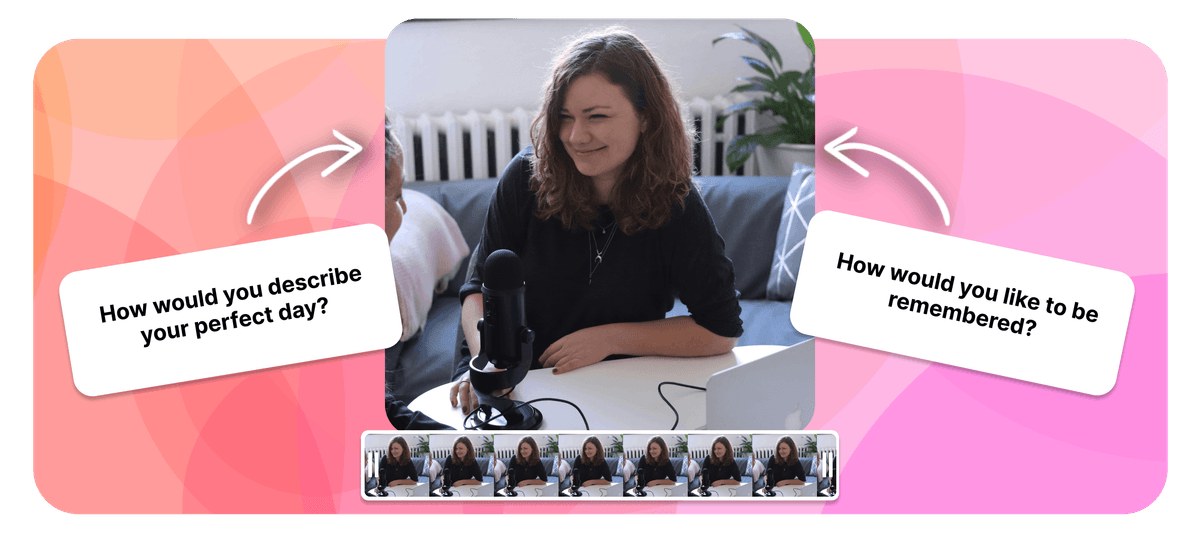
Who were your favorite relatives?
Family
This is a working podcast questions list, not a script. Good podcast questions are the difference between a guest reciting their bio and a guest telling a story your audience cannot stop listening to. Below you get a podcast question generator, more than 150 interview questions sorted by category, the follow-ups that pull out real answers, a research workflow, and the weak questions to delete before you record.
The short version: prepare 8 to 12 strong questions to ask on a podcast, group them into a clear arc, write more follow-ups than openers, and mark the moments worth clipping while you record. The list does the heavy lifting; your curiosity does the rest.
Podcast question generator
Use the generator above to draw a fresh set of podcast questions, then rewrite each one in your own voice. The best interviews never feel like a survey. They feel like a thoughtful conversation that knows where it is heading. Pull five or six prompts, reorder them into a beginning, middle, and end, and keep a few spares for when the conversation runs short.
How many questions do you need?
Match the count to the runtime, not to a magic number.
| Episode length | Core questions | Follow-ups ready | Notes |
|---|---|---|---|
| 15 to 20 min | 5 to 7 | 2 per question | One clear theme, fast intro, hard out |
| 30 min | 8 to 10 | 2 to 3 per question | Room for one story and one lesson |
| 45 to 60 min | 10 to 14 | 3 per question | Multiple themes, deeper digressions |
| 90 min+ | 12 to 16 anchors | open-ended | Let tangents run, anchors keep you on track |
For a 30 minute interview, 8 to 10 open-ended questions is the sweet spot. A talkative, media-trained guest will need fewer openers and more follow-ups; a quieter, more reflective guest needs fewer, deeper questions and your patience. Always have one or two spares ready in case the conversation moves faster than expected.
Should you send questions upfront?
Usually, send the topic areas in advance, not the exact full list.
Sharing the topics gives the guest confidence and time to recall specific stories, without encouraging rehearsed, word-for-word answers. For sensitive subjects, technical episodes, legal review, or executive guests, you may need to share more detail. When you do, be explicit about what is flexible and what must be covered, and tell the guest you will follow their answers wherever they get interesting.
How to prepare better podcast interview questions
Great questions are mostly preparation. This workflow gets you from a blank page to a tight question list in under an hour.
- Research the guest. Read or watch three recent things they made or said. Look for a detail no other host has asked about. The fresher your angle, the less canned the answer.
- Write the audience promise. Finish this sentence: by the end of this episode, a listener will be able to ___. That promise decides which questions stay.
- List the obvious questions, then cut most of them. If the answer is one search away, delete it. Keep what only this guest can answer.
- Build a clear arc. Group questions into sections: origin, the problem they work on, their process, a concrete example, a mistake, and practical advice. Order them so the conversation builds.
- Write follow-ups for every section. You should have more follow-ups than openers. The follow-up is where the real story lives.
- Mark likely clip moments. Note the one or two questions most likely to produce a quotable answer, so you can flag the timestamp while recording.
How to prepare without sounding scripted
Write the questions, then ask them like a person. Read your list, internalize the arc, and set it aside. During the recording, react to the actual answer instead of rushing to the next line. Use the guest's own words back to them, pause before you jump in, and treat your list as a safety net rather than a checklist. A short silence after an answer often produces the best follow-up of the episode, because the guest fills it.
Questions to avoid
Avoid questions that are too broad, too flattering, or too easy to answer with a canned response. Double-barreled questions, where you stack two asks into one, force the guest to pick one and drop the other. Ask one clear question at a time.
| Weak question | Stronger question |
|---|---|
| Tell us about yourself | What part of your background matters most for today's topic? |
| What do you do? | What problem do people usually come to you with? |
| What is your biggest tip? | What advice sounds good but fails in practice? |
| How did you become successful? | What changed the trajectory of your work? |
| What was the turning point and what did you learn? | What was the turning point in your career? (then follow up on the lesson) |
| Any final thoughts? | What should listeners do in the next 24 hours? |
Follow-up questions that unlock better stories
Keep these on a sticky note. Reach for one whenever an answer is interesting but incomplete.
- What happened next?
- What did that cost you?
- What did you believe before that changed?
- Can you give a specific example?
- Who disagreed with you?
- What would you do differently now?
- What did most people misunderstand?
- How did you know it was working?
- What did you stop doing?
- What is the smallest useful version of that idea?
The podcast questions list (150+ questions by category)
Use these as starting points, then customize them for the guest and audience. Mix categories to build your arc rather than working through one block top to bottom.
Icebreakers and intros
- Can you introduce yourself the way a friend would introduce you?
- What part of your story do people usually skip over?
- Where did you grow up, and how does that still show up in your work?
- What is something you were obsessed with as a kid?
- What is the elevator version of what you do, and the honest version?
Background and origin
- What problem pulled you into this work?
- What did you misunderstand when you started?
- Who believed in the work before anyone else did?
- What early decision mattered more than it seemed at the time?
- What was the turning point in your career?
- What did you give up to get here, and was it worth it?
Expertise and process
- What does your process look like when no one is watching?
- What do beginners overcomplicate?
- What do experts still get wrong?
- What checklist do you run before a big decision?
- What tool, habit, or constraint changed your work the most?
- How would you explain what you do to a smart ten year old?
- What is the biggest misconception about your field?
Stories and examples
- Can you walk through a real example, start to finish?
- What was the hardest part of that project?
- What did you try first that did not work?
- What happened after the public success story ended?
- What detail would surprise people who only saw the result?
- What is a moment from this work you will never forget?
Mistakes and lessons
- What mistake taught you the most?
- What advice did you follow for too long?
- What belief have you changed your mind about recently?
- What is a common myth in your field?
- What warning sign do people usually ignore?
- What is your biggest failure, and what did it teach you?
Industry and trends
- What is changing in your field that most people have not noticed yet?
- What is overhyped right now?
- What is underrated and deserves more attention?
- What ethical question does your industry avoid?
- Where will this work be in five years?
Practical advice
- What should someone do first if they are starting today?
- What should they avoid buying, building, or learning too early?
- What is the smallest useful action listeners can take this week?
- What resource do you recommend most often?
- What question should people ask themselves before they copy your path?
Personal but respectful
- What work are you proud of that did not get much attention?
- What do you want to be known for outside your job title?
- What kind of feedback still sticks with you?
- What keeps you interested in the work?
- What does a good day look like for you now?
- What would make the next chapter meaningful?
Rapid-fire round
- Coffee or tea?
- Early bird or night owl?
- Best book you read this year?
- One app you could not work without?
- The advice you give most often in one sentence?
Great closing questions
- What is one question you wish I had asked?
- What should listeners do in the next 24 hours?
- Three books, podcasts, or people you would point listeners to?
- Where can people find you and follow the work?
- What do you want the last word of this episode to be?
Tailor your podcast questions by niche
The categories above cover most shows, but the strongest questions are specific to your subject. Use these niche prompts as a starting point.
- Business and founders: What prompted you to start the company? What is a decision you almost got wrong? What metric do you actually watch? What would you tell yourself on day one?
- Health and wellness: What does health mean to you now versus five years ago? What advice has aged badly? What small habit made the biggest difference?
- Relationships: What is a belief about relationships you have changed your mind on? What advice do you wish you had ignored? What does a hard conversation done well look like?
- Creative and entertainment: What does your work look like on a bad day? What did you cut that you wish you had kept? Who shaped your taste?
- Tech and engineering: What problem are you closest to right now? What is a tradeoff non-experts misunderstand? What do you wish more people built?
- Sports and performance: What does preparation look like the night before? What failure reset your approach? What do fans misread about the work?
Interview pacing tips
- Start with an easy but specific question that the guest is glad to answer.
- Move from context to conflict to lesson, so the conversation has a shape.
- Let silence work for a beat before you jump in.
- Ask one question at a time, never two stacked together.
- Keep a short visible list of must-cover topics so you do not drift.
- Do not force every prepared question into the conversation; follow the good answers.
- End with a practical next step for listeners, not a vague wrap-up.
After the interview: turn answers into clips
Great questions create better answers, and the best answers make the best promotion. The moments you flagged while recording become your episode title, your show notes pull quotes, and the short video clips that bring new listeners in. Audio alone is hard to share on social; a short captioned video plays in the feed and travels much further.
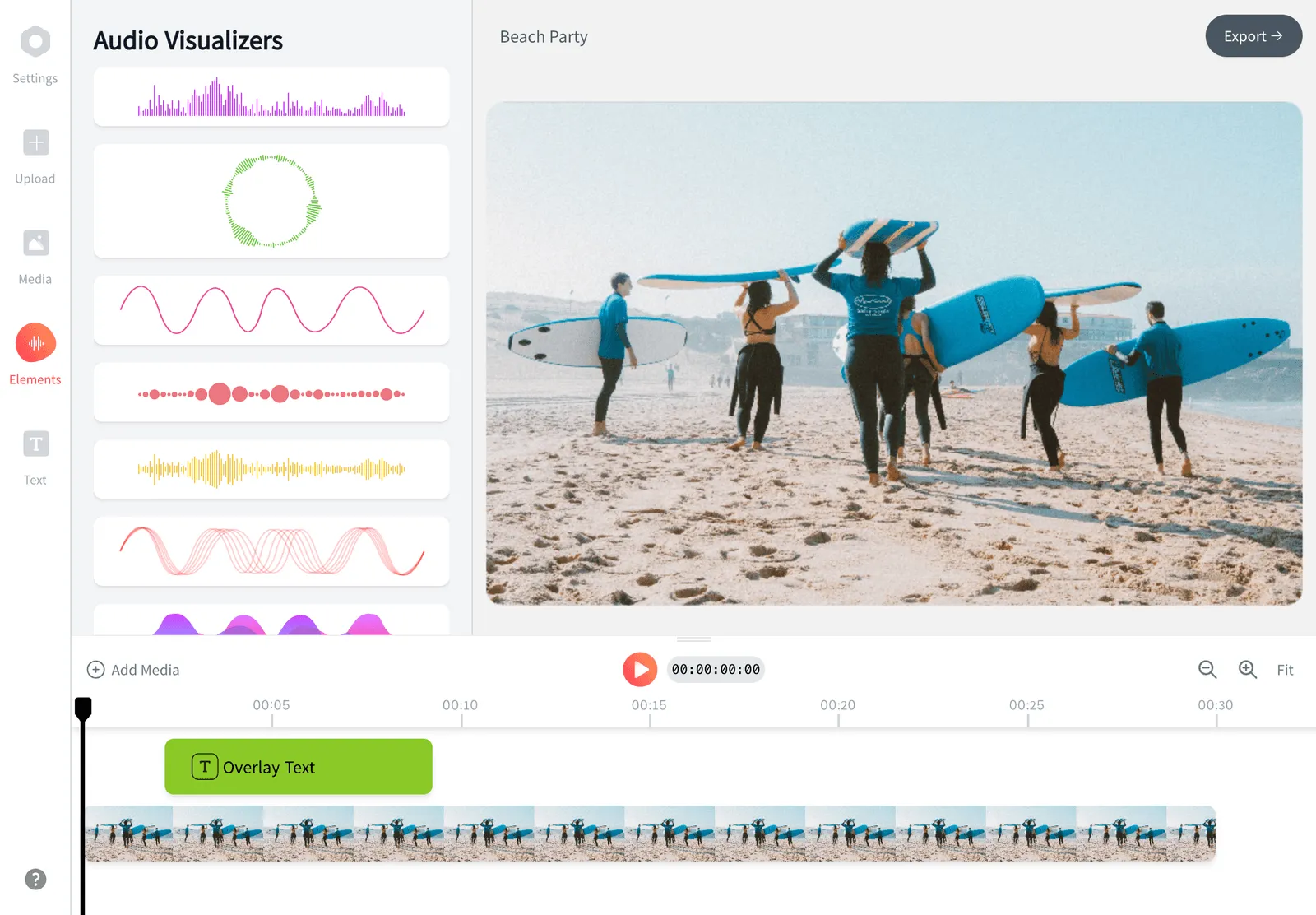
This is where EchoWave fits. Drop the episode into the editor, cut the strongest moment into a short clip, add an audio waveform or your cover art, and add subtitles so it lands with the sound off. You can also turn a full episode into a shareable video with the podcast to video tool. It is free and runs in your browser, so you can publish clips the same day you record.
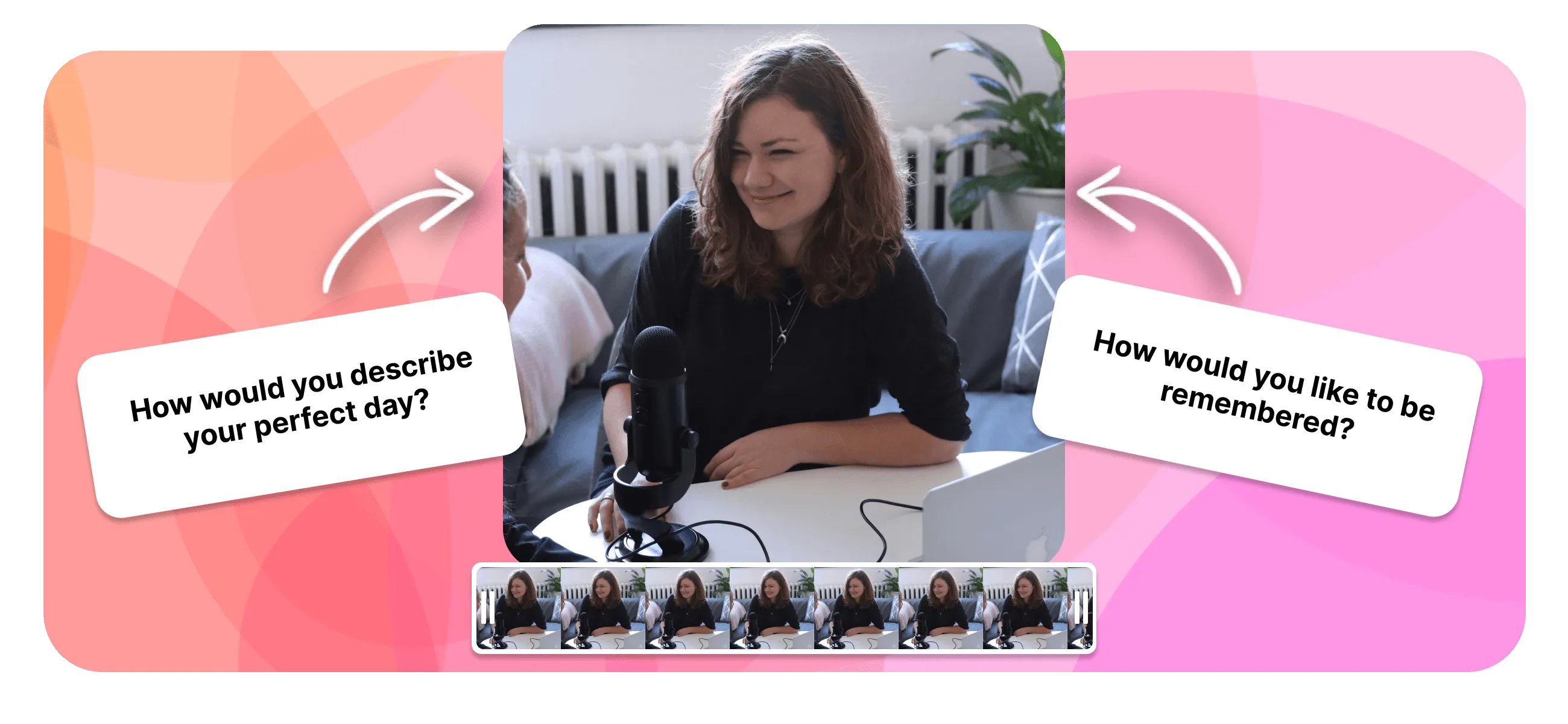
Plan the interview around moments you can use
Great questions create better answers, but they also create stronger episode titles, clips, show notes, and guest share assets. Mark the best moments while recording so editing is faster later, then cut them into short captioned videos with EchoWave.
What creators say after trying EchoWave
One list, two jobs
Sources & further reading
- An illustrated guide to the basics of interviewing, Poynter Institute
- Audio interviewing techniques, NPR Training

About the EchoWave team
EchoWave is a browser-based video and audio editor built by Lemon Vault LLC since 2018. The people who build the editor write these guides and test every step in the production app before publishing.
Frequently Asked Questions
How many questions should I prepare for a podcast interview?
Match the count to the runtime. A 30 minute interview works well with 8 to 10 open-ended questions, plus two or three follow-ups ready for each. For 60 minutes, prepare 10 to 14. Talkative guests need fewer openers and more follow-ups, quieter guests need fewer, deeper questions. Always keep one or two spares.
What makes a good podcast question?
A good podcast question is open-ended, specific to the guest, and impossible to answer with a yes or no. It invites a story rather than a fact. Questions that start with what, how, or why almost always beat questions a listener could answer with a quick search.
Should I send podcast questions to the guest in advance?
Send the topic areas, not the full word-for-word list. Sharing topics gives the guest confidence and time to recall specific stories without producing rehearsed answers. For technical, legal, or executive interviews, share more detail and be clear about what must be covered.
How do I ask questions without sounding scripted?
Write your list, learn the arc, then set the list aside. During recording, react to the actual answer rather than rushing to the next line. Use the guest's own words back to them, pause before jumping in, and treat the list as a safety net. The follow-up you improvise usually beats the one you planned.
What questions should I avoid on a podcast?
Avoid broad openers like tell us about yourself, double-barreled questions that stack two asks into one, leading questions that answer themselves, and anything too easy to answer with a canned line. Replace them with one specific, open question at a time.
What are good closing questions for a podcast?
Strong closers include: what is one question you wish I had asked, what should listeners do in the next 24 hours, three books or people you would point listeners to, and where can people find you. End with a clear next step rather than a vague wrap-up.
Are podcast guests typically paid for their appearance?
No. Most podcast guests are unpaid, because the appearance is a chance to reach a new audience. There are exceptions, such as a paid expert for a special episode, but for the majority of shows guesting is a mutual promotion rather than a transaction.
What is the ideal length for a podcast interview?
Agree on an end time upfront and stick to it. If you are unsure, list your topics and budget about 10 minutes per topic. Around 40 minutes is a strong default for an interview, long enough for depth and short enough to keep attention.
How do I research a guest before the interview?
Read or watch three recent things they made or said, then look for a detail no other host has asked about. Note their current project, a past mistake they have spoken about, and one strong opinion you can press on. That research is what makes your questions feel specific rather than generic.
How do I turn the best answers into video clips for social?
Flag the strongest moments while recording, then cut them in EchoWave. Trim the clip, add an audio waveform or your cover art so there is something to watch, and add subtitles for sound-off viewing. A short captioned video reaches far more people than an audio link.
How do I get interviewed as a guest on podcasts?
Start with smaller shows that share your topic and pitch a specific angle, not a generic bio. Build a short portfolio of appearances, then use it to reach larger shows. Tap your existing network and post your guest spots on social so other hosts can find you.
What are the best topics for a podcast?
Pick a topic you, your audience, and your guests genuinely care about, then narrow it. A focused niche beats a broad one: instead of food, cover baking; instead of business, cover bootstrapped software. A clear niche makes booking guests and writing questions far easier.
Ready to share your podcast as a video on social?
Turn your best interview moments into short, captioned video clips with EchoWave, free and in your browser.
Get Started →