Video Compressor Online: Compress Video and Reduce File Size Free
A free online video compressor that shrinks any video right in your browser and keeps it looking sharp. Compress video to a target size for Discord, email or WhatsApp, with no watermark, no sign-up and no software to install. Works with MP4, MOV, MKV, AVI and more.


Video Compressor Online: Compress Video and Reduce File Size Free Features
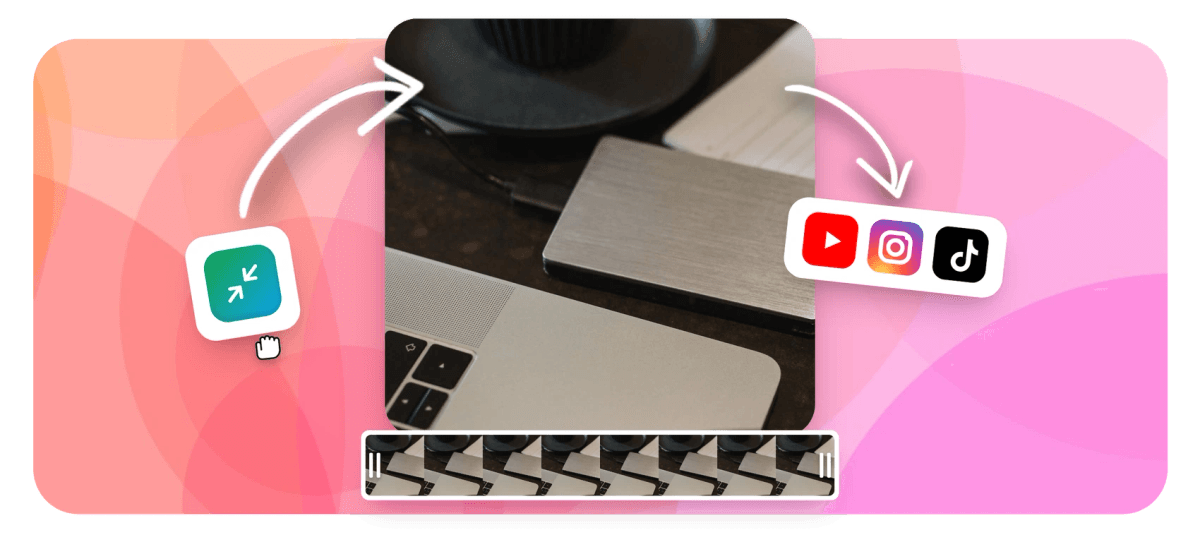
EchoWave is a free video compressor online that lets you compress video and reduce file size without losing quality. To compress a video, upload your file to the video compressor, choose a target size or a platform preset (Discord, email, WhatsApp), and download a smaller HD file in seconds. The video compressor runs in your browser with no watermark, no sign-up and no install, and works with MP4, MOV, MKV, AVI and more on any device.





How to Compress a Video Online
Three quick steps to a smaller file. No account, no watermark, and nothing to install.
-
1. Upload your video
Drag and drop your file or click to browse. The compressor accepts MP4, MOV, MKV, AVI, WEBM and more, so whatever your camera, phone or screen recorder produced, you can upload it straight away.

-
2. Set your target size
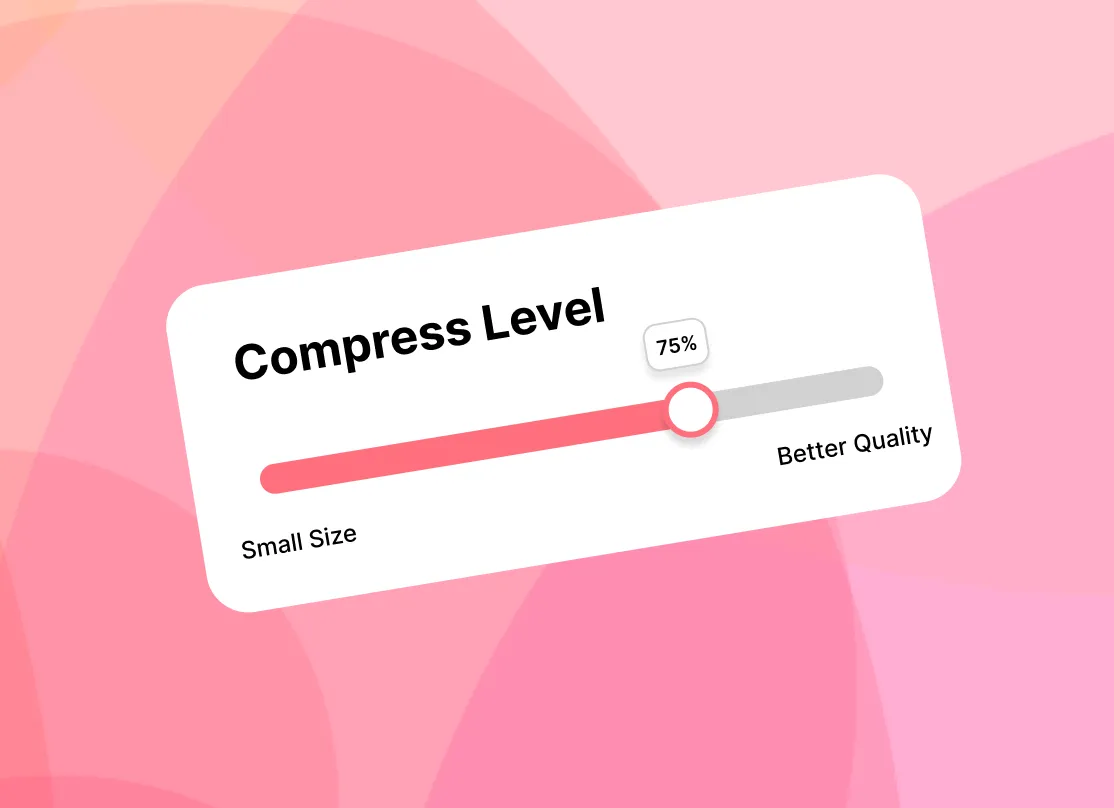
Type the file size you need or pick a platform preset such as 10MB for Discord or 25MB for email. EchoWave works out the bitrate automatically and lowers it just enough to hit your target while keeping the picture sharp.
-
3. Download your smaller file
Click export and the video is compressed in the cloud, usually within a few moments depending on its length. Download the finished file with no watermark, then share it anywhere you like.

How creators use EchoWave in real projects
A free video compressor that keeps your quality
Compress video to a target size
The fastest way to compress a video is to tell EchoWave the file size you need and let this video size compressor hit that number for you. Set a target in megabytes (or pick a platform preset) and the compressor calculates the right bitrate automatically to reduce video size, so your file lands under the limit without you working out any maths.
These are the sizes people compress to most often:
- 8 MB: the older Discord free upload cap, still useful for very small clips.
- 10 MB: Discord's current free upload limit, and a safe size for X (Twitter) and Bluesky.
- 16 MB: WhatsApp video sharing on mobile and WhatsApp Web.
- 25 MB: Gmail, Yahoo and iCloud Mail attachment limits.
- 50 MB: Discord Nitro Basic, plus general sharing and Slack.
- 100 MB: the usual ceiling for forums, learning platforms and CMS uploads. If your video is more than 100 MB, this is the first target to try, because clearing it rarely costs any visible quality.
- 500 MB: full Discord Nitro uploads.
- Compress 1 GB to 10 MB: yes, you can shrink a big clip this far. Expect a lower resolution and bitrate, but it will send.
It helps to remember that 4K and long clips carry the most data, so the bigger the source, the more you can safely cut. If your clip has dead air at the start or end, trimming it first removes whole seconds of data before compression even begins, which gets you to a small target with far less quality loss.
How to choose the right target size
File size is really just bitrate multiplied by duration, so length matters as much as the number you type. A minute of 1080p at a typical 5 Mbps lands around 37 MB, which is why a two-minute phone clip so often refuses to attach to an email.
Working backwards from your limit gives you a sensible target:
- A one-minute clip needs roughly 3.3 Mbps to fit 25 MB, or 1.3 Mbps to fit 10 MB. Both are comfortable at 1080p.
- A three-minute clip needs about 1.1 Mbps for 25 MB and 0.4 Mbps for 10 MB. At that point 720p will look considerably better than a starved 1080p.
- Anything over ten minutes aimed at a small target is better served by 720p or 480p, or by trimming it into shorter pieces.
The practical rule: pick the limit you actually have to clear rather than the smallest number you can think of. Compressing a 40 MB clip to 25 MB is invisible; forcing the same clip to 5 MB is not.
Reduce video file size without losing quality
Whether a compressed video still looks good has less to do with how far you compress and more to do with what you cut first. Work through these in order and most clips shed the bulk of their weight before anything becomes visible on screen.
- Trim the dead air. Seconds you remove are data you never have to compress. The lead-in before you start talking and the fumble at the end are usually worth more than any setting.
- Match the resolution to where it will be watched. Going from 4K to 1080p removes three quarters of the pixels, and nobody watching on a phone or in a chat window will notice. This is the single biggest saving available and the one that costs the least.
- Lower the bitrate only as far as your target needs. This is the dial that actually trades quality for size, so it should move last and no further than it has to. Setting a target size rather than a bitrate means the compressor works this out for you.
- Let the codec earn its keep. H.264 is the safe choice and plays on effectively everything. H.265 (HEVC) reaches the same quality in roughly 25 to 50 percent less space, which is a free saving on high-resolution footage as long as whoever receives the file can play it.
- Leave the frame rate alone unless you must. Halving 60fps to 30fps does save space, but it changes how motion feels in a way people notice far more readily than a slightly softer picture.
Audio is worth a thought too: speech at 128 kbps AAC is indistinguishable from a much larger track, so a long talking-head recording can lose a few megabytes there without anyone hearing the difference.
When compression does go too far, it shows up as blockiness in fast motion and banding across skies, gradients and dark scenes. If you see either, the fix is usually to step the resolution down and keep the bitrate rather than the other way round: a clean 720p reads far better than a starved 1080p.
Compress large videos: 1 GB, 4 GB and bigger
Large files are where an online compressor earns its place. Long recordings, 4K phone footage and multi-hour screen captures run past a gigabyte without trying, and those are exactly the files that make a laptop fan scream and a desktop encoder take an afternoon.
You can compress a 4 GB video file online free here, along with 1 GB, 2 GB and larger sources. Add the file, set the size you need, and the encoding runs on our servers rather than inside your browser tab, so an older laptop, a Chromebook or a phone gets through the job as well as a workstation would. Nothing is installed and no local disk space is eaten by temporary files.
Big files have the most to give. A 4 GB source is usually 4K at a very high bitrate, and most of that data never reaches the screen it ends up on. Taking a 4 GB 4K recording down to 1080p alone often lands it in the 500 MB to 800 MB range before the bitrate is touched at all, and pushing on to a 250 MB target still looks clean on a laptop or a phone. That is why the biggest files are usually the easiest wins.
Length matters more than size. Encoding time follows the duration of a video far more closely than its file size, so a 4 GB ten-minute clip finishes much sooner than a 4 GB feature-length one. If only part of a long recording matters, trim it first: cutting an hour-long capture down to the six minutes you actually need is a 90 percent saving before compression has done a thing.
Compress video for email, Discord, WhatsApp and Instagram
Every platform draws the line in a different place, so here is exactly what to compress to for each one.
Email (Gmail and Outlook)
Gmail, Yahoo and iCloud cap attachments at 25 MB, while Outlook is lower at around 20 MB. Email also adds encoding overhead that inflates the attached size by roughly a third, so aim for about 18 MB to be safe across every provider. If your clip is too long to fit even then, send a share link instead: Gmail offers to upload anything over 25 MB to Google Drive automatically.
Discord
The free Discord upload limit is 10 MB (older accounts saw 8 MB). Nitro Basic raises it to 50 MB and full Nitro to 500 MB. Discord does not compress video for you, so use this video compressor for Discord and pick the 10 MB preset to get your clip in without paying for Nitro. As an 8 MB or 10 MB video compressor it lands right under the cap, and you can do the whole thing in your browser.
WhatsApp limits shared video to 16 MB, which is roughly 90 seconds to three minutes depending on resolution. Compress to 16 MB or less and your clip will go through on both the mobile app and WhatsApp Web.
Instagram, TikTok and Reels
These platforms accept generous uploads (Instagram takes files up to 4 GB) but re-encode everything you send them, so there is nothing to gain from posting a giant original. Compressing to 1080p first makes the upload far quicker and the published clip looks the same, because their encoder starts from a tidy file instead of wrestling a huge one. Vertical posts are usually 1080 x 1920.
Slack, Teams and X (Twitter)
Slack caps a single upload at 1 GB on free workspaces, and X (Twitter) allows 512 MB but only around two minutes twenty of video for standard accounts. When a platform limits duration as well as size, trim the clip first and compress second, otherwise you will hit the time limit with a perfectly small file.
How video compression works without losing quality
When you compress a video, three settings decide the final size and how it looks: the codec, the bitrate, and the resolution. Understanding them helps you make a small file that still looks good.
Codec. The codec is the method used to encode the video. H.264 is the most compatible and plays on practically everything. H.265 (HEVC) fits the same quality into a noticeably smaller file, often 25 to 50 percent less for high-resolution footage. AV1 is the most efficient of all when you want the smallest size at a given quality. EchoWave picks a sensible codec for your target so you do not have to.
Bitrate. Bitrate is how much data is spent per second of video, measured in megabits per second. Lowering it is the main lever that shrinks a file, and it is where quality is won or lost. A good compressor drops the bitrate only as far as it needs to in order to reach your target, which is how you reduce file size without obvious quality loss.
Resolution. Dropping resolution (4K to 1080p, or 1080p to 720p) removes a large amount of data and is the most effective way to compress a heavy file. A 4K frame holds four times the pixels of 1080p, so the saving is huge, and on a phone screen the difference is hard to spot. When you need a much smaller file, lowering resolution is usually the best trade.
True lossless compression keeps every pixel but barely shrinks the file, so most online tools (EchoWave included) use lossy compression, which discards detail your eye is unlikely to notice. In practice you can expect to cut a typical clip by anywhere from 40 to 90 percent depending on the source and how aggressive your target is.
A free video compressor for every format and device
The video compressor works as an MP4 compressor and handles far more than MP4. Upload MP4, MOV, MKV, AVI, WEBM, WMV and other common formats, and download the size you need. Whatever camera, phone or screen recorder produced the file, you can compress it online for free with no conversion step and no software install.
The whole thing runs in the browser, so it is the same tool whether you are on Windows, Mac, a Chromebook, an iPhone or an Android phone. There is nothing to download, no app to keep updated, and your file never leaves the browser to install anything on your machine. Because the heavy encoding happens in the cloud, even an older laptop or a mid-range phone can compress a large clip without grinding to a halt.
Platform and device guidance
A few practical notes from compressing thousands of clips:
- iPhone and Android. Phone video is usually H.265 at a high bitrate, which is why a one-minute 4K clip can pass 350 MB. Dropping to 1080p alone often cuts that by three quarters, and it still looks great on any phone screen.
- Social media. Instagram, TikTok and Reels re-encode whatever you upload, so there is no point sending a giant file. Compressing to 1080p first means a faster upload and a result that looks the same after their processing.
- Screen recordings. Tutorials and gameplay capture compress extremely well because so much of the frame is static. You can usually be aggressive with the target size here without anyone noticing.
- 4K and long footage. These hold the most data and give you the most room to cut. If you do not need 4K for the final use, 1080p is almost always the right call.

About the EchoWave team
EchoWave is a browser-based video and audio editor built by Lemon Vault LLC since 2018. The people who build the editor write these guides and test every step in the production app before publishing.
Frequently Asked Questions
How do I compress a video online?
Open EchoWave's free video compressor, upload your file, choose a target size or platform preset, and click compress. Your smaller file downloads in seconds, with no sign-up, no watermark and no install.
How do I compress a video without losing quality?
EchoWave lowers the bitrate only as far as it needs to and uses an efficient codec (H.264, H.265/HEVC or AV1) to reach your target, so the result stays sharp. For most uploads the quality drop is hard to notice.
How can I reduce the MB size of a video?
Lower the bitrate and, for big savings, drop the resolution (for example 4K to 1080p). EchoWave does both automatically when you set a target size, so you just type the MB you want and download a smaller file.
Can I compress a video to a specific size like 10MB or 25MB?
Yes. Pick a target and EchoWave compresses your video to that size, including common ones like 10MB for Discord or 25MB for email. You can compress to 8mb, 10mb, 25mb or any size you type in.
How do I compress a video to send by email?
Gmail caps attachments at 25MB and Outlook at around 20MB, and email encoding adds overhead, so compress your video to about 18MB to be safe everywhere. Use EchoWave's email preset, then attach the smaller file as normal.
How do I compress a video for Discord?
The free Discord upload limit is 10MB, so compress your video to 10MB and it will send. Nitro Basic raises that to 50MB and full Nitro to 500MB, so you can keep more quality if you have it.
How do I compress a video for WhatsApp?
WhatsApp limits shared video to 16MB. Compress to 16MB or less with EchoWave and it will go through on both the mobile app and WhatsApp Web.
How do I compress a video on iPhone or Android?
Upload the clip straight from your phone's browser to EchoWave, set a target, and download the smaller file, no app required. Phone footage is often 4K, so dropping to 1080p alone usually cuts the size by about three quarters.
How do I make a video file smaller?
The two biggest levers are bitrate and resolution. EchoWave adjusts both for you when you set a target size, and trimming any dead air at the start or end first removes whole seconds of data before compression even runs.
What file types can I compress?
EchoWave supports MP4, MOV, MKV, AVI, WEBM, WMV and more. Upload almost any common video format and download a smaller file: it works as an MP4 compressor and well beyond.
Is there a watermark, and is it free?
This compressor is free to use, requires no account, and adds no watermark to your video. Compress your files in the browser and download them clean.
Can I compress a large video like 1GB or 4GB online for free?
Yes. Upload the large file, set the size you need, and the compressor drops resolution and bitrate to make even a multi-gigabyte video manageable. The bigger the source, the more you can safely cut.
How do I compress a video to 25 MB?
Upload your video, type 25MB as the target size (or pick the email preset), and download the result. A one-minute 1080p clip only needs about 3.3 Mbps to fit 25MB, so the quality drop is usually invisible. For email attachments specifically, aim for around 18MB instead, because encoding overhead inflates the attached size.
How do I compress a video to under 100MB?
Set 100MB as your target and the compressor works out the bitrate for you. Videos over 100MB are usually 4K or several minutes long, and dropping them to 1080p alone often clears the limit before the bitrate is touched, so this is one of the easiest targets to hit without visible quality loss.
Does compressing a video reduce its quality?
Some detail is always discarded, because online compression is lossy rather than lossless. Whether you can see it is a different question: a modest reduction is invisible, while forcing a long 4K clip into a few megabytes is not. Trimming dead air and lowering the resolution first means the bitrate never has to fall far enough to show.
What is the best free video compressor online?
The useful test is whether it hits an exact target size, leaves no watermark, needs no signup or install, and copes with files over 1GB. EchoWave does all four in the browser, which is why it works the same on Windows, Mac, a Chromebook, an iPhone or an Android phone.
How do I compress a video for Instagram or TikTok?
Compress to 1080p before you post. Both platforms re-encode whatever you upload, so a smaller clean file uploads faster and ends up looking the same as a huge original. Vertical posts and Reels are usually 1080 x 1920.
How long does compressing a video take?
Most short clips are done in seconds. Encoding time follows the length of the video far more than its file size, so a ten-minute 4GB recording finishes much sooner than a feature-length one. The work happens on our servers rather than in your browser, so an older laptop or a phone is no slower at it.
Ready to compress your video? We have a free plan!
No credit card required, our free plan includes a small Echowave.io watermark.
Get Started →