Sound Wave Generator: Audio Waveform Video Maker
Turn any MP3 or WAV into an animated sound wave video that moves in time with the audio. This free sound wave generator and audio waveform video generator lets you choose a style, set your colors, and export a share-ready MP4 right in your browser.

Sound Wave Generator: Audio Waveform Video Maker Features
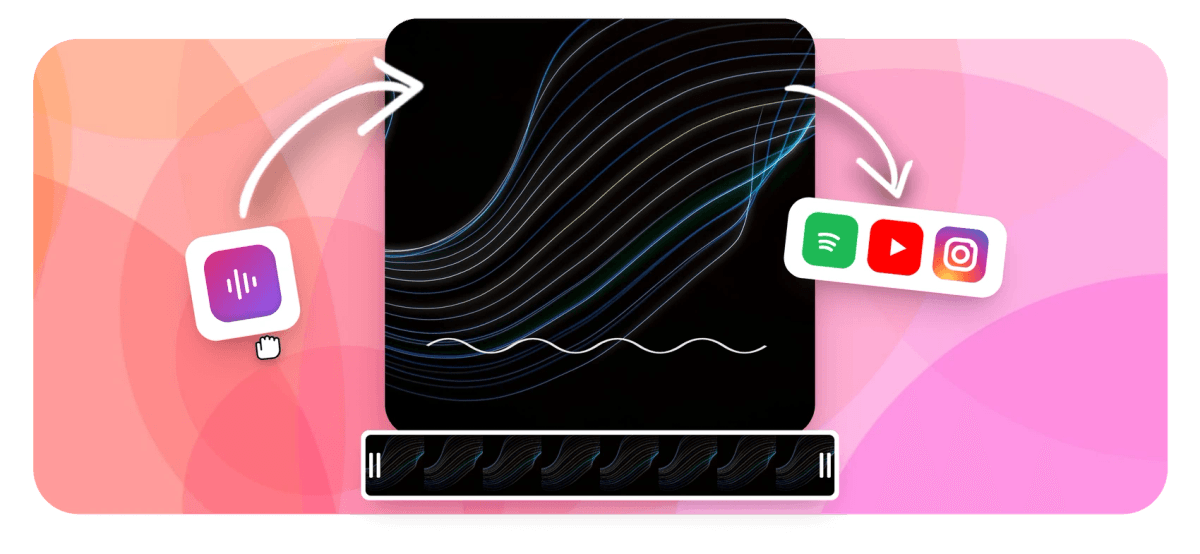
EchoWave is a free sound wave generator and audio waveform generator that turns sound into a moving wave you can post as video. Upload an MP3 or WAV, pick a bar, line, radial or circular sound wave style, set your colors and aspect ratio, then render an MP4. This online sound wave generator runs free in your browser with no account, so podcasts, singles, voice notes and social clips get a visual in minutes.
Echowave is used by thousands of businesses around the world





How to make a waveform video from audio
It takes three steps to turn your sound into an animated waveform video with EchoWave:
-
1. Upload your audio
Drag in an MP3 or WAV file. A mono-channel recording often gives the cleanest wave, but stereo works too. Nothing installs, and your file uploads straight to the in-browser editor.

-
2. Choose a wave style and customize
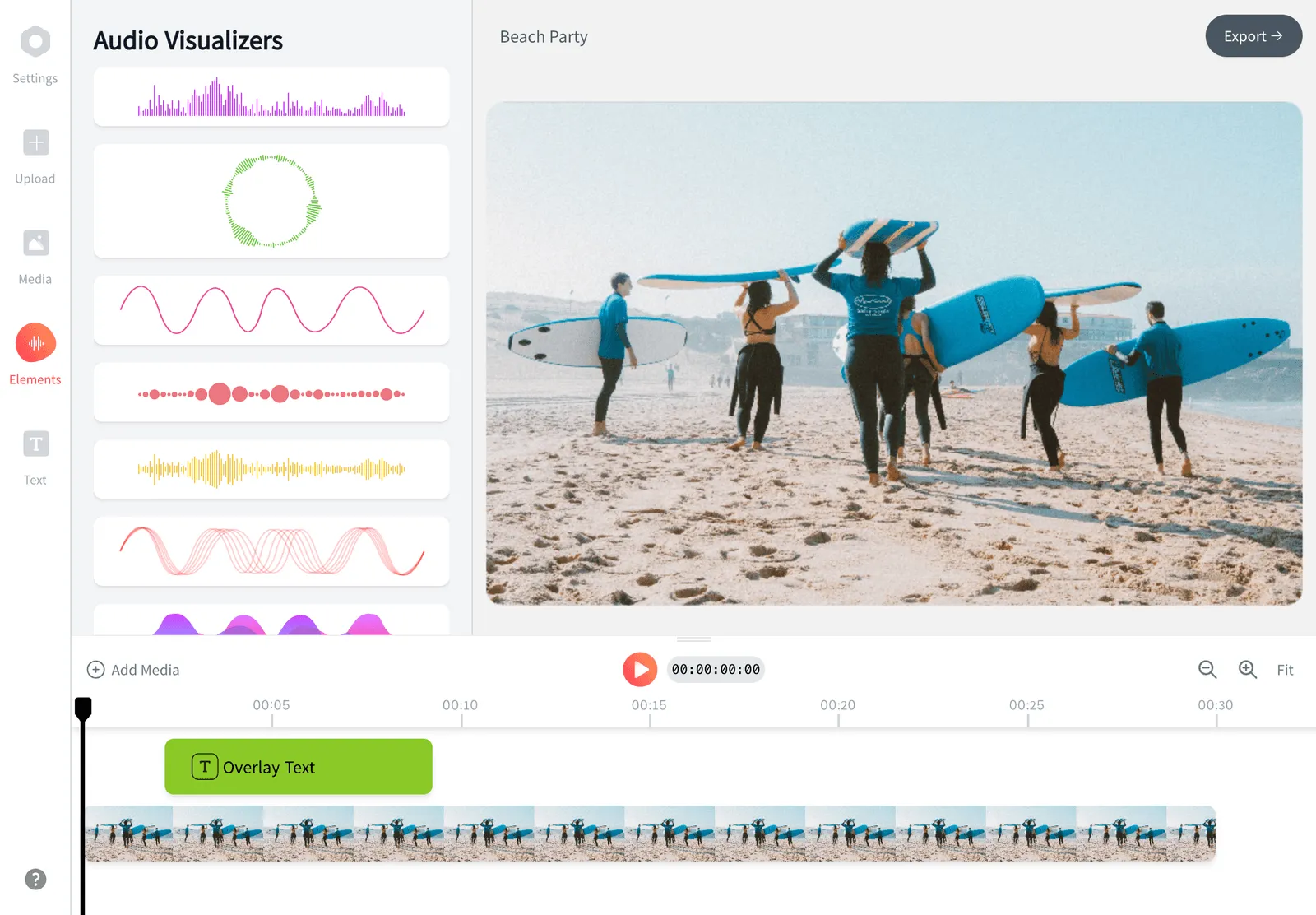
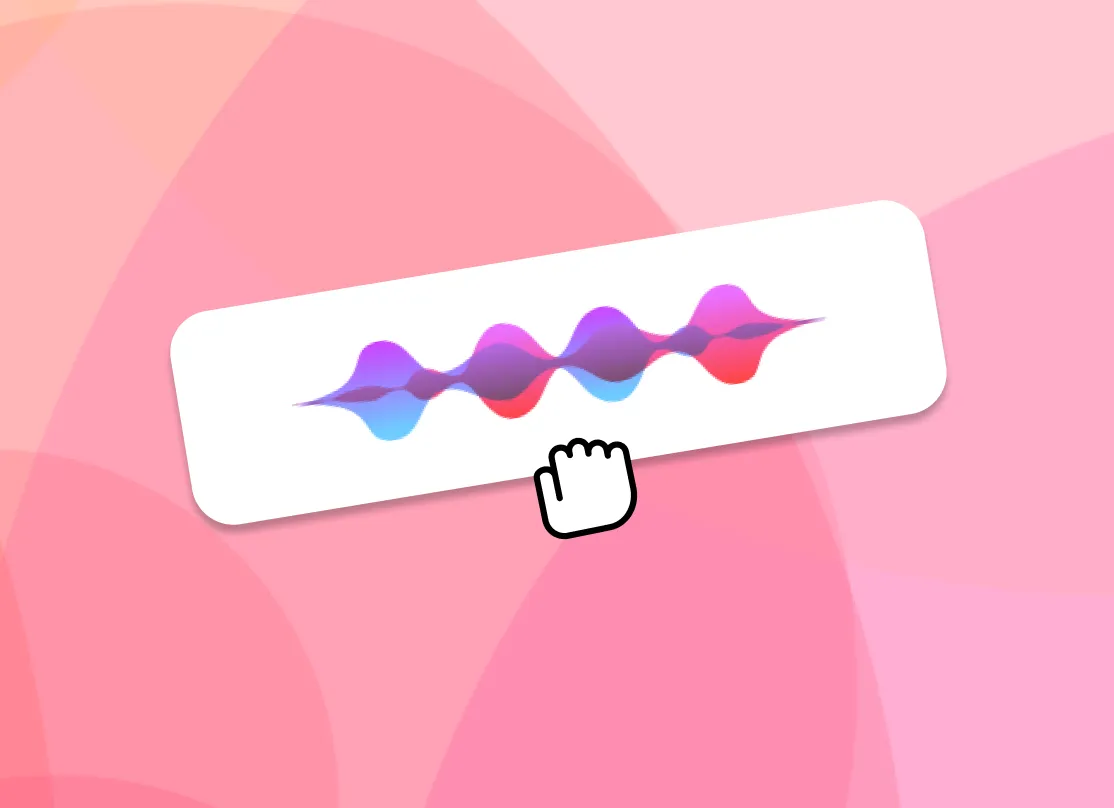
Pick a bar, line, radial or circular sound wave and watch it move with your audio in the live preview. Set custom colors or a gradient, drop in a background image, add your logo and a track title, then resize, reposition and adjust the amplitude for more or less motion.
-
3. Render and download
Choose your aspect ratio (9:16, 1:1 or 16:9), click render, and EchoWave builds your MP4. Download it and post to TikTok, Reels, YouTube or anywhere else.
How creators use EchoWave in real projects
How the sound wave generator works
Waveform styles: bar, line, mirror, radial and circular
EchoWave is a flexible sound wave maker and waveform maker with bar, line, mirror, radial and circular animated waveform styles, so you can match the look to your track and your platform:
- Bar waveform: vertical bars that jump with the beat, the classic audio waveform visualizer look that suits beats, EDM and energetic tracks.
- Line waveform: a single smooth line tracing the signal across the screen, clean and minimal for spoken word, lo-fi and ambient. Tighten it up and you get the oscilloscope look, the raw trace you would see on lab gear or an old hardware display.
- Mirror waveform: the wave reflected above and below a centre line so it grows in both directions at once. This is the symmetrical shape most audio editors show you, and it fills a wide frame without looking sparse.
- Radial waveform: bars arranged in a ring that pulse outward, ideal wrapped around a logo or cover image.
- Circular sound wave: a continuous wave bent into a circle, a popular look for single covers and profile-style posts.
Every style is a true soundwave maker: the animation is driven by your audio, so it stays in sync. As a soundwave generator and audio wave generator, EchoWave lets you pick a style, tweak it live in the editor, and end up with a custom sound wave creator that needs no design skills. The output is a short, loop-friendly animated waveform video, the modern moving alternative to a static sound wave GIF or printable sound wave art.
Sound wave art and sound wave gifts
A sound wave drawn from a recording that means something is one of the most personal things you can make from audio: a wedding vow, a first laugh, a voice note from someone you miss, the hook from your own track. Because the shape comes from the real amplitude of that specific file, no two recordings ever draw the same wave. That is what makes it worth keeping.
People usually want one of two things here, and they are not the same:
- Animated soundwave art. A short video where the wave moves with the voice or the music. This is the version that works in a message, on Instagram or looping on a digital frame, because the sound plays alongside it.
- Static sound wave art. A still image of the wave, the kind people print, frame or put on a card. Render the clip, then pull a single frame from it and you have the shape to work from at full resolution.
Set the colors to match the room or the brand, drop the wave over a photo or a plain background, and add the date or a line of text. If you want the same styles with a shorter set of steps, the sound wave maker is built around that quicker flow.
Audio spectrum and spectrum visualizer
Want frequency-reactive visuals instead of a single wave? EchoWave also works as an audio spectrum and spectrum visualizer. Where a waveform draws the overall shape of the signal, a spectrum splits your audio into frequency bands (bass, mids and treble) and animates a bar for each one, so the lows and highs in your mix move independently.
That makes the audio spectrum visualizer a good fit for music with a strong beat: the bass bars thump on the kick while the treble bars shimmer on hi-hats and vocals. It is the kind of frequency-reactive sound wave visualizer that usually needs After Effects or a plugin, but here you choose the spectrum style, set your colors, and render an MP4 in the browser with nothing to install.
Customize colors, background and logo
Make every waveform video unmistakably yours. Set custom colors and gradients for the wave, drop in a background image or solid color that matches your brand, and add your logo or cover art. You can resize and reposition the wave, adjust its amplitude for more or less motion, and add text such as a track title, episode name or handle.
The same controls work whether you are building a music waveform for a single or a voice waveform for a podcast clip or voice note. The result is branded content you can ship for every release without buying or learning expensive software.
What you can make with it
- Podcasts: turn an episode or a punchy clip into a shareable, audiogram-style waveform video for social.
- Music singles: give a new track a striking visual for YouTube, Reels and TikTok before the full music video lands.
- Audiograms: pair a quote or sound bite with an animated wave to stop the scroll. See the dedicated audiogram creator.
- Voice notes and messages: add a simple visual so spoken-word audio works on platforms that expect something to watch.
- Album and playlist promos: drop in cover art and a circular wave to tease a release or a curated set.
Unlike a printable sound wave art print, EchoWave produces an animated video built for social feeds: motion that reacts to the sound and is ready to post.
Waveform video vs music visualizer
The two get mixed up, so it helps to be precise. A waveform renders your audio itself as a moving wave: the line or bars are the sound, drawn from its amplitude. A music visualizer layers reactive effects (particles, geometry, color shifts) that respond to the beat but are not a direct picture of the signal. Use a waveform when you want a clean, honest representation of the audio, and a visualizer when you want a busier, more stylised motion graphic. EchoWave does both, so you can switch between them on the same upload.
Audiogram maker for podcasts
An audiogram is a podcast clip posted as video: a waveform moving over your cover art, usually with the episode title and captions. It exists for a simple reason. Audio has nothing to show in a feed, and a still image gets scrolled past, so the moving wave becomes the signal that there is something here to listen to.
The workflow is the same as any other waveform video on this page. Cut a 30 to 60 second section that makes its point without setup, upload it, sit the wave over your artwork, then add the episode name and your handle. Export vertical for Reels and Shorts or square for the feed. Add subtitles if you want it to land with the sound off, which is how most of the feed watches.
For the full podcast workflow, including automatic captions and branding you can reuse across every episode, the dedicated audiogram creator is set up for exactly that.
Free sound wave generator, no account, runs in your browser
Formats and export aspect ratios
Go from MP3 to waveform in a couple of clicks. Upload common audio formats including MP3 and WAV, then export your waveform video as an HD MP4 that uploads anywhere, in the aspect ratio each platform wants:
- 9:16 vertical: TikTok, Instagram Reels, YouTube Shorts and Stories.
- 1:1 square: Instagram feed posts and Facebook.
- 16:9 widescreen: YouTube, podcasts and presentations.
Whether you post short clips or full-length tracks, EchoWave's flexible aspect ratios and HD output cover every social need, and your original audio is included in the file. Turning audio to waveform video this way means the sound and the visual stay in one MP4, ready to share.
Sound wave video for every platform
The wave itself does not change from one platform to the next, but the framing and the length do. What is worth knowing before you export:
- TikTok, Reels and Shorts (9:16). Keep the wave in the upper two thirds, clear of the caption block and the buttons. Short wins here, so lead with the loudest few seconds rather than the intro.
- Instagram feed and Facebook (1:1). Square suits a circular or radial wave wrapped around cover art, which is why most single and release posts use it.
- YouTube (16:9). Widescreen is the home for full tracks, full episodes and anything people leave playing in a tab. A line or bar wave over a still background stays legible at small sizes.
- Spotify Canvas and profile loops. Short vertical loops that repeat behind a track. Keep the motion simple and pick a section whose first and last frames sit close together, so the loop does not visibly jump.
- Podcast pages and newsletter embeds. A square or widescreen wave gives an otherwise static page something that plays.
Export as HD MP4 in whichever ratio you need and the original audio rides along inside the file, so nothing has to be re-synced after upload.

About the EchoWave team
EchoWave is a browser-based video and audio editor built by Lemon Vault LLC since 2018. The people who build the editor write these guides and test every step in the production app before publishing.
Frequently Asked Questions
What is an audio waveform?
A waveform is a visual representation of a sound recording. Its height (amplitude) rises and falls with how loud the audio is at each moment, and it stretches left to right over time. A sound wave generator, also called an audio waveform generator, animates that shape into a video so the wave moves in step with the sound.
How do I turn an MP3 into a waveform video?
To make a sound wave video from an MP3, upload the file, pick a waveform style, set your colors, background and aspect ratio, then click render. EchoWave generates an animated MP4 you can download and post, all in your browser, in three steps. WAV files work the same way.
Is the sound wave generator free, and is there a watermark?
Yes, the sound wave generator is free to use and there is no signup. Exports from the full editor include a small EchoWave watermark on the free plan, which you can remove anytime by upgrading. Our dedicated quick tools, like crop, trim and compress, export with no watermark.
Do I need an account or download?
No. There's no signup and nothing to install. The whole sound wave generator runs in your web browser, so you can create and export a video in minutes.
What's the difference between bar, line and radial waveforms?
A bar waveform shows separate vertical bars that jump with the beat; a line waveform traces the signal as one smooth continuous line; and a radial (circular) waveform wraps the wave into a ring, which looks great around a logo or single cover.
Can I generate an audio spectrum or spectrum visualizer?
Yes. As well as waveforms, EchoWave can render an audio spectrum that splits your sound into frequency bands, so bass, mids and treble each animate their own bars. It is a true spectrum visualizer with no plugins needed.
What audio formats are supported?
EchoWave supports common audio formats including MP3 and WAV. For waveform visualisations, a mono-channel file often gives the cleanest result.
Can I add my logo, colors and a background image?
Yes. You can set custom colors and gradients for the wave, add a background image or color, and place your logo or cover art on top for fully branded content.
What aspect ratios can I export for TikTok, Instagram and YouTube?
Export in 9:16 (vertical for TikTok, Reels and Shorts), 1:1 (square for Instagram feed) and 16:9 (widescreen for YouTube), all as HD MP4 files.
Can I make a circular or radial sound wave for a single cover?
Yes. Choose the radial or circular waveform style and wrap the animation around your artwork. It is a popular look for music single covers and profile-style social posts.
How long can my audio file be?
You can make short clips of a few seconds or longer pieces up to full-length tracks and episodes. Shorter clips render faster and tend to perform best on social feeds, so many creators export a highlight rather than the whole recording.
What is the difference between a waveform and a music visualizer?
A waveform draws your audio itself as a moving wave, taken directly from the signal's amplitude. A music visualizer adds reactive effects like particles and color that respond to the beat but are not a literal picture of the sound. EchoWave can make both from the same upload.
Can I use it as a voice wave generator or music wave generator?
Yes. EchoWave works as a voice wave generator for spoken-word clips and as a music wave generator for songs and beats. The waveform animation reads whatever you upload, so a voice note draws a calm line and a track with a strong beat gives you a punchy, animated waveform.
Can I create sound wave art from a voice recording?
Yes. Upload a voice note, a vow, a message or any spoken clip, choose a wave style and set your colors, and EchoWave draws the wave from that exact recording, so the shape is unique to it. Export it as an animated MP4 to send or loop, or take a single frame from the render if you want a still image of the wave to print or frame.
What is the difference between a waveform and a spectrum visualizer?
A waveform works in the time domain: it draws how loud your audio is at each moment, so the shape you see is the volume of the recording over time. A spectrum visualizer works in the frequency domain: it splits the same audio into bands and gives bass, mids and treble their own bars, so you see what the sound is made of rather than how loud it is. EchoWave renders both from one upload, and the music visualizer layers reactive effects on top of either.
Ready to make a waveform video? Free, no signup, right in your browser.
Upload your audio and export an animated sound wave video in minutes, right in your browser.
Get Started →