Annotate Video Online Free
Add text, arrows, shapes and freehand drawing to any video right in your browser, then place each note on the exact frame it belongs to. EchoWave is free, works on any device and needs no software install.

Annotate Video Online Free Features




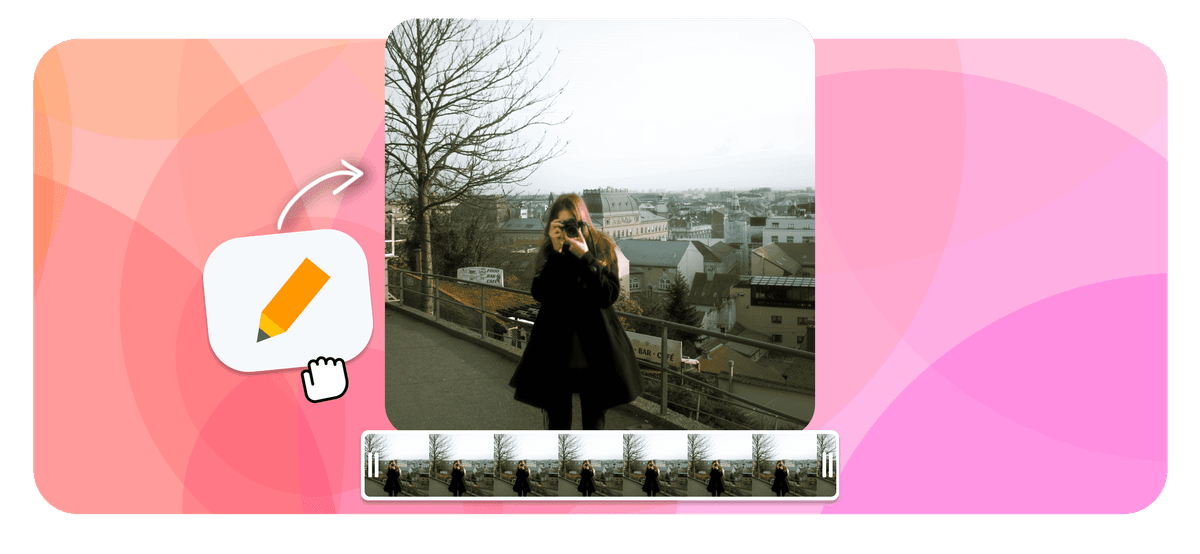
Annotate video online free with EchoWave: upload your clip to the editor, then add notes, arrows, shapes or freehand pen marks on top of the picture. Drag each annotation to the spot you want, use the timeline to set when it appears and disappears, and export the finished video as an MP4. This browser-based video annotator installs nothing and runs on any device.
What video annotation actually means
Annotating a video means layering notes and markup directly onto the moving picture so a viewer understands a specific moment without you having to explain it out loud. In practice that is a text caption, an arrow pointing at a button, a circle around a defect, a blurred face or a quick scribble in a bright colour. Annotations sit in their own layer above the footage, so the original video is never altered until you export. You decide what shows, where it sits and for how long.
EchoWave handles the creative side of annotation: notes and graphics that get burned into the final file for tutorials, product walkthroughs, sports breakdowns, design feedback and social clips. It is not a data labelling platform for training machine learning models, and it is not a real-time conferencing whiteboard. If you want a finished, shareable video with clear callouts on it, this free video annotation tool is the right choice.
How to annotate video online in EchoWave
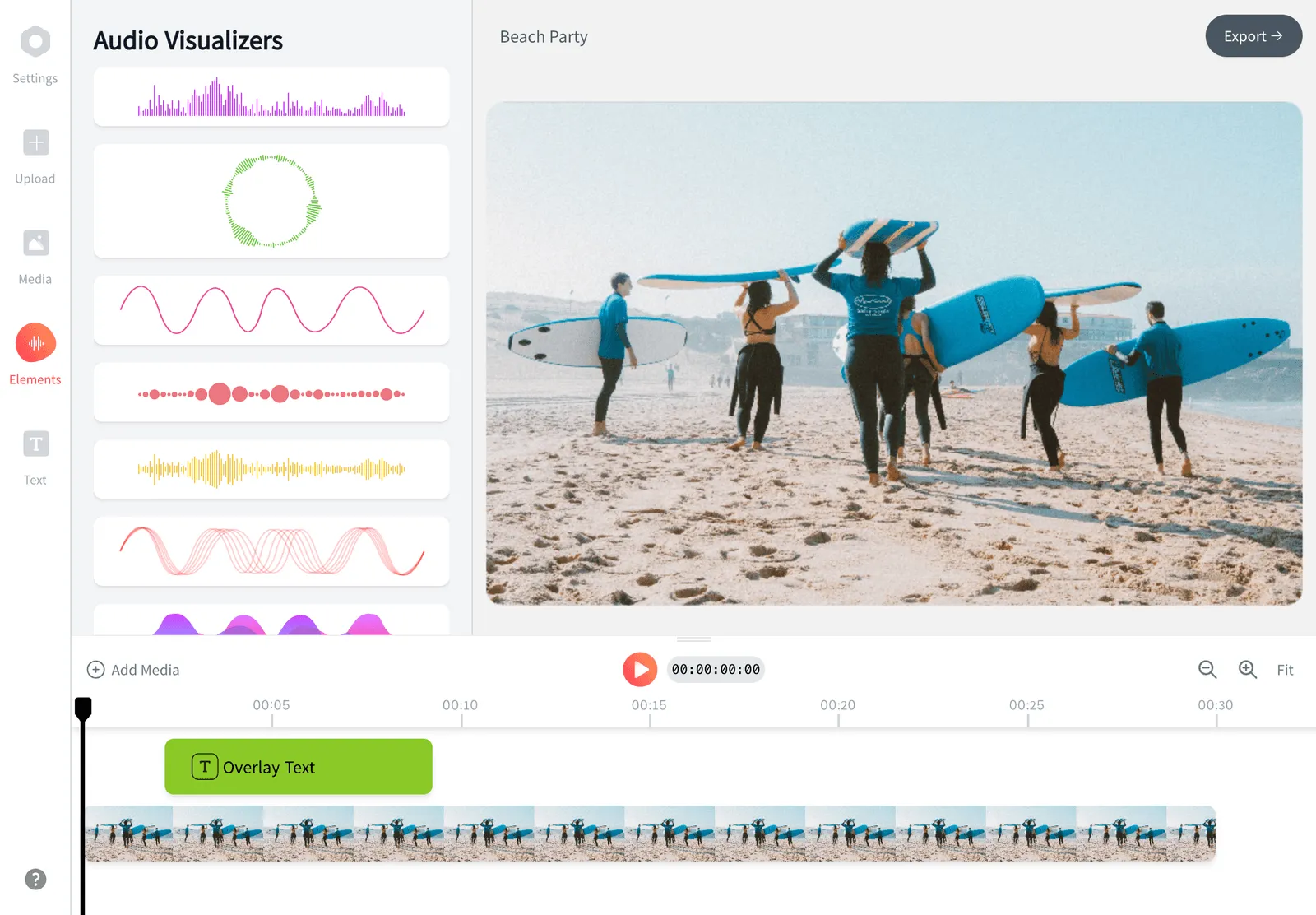
Every annotation lives on the timeline as its own element. When you drop a text box or shape onto the canvas, it appears as a layer with a start point and an end point you can drag, the same way you trim a clip. That is what lets you show an arrow only while the narrator is talking about that part, then have it vanish a second later.
The tools you get are the ones people actually reach for:
- Text and captions: type a label, choose a font, colour and size, and add a semi-transparent background so words stay readable over busy footage.
- Arrows and lines: point at a button, a play, a flaw or a region of the frame. Rotate and resize them to follow the action.
- Shapes: rectangles, circles and highlight boxes to ring an area or mask part of the screen.
- Freehand pen: draw directly on the video to circle or underline something, in any colour and thickness.
- Images and logos: drop in a PNG, a screenshot or a brand mark and position it over the clip.
- Blur: cover a face, a number plate or sensitive on-screen text before you share the file.
Because each layer is independent, you can stack several annotations on the same frame, reposition them after the fact, and change the timing without touching the underlying video. Annotations are burned in when you render, which means they play correctly on every device and platform, with no extra player or plugin required.
Real ways people use video annotation
Tutorials and how-to videos. Point at the exact menu, label each step and reinforce spoken instructions with on-screen text so viewers can follow along with the sound off.
Product demos and software walkthroughs. Ring the button you want clicked, add a short caption for each feature and guide the eye through an interface that would otherwise be confusing.
Design and video feedback. Mark up a draft cut or a mockup with arrows and notes tied to the exact frame, so a teammate sees precisely what needs changing instead of reading a vague paragraph.
Sports and coaching analysis. Circle a player, draw the run they should have made and freeze the moment with a caption to explain positioning.
Social and marketing clips. Add bold captions, callouts and emoji-style markers to grab attention in the first few seconds on TikTok, Reels and Shorts, where most viewers watch muted.
Supported formats, aspect ratios and export
Upload the common containers: MP4, MOV, WebM, AVI, MKV and more. EchoWave's backend decodes a wide range of codecs, so a clip from a phone, a screen recorder or a camera will load. If your browser cannot preview an unusual file, the upload and processing still run server-side, so you are rarely blocked by a format quirk.
You can annotate in any aspect ratio and match it to where the video is going:
- 9:16 vertical for TikTok, Instagram Reels and YouTube Shorts.
- 1:1 square for in-feed Instagram and Facebook posts.
- 16:9 widescreen for YouTube, embeds and presentations.
When you keep an annotation inside the central safe area, it stays clear of the platform interface, such as the caption, profile and button overlays that crowd the right side and bottom of a vertical feed. Exports render to MP4 with H.264 video, the format every social platform, messaging app and web player accepts without re-encoding.
Annotating YouTube and downloaded videos
YouTube retired its native annotations feature years ago, so the modern way to put notes on a YouTube video is to annotate video online and burn the markup into the file before you upload. Download a video you own or have the rights to use, bring it into EchoWave, add your text, notes, arrows and shapes, then export and re-upload the annotated version. The same flow works for screen recordings from Loom or OBS, clips from your camera roll and footage exported from another editor.
For a closer look at on-screen text specifically, see our guide to adding text to a video and the dedicated walkthrough for adding text to a YouTube video.
Privacy, pricing and the watermark
EchoWave runs in your browser and your account, so you are not emailing files around or handing footage to a third party for manual labelling. The tool is free to use. On the free plan, exports carry a small EchoWave watermark, which a paid plan removes. If you need a quick edit with no watermark at all, EchoWave's single-purpose tools, such as crop, trim, compress and resize, export with no watermark. Annotation uses the full editor, so its free exports include the watermark.
Quality, limits and device support
Annotations are vector and text layers, so they stay crisp at any resolution and never look pixelated, even at 1080p and above. The export keeps your source resolution and frame rate, and the only quality change is the encode that bakes the markup into the picture. Longer clips and higher resolutions take longer to render, since the work happens after you press render rather than live in the preview.
The editor works in any modern browser, including Chrome, Edge, Safari and Firefox, on Windows, macOS, ChromeOS, Linux, and on tablets. There is nothing to download and no extension to add. A laptop or desktop gives you the most precise control over placement and timing, while a touchscreen is handy for quick freehand marks.
How to annotate a video online
Add notes, arrows and shapes to your video in three steps:
-
1. Upload your video
Open the editor and upload your video file. EchoWave works with almost every format, including MP4, MOV, WebM, AVI and MKV, so most clips load straight away.
-
2. Add your annotations
Scrub the playhead to the right moment, then drag text, arrows, shapes or a pen mark onto the video. Position each one on the canvas and set how long it stays on screen using the timeline.
-
3. Render and download
When the markup looks right, click render to burn the annotations into the video, then download your finished MP4 ready to share or re-upload.

What creators say after trying EchoWave
Why annotate your video?

About the EchoWave team
EchoWave is a browser-based video and audio editor built by Lemon Vault LLC since 2018. The people who build the editor write these guides and test every step in the production app before publishing.
Frequently Asked Questions
How can I annotate a video?
Upload your clip to EchoWave's free online editor, then drag text, arrows, shapes or freehand pen marks onto the video. Move the playhead to choose where each note appears, set its timing on the timeline, then render and download the annotated MP4.
How do I annotate a video for free?
EchoWave is free to use in the browser with no account needed to start. You can add unlimited text, shapes, arrows and drawings. Free exports include a small EchoWave watermark, which a paid plan removes.
What is the best app to annotate videos?
For a finished, shareable video with notes burned in, a browser tool like EchoWave is the simplest option because there is nothing to install and it runs on any device. Dedicated review platforms suit teams who comment back and forth, while data labelling tools are for machine learning, not creative markup.
Can you do markup on a video?
Yes. You can add arrows, circles, rectangles, highlight boxes, freehand pen strokes and text labels directly on the picture, then position each one and control exactly when it shows and hides.
How do I annotate a YouTube video?
YouTube removed its built-in annotations feature, so the way to add notes now is to burn them into the file. Download a video you own, add your text and markup in EchoWave, then export and re-upload the annotated version.
Can I draw on a video?
Yes. The freehand pen tool lets you draw directly on the footage in any colour and thickness, so you can circle a detail, underline a word or sketch a path on screen.
Does the annotated video keep its quality?
Yes. Text and shapes are vector and text layers, so they stay sharp at 1080p and above, and the export keeps your original resolution and frame rate. The only change is the encode that bakes the markup into the picture.
What video formats can I annotate?
EchoWave accepts MP4, MOV, WebM, AVI, MKV and more. Even if your browser cannot preview an unusual file, the upload and processing run on the server, so you can usually still annotate and export it.
Can I add an arrow or text to only part of the video?
Yes. Each annotation has its own start and end point on the timeline, so you can show an arrow or caption for just a few seconds and have it disappear when the moment passes.
Do I need to install any software?
No. EchoWave runs entirely in your web browser on Windows, macOS, ChromeOS, Linux and tablets. There is no download, plugin or extension to add.
Ready to get started? We have a free plan!
No credit card required, our free plan includes a small Echowave.io watermark.
Get Started →