Video Merger: Combine and Join Videos Online
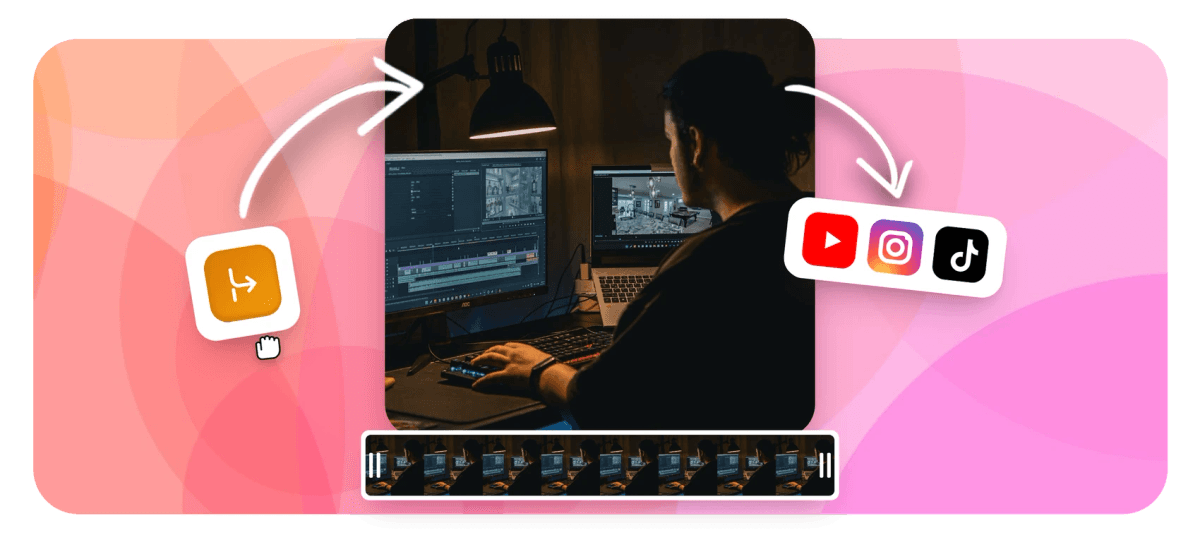
Stitch two or more clips into one continuous video right in your browser. Reorder, trim, add music and transitions, then export a clean MP4 ready for YouTube, Instagram, or TikTok. No software to install.


Video Merger: Combine and Join Videos Online Features
Trusted by thousands of creators worldwide for smooth video merging





A video merger joins separate clips into a single file by lining them up on one timeline and exporting them as one continuous video. With EchoWave you upload your clips, drag them into the order you want, optionally trim or add music, and export an MP4. It all runs in your browser, so there is nothing to download and your files never leave your device until you export.
How to merge videos online
Combine multiple videos into one in a few minutes with this free online video merger, no installation required. Follow these steps:
-
1. 1. Upload your video clips
Import videos from your computer, phone, or cloud storage. The editor accepts a wide range of formats, including MP4, MOV, AVI, WebM, MKV, and more.

-
2. 2. Arrange and edit
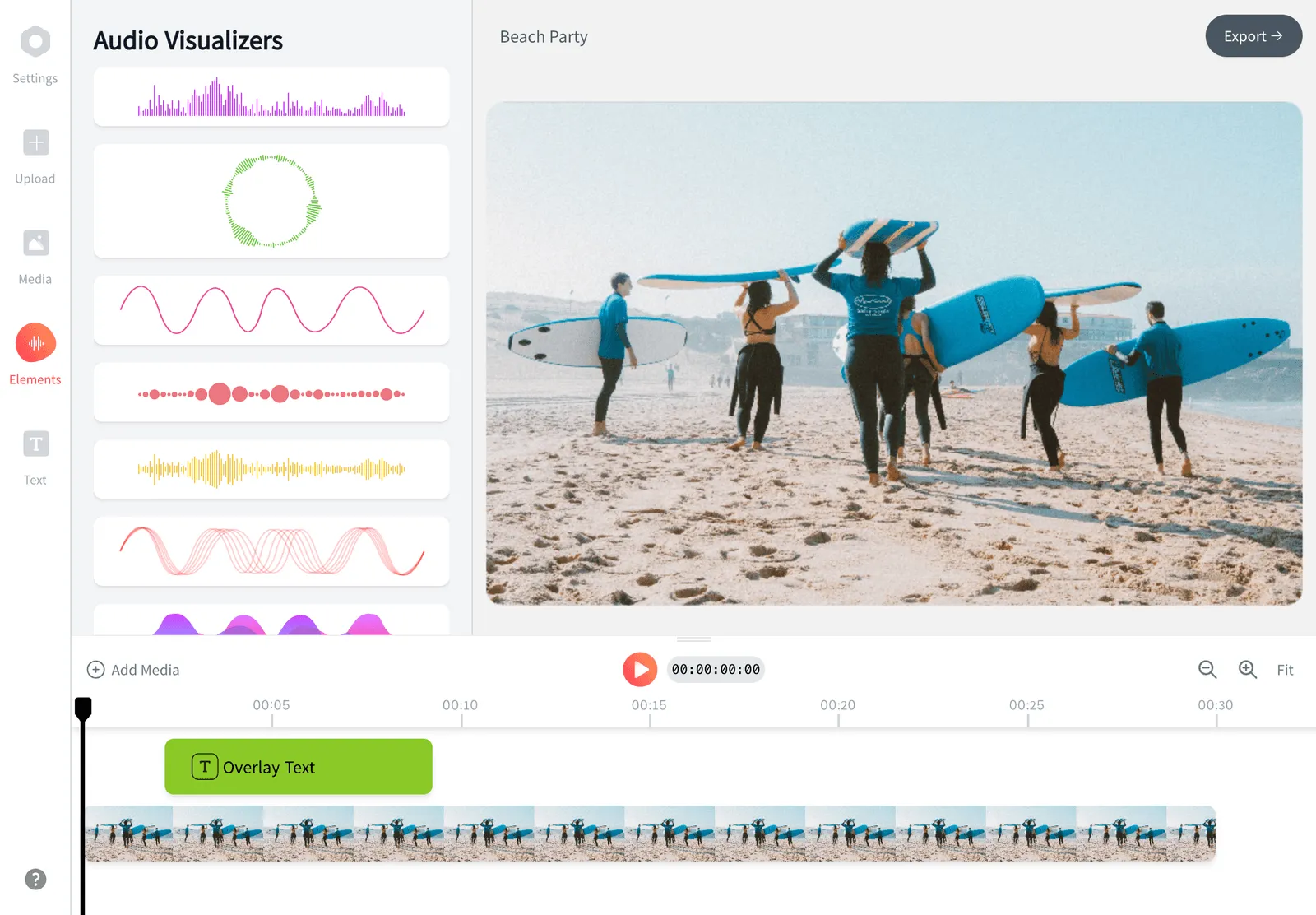
Drag and drop to reorder clips on the timeline. Trim the ends, split a clip, add transitions, overlay text, or layer in a music track or voiceover. Everything you need is built in.

-
3. 3. Export and share
Click Export to render your combined video, then download the finished MP4 or post it straight to your social platforms.

What creators say after trying EchoWave
How merging works on the timeline
Merging is timeline editing. This video merger lets you join videos online by lining them up on a single timeline: when you add clips to EchoWave, each one becomes a block you can drag, drop, and reorder. Clips play back to back in the order they sit on the timeline, so getting the sequence right is mostly drag-and-drop. Slide a clip earlier or later, snap two clips together to remove the gap, or leave a short gap for a beat of black between scenes.
From there you can refine the join. Trim a clip's head or tail so it cuts in and out exactly where you want, split a single clip into two and drop another segment between the halves, or shorten one piece so the pacing matches the rest. A crossfade transition softens the cut between two clips, which is useful when the footage was shot at different times or in different lighting. Because every edit is non-destructive, your original files stay untouched and you can undo any change before you export.
Real ways people use a video merger
Merging is one of the most common edits there is, and the reasons are practical. A few patterns we see constantly:
- Stitching phone clips into one video. Recording in short bursts is normal on a phone. Merging turns a dozen 10-second takes into a single watchable clip.
- Building a social montage or reel. Combine highlights from a trip, an event, or a product demo into one Instagram Reel, TikTok, or YouTube Short.
- Joining a screen recording with a webcam intro. Drop a quick talking-head intro in front of a tutorial or demo recording.
- Assembling B-roll behind a voiceover. Lay several short shots end to end, then run one narration track across all of them. As a video and audio merger, it lines a music or voice track up under the whole sequence.
- Merging gameplay or stream segments. Combine separate captures into one upload without re-recording, then use it as a YouTube video merger to publish a single clip.
- Putting an intro and outro on existing footage. Bookend a clip with a branded opener and a sign-off.
If your goal is to place clips side by side rather than one after another, use the video collage or split screen tools instead. A merger is for sequential clips; a collage is for simultaneous ones.
Supported formats and export specs
EchoWave reads the formats people actually have on hand. On the way in, you can upload MP4, MOV, M4V, WebM, MKV, AVI, FLV, and 3GP, with H.264, H.265 (HEVC), VP9, and AV1 video inside them. You can also drop in still images (JPG, PNG, WebP) to hold on screen for a set duration, and audio files (MP3, M4A, WAV, AAC) for music or narration.
Exports are standard MP4 with H.264 video and AAC audio, the combination that plays everywhere: phones, browsers, smart TVs, and every major social platform. You set the output resolution and aspect ratio for the whole project, so a mix of clips comes out as one consistent file rather than a patchwork.
A practical note on mixing sources: when you merge clips that were shot at different resolutions or aspect ratios, the editor fits each clip to the project frame. A vertical phone clip placed in a 16:9 project will show side bars unless you scale or crop it to fill. The cleanest results come from merging clips that share an orientation, or from picking the project aspect ratio that matches most of your footage and adjusting the odd one out.
Pick the right size for the platform
Set your project aspect ratio before you export so the merged video fits where it is going:
- 9:16 vertical for TikTok, Instagram Reels, and YouTube Shorts. Target 1080x1920.
- 1:1 square for in-feed Instagram and Facebook posts. Target 1080x1080.
- 16:9 widescreen for YouTube, Vimeo, and most desktop playback. Target 1920x1080.
- 4:5 portrait for the Instagram feed when you want more vertical real estate. Target 1080x1350.
If you plan to post the same montage in more than one place, build it once at the largest size you need, then duplicate the project and change the aspect ratio rather than re-editing from scratch.
How to combine videos on iPhone and Android
You do not need an app to combine videos on a phone. EchoWave runs in the mobile browser, so the process is the same as on desktop: open the tool in Safari or Chrome, tap to upload clips from your camera roll, drag them into order, and export. To combine videos on iPhone, this is the fastest route when you would rather not learn the multi-clip workflow in the Photos app or iMovie, and the same steps combine videos on Android without installing anything from the Play Store. No separate video merger app to download either.
One tip for phone footage: clips from the same device usually share a resolution and frame rate, so they merge cleanly. If you are mixing in a clip someone sent you over a messaging app, it may have been recompressed to a smaller size, and you might want to trim or rescale it so it sits well next to your sharper originals.
Quality, length, and what to expect
EchoWave keeps your footage at full resolution through the merge and only re-encodes once, at export, so you are not stacking compression passes. Output quality tracks the resolution you choose, so exporting at 1080p keeps a crisp result for most uses, and you can go higher when the source supports it.
There is no fixed cap on how many clips you can join. Practical limits come from total length and your device: very long projects with many high-resolution clips take longer to render and use more memory, especially on older phones. If a finished merge is larger than a platform's upload limit, run it through the video compressor to bring the file size down without rebuilding the edit.
Privacy and pricing
Editing happens in your browser, and your clips are processed for your project rather than shared or sold. EchoWave is free to use: you can upload, arrange, edit, and export without paying. Free exports carry a small EchoWave watermark that you can remove on a paid plan. If all you need is a quick edit on a single clip with no watermark at all, the dedicated quick tools such as crop, trim, and compress export clean.
More than a basic joiner
Keep your footage sharp
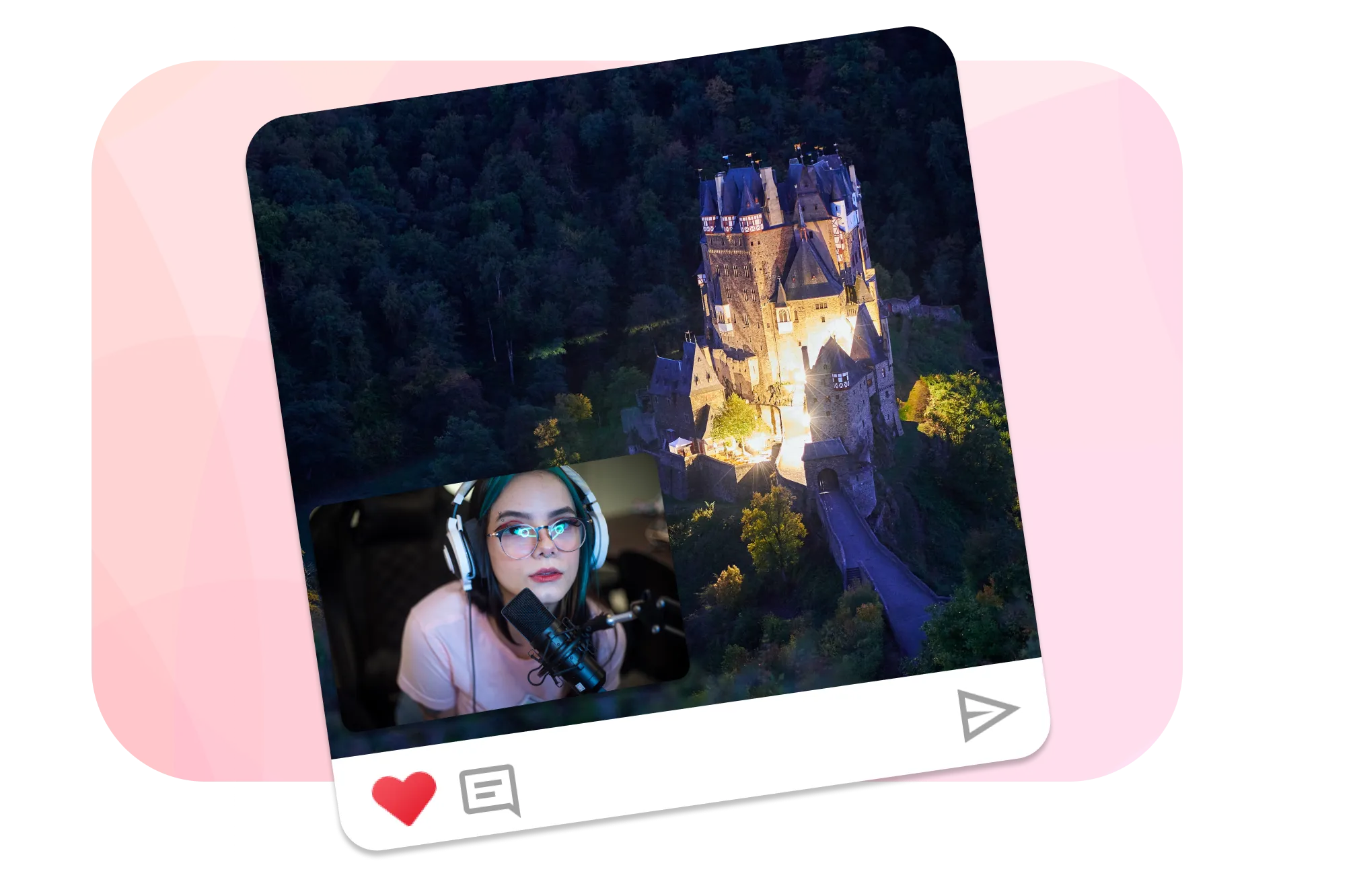
EchoWave holds your clips at full resolution and re-encodes only once, at export. Your merged video stays crisp and clear, with no extra compression pass stacked on top.
Works in the browser
No installs, no slow desktop renders. Because EchoWave runs in your browser, you can merge videos from a laptop, tablet, or phone, wherever you happen to be.

About the EchoWave team
EchoWave is a browser-based video and audio editor built by Lemon Vault LLC since 2018. The people who build the editor write these guides and test every step in the production app before publishing.
Frequently Asked Questions
How do I merge two videos into one?
Upload both clips, drag them onto the timeline in the order you want, snap them together so there is no gap, then click Export. The two clips render as one continuous MP4.
How many clips can I combine?
There is no fixed limit. Combine multiple videos into one longer video, as many clips as you need. Total length and your device's memory are the practical constraints, not a hard cap.
Can I merge videos that are different sizes or aspect ratios?
Yes. Set one aspect ratio for the whole project, and each clip is fitted to that frame. A vertical clip in a 16:9 project will show side bars unless you scale or crop it to fill, so it is cleanest to match orientations where you can.
How do I combine videos on my iPhone without an app?
Open this tool in Safari, tap to upload clips from your camera roll, drag them into order, and export. Nothing to install, and it avoids the multi-clip steps in Photos or iMovie.
Does it work on Android?
Yes. EchoWave runs in Chrome or any modern mobile browser on Android. Upload, arrange, edit, and export the same way you would on a desktop, with no Play Store download.
Can I add background music or a voiceover?
Yes. As a video and audio merger, EchoWave lets you add a music track or record a voiceover as an audio layer that runs across the whole merged video, and adjust per-clip volume so the original sound and your added audio sit well together.
Can I add transitions between clips?
Yes. Apply a crossfade between two clips to soften the cut. It is handy when the footage was shot at different times or in different lighting.
What video formats can I upload and export?
Upload MP4, MOV, WebM, MKV, AVI, and more. Exports are standard MP4 with H.264 video and AAC audio, which plays on phones, browsers, smart TVs, and every major social platform.
Will merging reduce the quality?
Quality tracks the export resolution you choose. EchoWave keeps clips at full resolution and re-encodes once at export, so exporting at 1080p stays crisp for most uses without stacking compression.
Will my merged video have a watermark?
Free exports from the editor include a small EchoWave watermark, removable on a paid plan. The dedicated quick tools such as crop, trim, and compress export with no watermark.
Is it free?
Yes. You can upload, arrange, edit, and export videos for free, with no account or credit card required. A paid plan removes the watermark and adds more export options.
Are my files private?
Editing happens in your browser, and your clips are processed for your project rather than shared or sold. You stay in control of your footage.
Ready to combine your videos? No account or software install required.
Start merging for free. No credit card needed. The free plan includes a small Echowave.io watermark, or upgrade to remove it.
Get started