Turn Your Podcast Into Video, Free
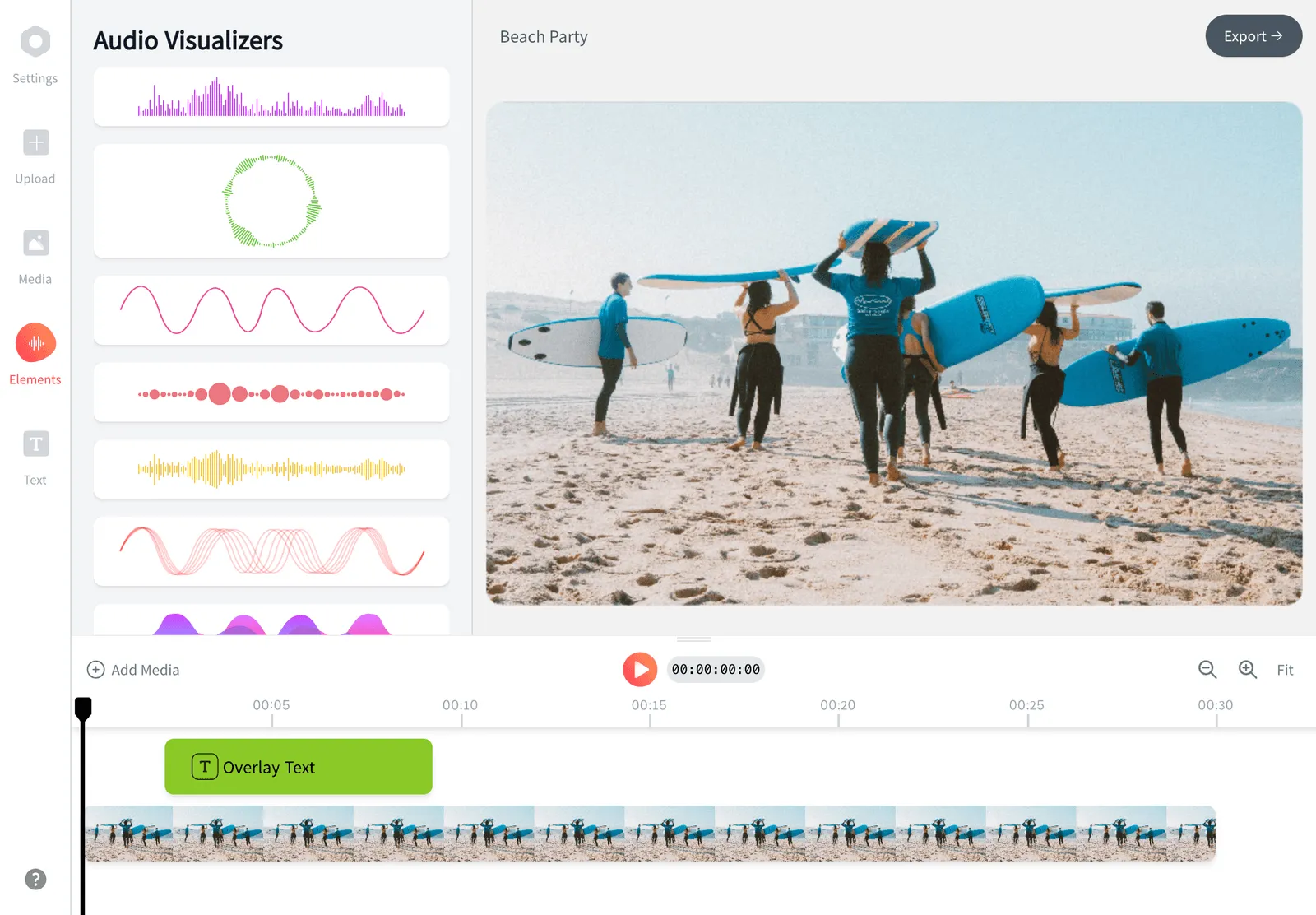
EchoWave turns any podcast episode or clip into video for YouTube, Shorts and Reels. Upload your audio, add an animated waveform or audiogram over your cover art, pick the aspect ratio for where it's going, then export an HD MP4: free to start, no download, no signup needed.

Turn Your Podcast Into Video, Free Features







A podcast to video converter takes your audio episode (MP3, WAV, M4A and similar files) and wraps it in a video frame so it can be posted where audio files are not allowed. With this free podcast video maker you upload the audio, drop in your cover art as a background, add a moving waveform or captions, choose a 16:9, 1:1 or 9:16 canvas, and export an MP4. To convert podcast to video you do not install anything: everything runs in your browser, and it is free to use.
Two ways to turn a podcast into video
Most podcasters need two different outputs from the same episode, and EchoWave covers both from one upload.
Full episode. Keep the whole conversation intact for YouTube or your podcast host. Add an animated waveform or build a proper audiogram that reacts to the audio, sitting over your cover art or a looping video background. Render at 16:9 and the episode is ready to upload as a normal YouTube video.
Short clips. Pull the best two or three minutes out of the episode, the answer to a good question, a strong opening line, a joke that landed, and turn just that highlight into a podcast clip. Since most feeds autoplay muted, add auto-generated captions so the clip still makes sense with the sound off. Export at 9:16 for Shorts and Reels, or 1:1 for a feed post.
Both paths start the same way: upload the audio, and EchoWave builds the video around it.
Why turn a podcast into a video
Audio-only files do not travel well on social platforms. You cannot post an MP3 to YouTube, Instagram, TikTok or a feed on X, and a flat link rarely stops anyone scrolling. Converting the episode to video fixes both problems at once. You get a real upload target on YouTube (now the most-watched podcast platform), a vertical clip for Reels and Shorts, and a moving asset that earns far more attention than a static link.
Video also opens up captions. Adding burned-in subtitles makes a clip watchable with the sound off, which is how most people scroll, and it makes the content accessible to viewers who are deaf or hard of hearing. Spotify, Apple Podcasts and YouTube all support or actively favour video episodes now, so a single MP4 export can feed several distribution channels from one source file. You do not need a separate podcast video editor or a recording rig to start a video podcast: a podcast video maker that turns the existing audio into a video is enough to publish on every platform.
How to convert a podcast to video
Turn an audio episode into a branded MP4 you can post anywhere, using EchoWave's free in-browser editor.
-
1. Upload your episode audio
Open the editor and upload your MP3, WAV or M4A file: the full episode or just the clip you want to turn into video. Social feeds reject raw audio, so wrapping it in an MP4 makes it postable.
-
2. Pick a visual style and add captions
Use your cover art as the background, add an animated waveform or audiogram, and drop in auto captions if you're posting a muted-feed clip.
-
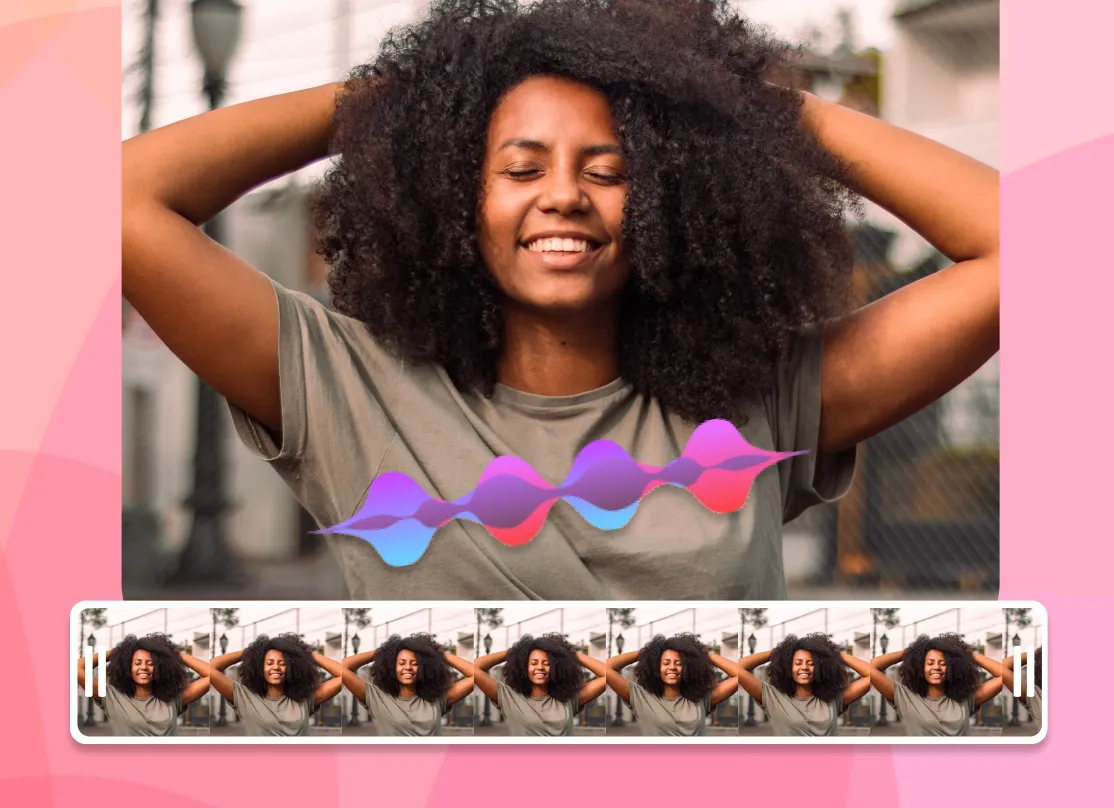
3. Export the right size for each platform
Set the canvas to 16:9 for YouTube and podcast hosts, 9:16 for Shorts and Reels, or 1:1 for a feed post, then render an MP4 (H.264 video, AAC audio) and download.
What people are saying about EchoWave
Supported formats and export specs
On the way in, EchoWave accepts the common podcast audio containers: MP3, WAV, M4A (AAC), OGG, FLAC and AAC. For backgrounds you can bring in JPG and PNG images, or MP4, MOV and WebM video.
Exports come out as MP4 with H.264 video and AAC audio at up to 1080p HD, the combination YouTube, Spotify, Instagram and every major player accept without re-encoding. If your final file is larger than a platform allows, run it through the free video compressor afterwards.
There is no hard rule on episode length, but a full hour-long episode makes a large file and takes longer to render in the browser. For social posts, most creators export a short highlight rather than the whole episode, and keep the full-length version for YouTube or Spotify.
Video sizes for every platform
The canvas shape matters as much as anything else in the editor, because each platform crops and ranks differently:
- 16:9 landscape (1920x1080), YouTube, Spotify video and a website embed. This is the size for a full episode.
- 1:1 square (1080x1080), an Instagram or LinkedIn feed post, where square takes up more space than 16:9 while scrolling.
- 9:16 vertical (1080x1920), YouTube Shorts, Instagram Reels and TikTok. Use this for short, punchy clips, not the whole show.
A common workflow is to export the full episode once in 16:9 for YouTube, then cut two or three vertical highlights in 9:16 to point people back to it.
Posting your podcast on YouTube
YouTube does not accept a raw audio file, it needs a video, even if that video is just your cover art sitting still. This tool creates that file: upload the episode, add a background and a waveform or audiogram, and export an MP4 that's ready to upload as a normal YouTube video.
For a full episode, export at 16:9 and add it to a playlist for the show; YouTube treats the playlist as the podcast, and it's where a lot of new listeners discover a show. For a highlight, export at 9:16 so it fits YouTube Shorts. If you haven't uploaded to YouTube before, the MP3 to YouTube guide walks through the upload step itself, from channel setup to publishing.
Other places to post the video
Spotify. In Spotify for Creators you can attach a video file directly to an episode. Spotify accepts MP4, MOV and MPG, so the standard MP4 export from EchoWave works without any changes.
Instagram and TikTok. Keep vertical clips short and lead with the strongest five to ten seconds. Captions matter most here, since both feeds autoplay muted.
Apple Podcasts. Video episodes go out through your RSS feed and hosting provider rather than a direct upload, so check what your host supports before you produce video specifically for Apple.
Coming from another audiogram tool
If you've built podcast videos with a tool like Wavve or Headliner before, the workflow here will feel familiar: audio in, animated video out. You can rebuild your usual episode template in EchoWave in a few minutes, drop in your cover art, pick a waveform or audiogram style, set your colors, and add captions, then export the same aspect ratios you're already using for YouTube, Instagram or TikTok.
There's no import or migration step. Just upload the episode audio you'd normally drop into your current tool, rebuild the look once, and you're set for future episodes. We also keep honest, sourced comparisons of the popular clip tools: Opus Clip alternatives and Riverside alternatives.
Privacy, price and the watermark
Editing happens in your browser, so your audio is processed client-side while you work rather than sitting on a public server; rendering the final MP4 uses EchoWave's cloud servers. EchoWave is free to use, with no signup needed to start. Exports from the full editor carry a small, removable EchoWave watermark on the free plan, which you can remove by upgrading. If you only need a quick, watermark-free pass, cropping, trimming, compressing or converting a file, EchoWave's dedicated quick tools export with no watermark at all.

About the EchoWave team
EchoWave is a browser-based video and audio editor built by Lemon Vault LLC since 2018. The people who build the editor write these guides and test every step in the production app before publishing.
Frequently Asked Questions
How do I turn my podcast into a video?
Upload your audio episode to EchoWave, add a background such as your cover art, drop in an animated waveform or audiogram, choose an aspect ratio for the platform you're posting to, then render an MP4. The whole process happens in your browser, with no software to install.
Can I put my podcast on YouTube?
Yes, but YouTube needs a video file, not a raw MP3 or WAV. Use EchoWave to wrap your episode audio in a video (cover art plus a waveform or audiogram works well), export at 16:9, then upload it like any other YouTube video. Our MP3 to YouTube guide covers the upload step itself.
What is an audiogram?
An audiogram is a short video built from a podcast clip: usually a waveform or sound-wave animation over a still image or cover art, sometimes with captions and the episode title layered on top. It's the format most podcasters use to promote an episode on Instagram, X and YouTube, because it gives a static audio clip something to watch. Our audiogram creator is built specifically for this format.
Do I need a camera or video footage?
No. Cover art, a logo, or even a solid color background is enough, EchoWave generates the moving waveform or audiogram from your audio, so there's nothing to film. You can add a video background instead if you have one, but it isn't required.
What audio formats can I upload?
EchoWave accepts common podcast audio files including MP3, WAV, M4A (AAC), OGG, FLAC and AAC. For the background you can also add JPG or PNG images, or MP4, MOV and WebM video.
What aspect ratio should I use?
Use 16:9 for YouTube, Spotify and website embeds, 1:1 for Instagram and LinkedIn feed posts, and 9:16 for YouTube Shorts, Reels and TikTok. A full episode usually goes out in 16:9, while short highlights work best vertical.
What size should I use for YouTube Shorts?
Export at 9:16 vertical (1080x1920) for YouTube Shorts. Keep the clip focused on one highlight rather than the whole episode, and add captions since Shorts are often watched muted.
Is EchoWave free, and does the export have a watermark?
Yes, EchoWave is free to use with no signup required to start. Exports from the full editor include a small, removable EchoWave watermark on the free plan; upgrading removes it, and EchoWave's dedicated quick tools, like crop, trim and compress, export with no watermark at all.
Can it auto-caption my podcast clips?
Yes. EchoWave can auto-generate captions for a clip, which matters because most feeds autoplay muted and a captioned clip still makes sense with the sound off. Our subtitles tool covers styling and translation options in more detail.
How long can my podcast episode be?
There's no fixed length limit, but a full hour-long episode makes a large file and takes longer to render in the browser. For social posts, export a short highlight and keep the full-length version for YouTube or Spotify.
Do I need to install any software?
No. EchoWave runs entirely in the browser, so there's nothing to download or set up. Your audio is processed client-side while you edit, which keeps the workflow quick.
Can I make several podcast clips from one episode?
Yes. Because the audio sits on a normal timeline, you can trim out one section, export it, then go back and trim another. Many podcasters cut two or three vertical clips from a single episode to post across the week.
Ready to get started? We have a free plan!
No credit card required, our free plan includes a small Echowave.io watermark.
Get Started →