How to record a podcast remotely
A complete remote podcast recording guide for 2026: the tools that capture broadcast quality audio over the internet, the exact mic and sample rate settings to use, the double-ender backup method the pros rely on, and how to turn the finished episode into video for YouTube and social.

How to record a podcast remotely Features
Remote podcast recording means capturing a podcast when the host and guest sit in different places and talk over the internet. Done right, it sounds like everyone was in the same studio. Done wrong, you get robotic dropouts, echo, and a guest who sounds like they called in from a tunnel.
The single rule that separates good remote recordings from bad ones: record each person locally, not over the live call. A video call compresses audio so it fits down a shaky connection. If you record that compressed stream, you are stuck with it. If instead each microphone is captured on the speaker's own machine at full quality and uploaded afterwards, internet hiccups never touch the final file. Every method in this guide is judged on that one point.
The 60 second version:
- Pick a tool that records each guest locally (Riverside, Zencastr, Descript, or a manual double-ender). Avoid recording the raw Zoom stream if quality matters.
- Get everyone on a real microphone and wired headphones, on a wired internet connection where possible.
- Record separate tracks per person, plus a backup, at 48 kHz WAV.
- Run a 20 second sound check and a sync clap before you start.
- Edit, then turn the episode into a video so it works on YouTube, Facebook, and Instagram, not just audio apps.
What our creator community is saying
Why local recording beats recording the call
When you talk on Zoom, Google Meet, or Skype, the app does two jobs at once: it keeps the conversation flowing in real time, and it has to survive whatever the weaker of the two connections throws at it. To do that it compresses audio hard, drops the sample rate, and applies aggressive noise gates. That is fine for a meeting. It is a problem for a podcast you want to keep forever.
Local recording flips the order. Each person's microphone is recorded straight to their own device at full resolution while the call is only used so you can hear and see each other. After you stop, the high quality files upload in the background. A two second internet stutter that made the live call glitch leaves no mark on the recorded track, because that track never traveled over the internet during the conversation. This is why dedicated podcast platforms and the double-ender method both sound dramatically better than a screen recording of a video call.
Do you actually need video on the call?
Yes, almost always, even for an audio only podcast. Up to 55 percent of communication is non-verbal, so seeing your guest's face changes how the conversation flows. You catch when they are about to jump in, when a point landed, and when they are uncomfortable, none of which comes through on a phone call. Three things to watch for on camera:
- Context. Body language only means something in its setting. Folded arms outdoors in winter means cold. Folded arms in a warm room can mean something else.
- Clusters. One signal is noise. Folded arms plus a frown plus leaning away is a cluster that tells you the guest is closing off, and you can steer the conversation back.
- Congruence. If the words and the tone disagree, believe the tone. Seeing the face is how you spot it.
A live video call also gives you a video version of the episode for free, which is increasingly where podcasts get discovered.
The 4 ways to record a podcast remotely
There are four practical methods. The right one depends on how much you care about quality versus how little setup your guest will tolerate.
| Method | Audio quality | Guest effort | Cost | Best for |
|---|---|---|---|---|
| Dedicated podcast software | Excellent | Click a link | Free to paid | Most shows, including video |
| Video conferencing (Zoom etc) | Fair | Click a link | Free to low | Casual or one-off interviews |
| Double-ender | Excellent | High | Free | Tech-comfortable guests, audiophiles |
| Phone call recording | Poor to fair | Pick up | Free to low | Field interviews, last resort |
Method 1: Dedicated remote podcast software
This is the best choice for most people. Tools built for podcasting record each participant locally, upload in the background, and hand you clean separate tracks. The leading options in 2026:
- Riverside.fm. Records up to 4K video and 48 kHz WAV audio per person, supports up to 9 guests, progressive uploading so a dropped connection does not lose your recording, plus AI clips and transcripts. Has a usable free tier.
- Zencastr. Separate tracks per guest, automatic post-roll uploads, soundboard, and a generous free plan for audio. Strong if your show is audio first.
- Descript (with its built-in recording rooms). Records remotely and then edits in the same place using text-based editing, where you delete words in a transcript and the audio follows. Best if you want record and edit under one roof.
- Cleanfeed. Audio-first and broadcast grade, popular with radio producers, no video clutter.
All of them work in the browser, so your guest clicks a link and nothing to install. Send the link, hit record, and each microphone is captured at full quality at the source.
Method 2: Video conferencing tools
Zoom, Google Meet, and Skype are familiar and free, which is their whole appeal. The catch is quality: they compress audio for the live call, so a straight recording sounds thinner than dedicated software. If you must use Zoom, two settings claw back a lot:
- Turn on Record a separate audio file for each participant (Settings, Recording) so you get one track per person instead of one mixed file.
- Enable Original Sound for Musicians with High Fidelity Music Mode, which lifts Zoom to 48 kHz and up to 192 kbps stereo and disables the harsh noise suppression.
Even tuned, conferencing tools sit below podcast software because the recorded file is still the compressed call. Use them for casual chats, or as the video reference track while each person also records locally (which is the double-ender below).
Method 3: The double-ender
The double-ender is the studio-quality method and costs nothing. Everyone is on a normal video call so you can talk, but each person also records their own microphone locally on their own machine, using Audacity, QuickTime, GarageBand, or their phone's voice recorder. The host records everything as a backup. Afterwards, each guest sends you their local file and you line them all up in a DAW like Logic Pro, Adobe Audition, or GarageBand.
The trick to syncing painlessly: at the very start, do a countdown and a single loud clap on camera. That clap shows up as a sharp spike in every track, so you drag each file until the spikes line up and the whole episode is in sync. The downsides are coordination and trust: your guest has to remember to hit record, keep the file, and send it. For a non-technical guest, dedicated software (Method 1) does the same thing automatically.
Method 4: Recording a phone call
This is the fallback when a guest cannot get to a computer. Quality is the lowest of the four because phone audio is heavily compressed. Two ways to do it:
- App based. Google Voice (Settings, Calls, Incoming Call Options, Record Calls) or a call recorder app captures the call to a single flattened track.
- Through a mixer. Route the phone into a podcast mixer like a RODECaster so the host mic and the phone line land on separate channels.
Before you record any call, check that call recording is legal where you and your guest are, and tell them you are recording. Some regions require consent from everyone on the line.
The one setting that saves your episode: record separate tracks
Gear and settings for clean remote audio
You do not need a studio. You do need a few right choices.
Microphone. Anything beats a laptop mic. A USB mic like the Audio-Technica ATR2100x-USB or a Blue Yeti is plug and play and great for beginners. For a step up, an XLR dynamic mic like the Shure SM7B or RODE PodMic rejects room noise better. Whatever you use, position it roughly a fist's width (about 4 inches) from your mouth and speak across it, not into it, to cut plosives.
Headphones. Everyone wears headphones, no exceptions. Without them, your guest's voice leaks out of their speakers and back into their mic, creating echo that is almost impossible to remove later. Closed-back headphones (for example the Sony MDR-7506) or even basic wired earbuds are fine.
Internet. Plug into Ethernet if you can. Wi-Fi is the most common cause of dropouts and glitches. If you are stuck on Wi-Fi, sit close to the router and ask everyone else in the house to stay off streaming for the session.
Recording specs. Record at 48 kHz sample rate and save lossless WAV files for editing, then export the final episode as MP3 or AAC for publishing. 48 kHz is the standard that matches video, so if you plan to publish a video version too, it keeps audio and video locked in step.
Room. Soft surfaces kill echo. Record in a carpeted room with curtains, soft furniture, or even a closet of clothes. Turn off fans, air conditioning, and notifications, and pick the quietest time of day.
Pre-record checklist
Run this every single time before you hit record:
- Internet stable, ideally wired. Close bandwidth-hungry apps and background uploads.
- Correct microphone selected in the recording tool, not the laptop default. This is the number one quality mistake.
- Headphones on for everyone.
- Levels checked: peaks around -12 dB to -6 dB, never clipping into the red.
- Everyone confirms they are recording locally (in a double-ender, watch for the red dot on each end).
- Sync clap and countdown recorded.
- Backup recording running on the host machine.
How to fix background noise after recording
If noise crept in, the order of operations is: prevent, then reduce. Move to a quieter spot first. If you cannot, real time noise suppression tools like Krisp clean up keyboard clicks and fans during the call, and most podcast platforms now include an AI cleanup or studio sound feature that flattens hiss and room tone in post. Reduce gently; pushing noise removal too hard makes voices sound underwater.
Turn your remote recording into a video
More than half of podcast discovery now happens on video platforms. YouTube is one of the most used podcast apps in the world, and Spotify, Facebook, Instagram, and TikTok all favor video in the feed. A remote recording is the easy path to a video version, because you usually already captured the call.
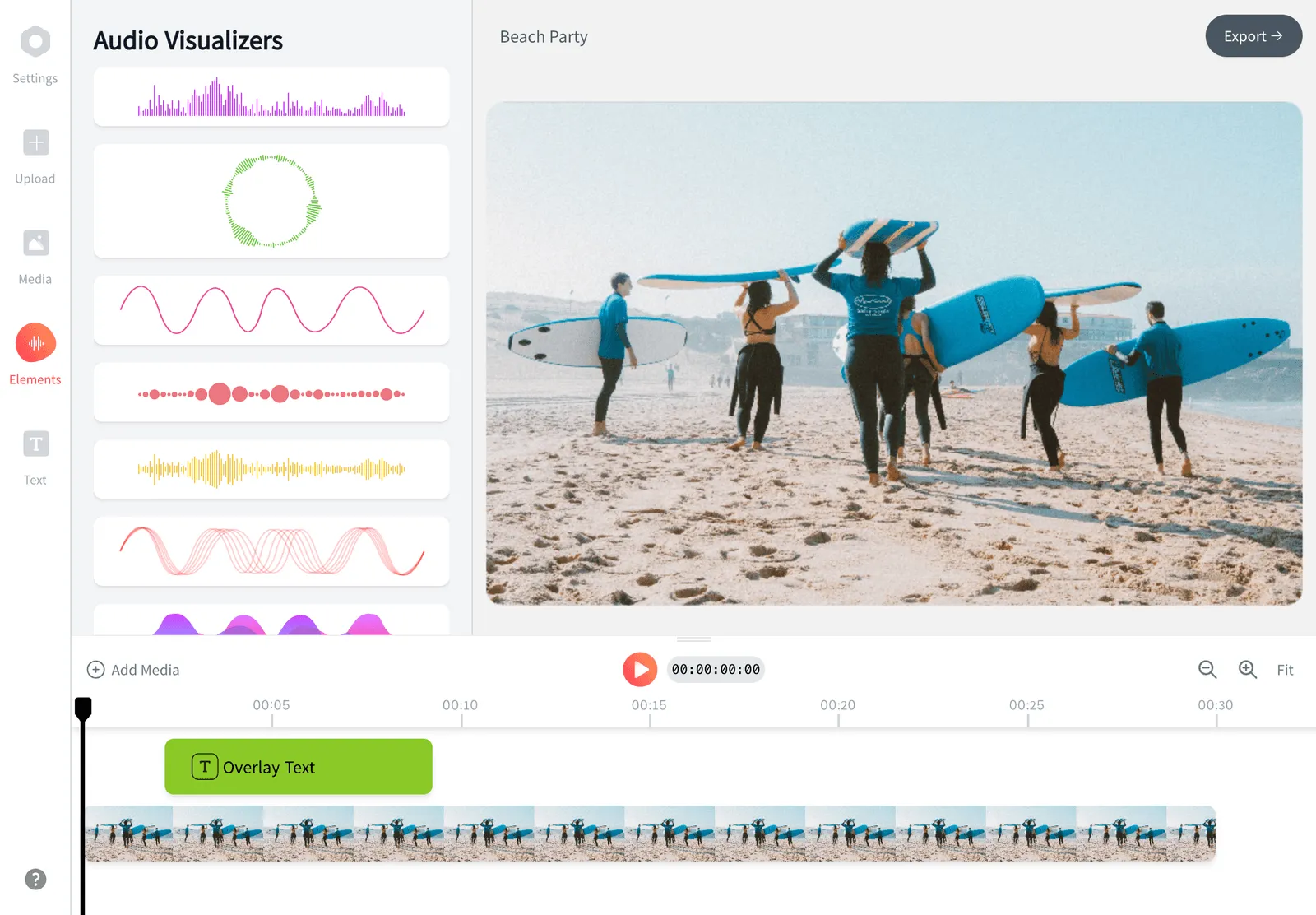
You do not need a separate video editor. With EchoWave you can turn the finished audio into a shareable video right in your browser, free:
- Podcast to video. Drop in the episode audio, add your cover art or the guest's photo, and export a clean MP4 ready for YouTube or Facebook.
- Audio waveform video. Add an animated waveform that pulses with the voice, so a static image still feels alive in the feed.
- Audiogram clips. Cut a 30 to 60 second highlight, add it to a square or vertical frame, and post it as a teaser. Short audiograms are the most reliable way to grow a podcast on social.
- Captions and subtitles. Add captions so the clip works with the sound off, which is how most people scroll. You can also convert the audio to text for show notes and SEO.
Everything runs in the browser, with no install, so you can go from a finished remote recording to a posted video clip in a few minutes.
Sources & further reading
- Starting a computer recording, Zoom Support
- Changing audio settings during a Zoom meeting, Zoom Support

About the EchoWave team
EchoWave is a browser-based video and audio editor built by Lemon Vault LLC since 2018. The people who build the editor write these guides and test every step in the production app before publishing.
Remote Podcasting FAQ
How do I record a podcast remotely and keep it high quality?
Record each person locally rather than recording the live video call, because the call is compressed. Use dedicated podcast software like Riverside or Zencastr, or run a double-ender where everyone records their own mic. Make sure each person selects their real USB or XLR microphone, wears headphones, and records 48 kHz WAV with a separate track per speaker.
What is the best way to record a podcast remotely?
For most shows, dedicated browser-based podcast software is best. Tools like Riverside, Zencastr, and Descript record each guest locally and upload the high quality file afterwards, so internet dropouts never reach the final recording. Your guest just clicks a link, with nothing to install. The double-ender method matches the quality for free but asks more of your guest.
Can I record a podcast remotely for free?
Yes. Zencastr and Riverside both have free tiers that record separate tracks. Zoom is free for calls up to 40 minutes. A double-ender costs nothing because everyone records locally with free apps like Audacity, QuickTime, or GarageBand, then you sync the tracks in a free DAW. Turning the episode into a video is also free with EchoWave.
How do I record a phone call for a podcast?
First check that call recording is legal where you both are, and tell your guest you are recording. On Android, Google Voice can record calls (Settings, Calls, Incoming Call Options, Record Calls). On iPhone, recent iOS versions include call recording in the Phone app. For better quality, route the call through a podcast mixer so the host and the phone land on separate tracks.
Is Zoom good for recording a podcast?
Zoom is easy and free, but it compresses audio for the live call, so the recording sounds thinner than dedicated podcast software. If you use it, turn on Record a separate audio file for each participant, and enable Original Sound for Musicians with High Fidelity Music Mode (48 kHz, up to 192 kbps). For the best quality, have everyone also record locally and use Zoom only as the video reference.
What is double-ender recording?
A double-ender is when every person records their own microphone locally on their own device while you talk over a normal video call, and the host also records everything as a backup. Each guest sends their local file afterwards and you sync the tracks in a DAW. It delivers studio quality for free, but needs a tech-comfortable guest who remembers to record and send their file.
How do I record a podcast with guests in different locations?
Use a remote recording platform like Riverside, Zencastr, or Descript that supports multiple participants over the internet. You send a link, everyone joins in the browser, and each microphone is recorded locally and uploaded as a clean separate track. This works the same whether your guests are in the next city or another country.
How do I keep recordings in sync in a double-ender?
At the very start of the session, do a countdown and a single loud clap on camera. The clap appears as a sharp spike in every recorded track. In your editor, drag each track until the spikes line up and the whole episode is synchronized. Recording everyone at the same 48 kHz sample rate prevents slow drift over a long episode.
Why does my guest sound bad or echoey?
Echo almost always means your guest is not wearing headphones, so their speakers leak your voice back into their mic. Have everyone wear headphones. Thin or robotic audio usually means you recorded the compressed call instead of recording locally, or the guest used a laptop mic. Switch to a real mic and a tool that records each person locally.
What sample rate and format should I record a podcast at?
Record at 48 kHz and save lossless WAV files while editing, then export the final episode as MP3 or AAC for publishing. 48 kHz matches the video standard, so if you also publish a video version of the podcast, the audio and video stay locked together.
How do I remove background noise from a remote recording?
Prevent it first by recording in a quiet, soft-surfaced room with fans and notifications off. During the call, real time tools like Krisp suppress clicks and hum. After recording, use the AI cleanup or studio sound feature in your podcast software, but apply it gently. Heavy noise removal makes voices sound underwater.
How do I turn my remote podcast into a video for YouTube?
Upload the episode audio to EchoWave's podcast to video tool, add your cover art or the guest's photo, and optionally an animated waveform and captions, then export an MP4. It runs free in your browser, so you can publish a video version for YouTube, Facebook, and Instagram without a desktop video editor.
Recorded your episode? Turn it into video. Free, in your browser
Add cover art, a waveform, and captions, then export a YouTube and social ready MP4 in minutes. No credit card required, free plan includes a small EchoWave.io watermark.
Turn your podcast into video