Add Stickers to Video Online, Free
Drop emojis, animated stickers, shapes, text and your own logo straight onto your video in the browser. Position each one exactly where you want it, set when it appears, and export with no software to install.

Add Stickers to Video Online, Free Features
Echowave is used by thousands of businesses around the world





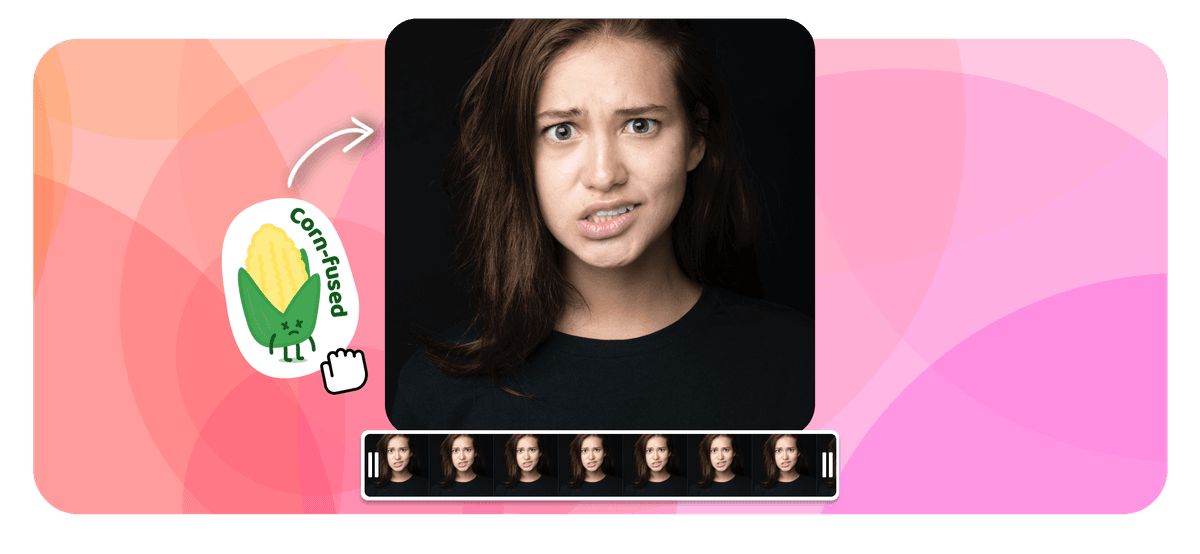
To add stickers to video online, upload your clip to EchoWave's free editor, open the sticker and elements panel, then drag an emoji, animated sticker, shape or your own image onto the canvas. Resize it, position it, and set the seconds it stays on screen. When it looks right, export the finished video straight from your browser. EchoWave works as a free video sticker maker in the browser, so you can add stickers to video on PC, Mac, iPhone or Android with nothing to install.
Why add stickers to video
Stickers do real work on a clip. A bright arrow points viewers at the thing that matters. A subscribe or follow sticker turns passive watchers into followers. An emoji reaction makes a talking-head video feel alive instead of flat. A logo in the corner brands every second of the footage even when someone reposts it without credit.
The most common reasons people add stickers are social engagement (reactions, polls-style callouts, trend graphics), branding (a logo, a handle, a website URL), and clarity (arrows, circles and highlights that direct attention). EchoWave handles all three in one place, and because it runs in the browser there is nothing to download and no account needed to start.
How adding stickers works in EchoWave
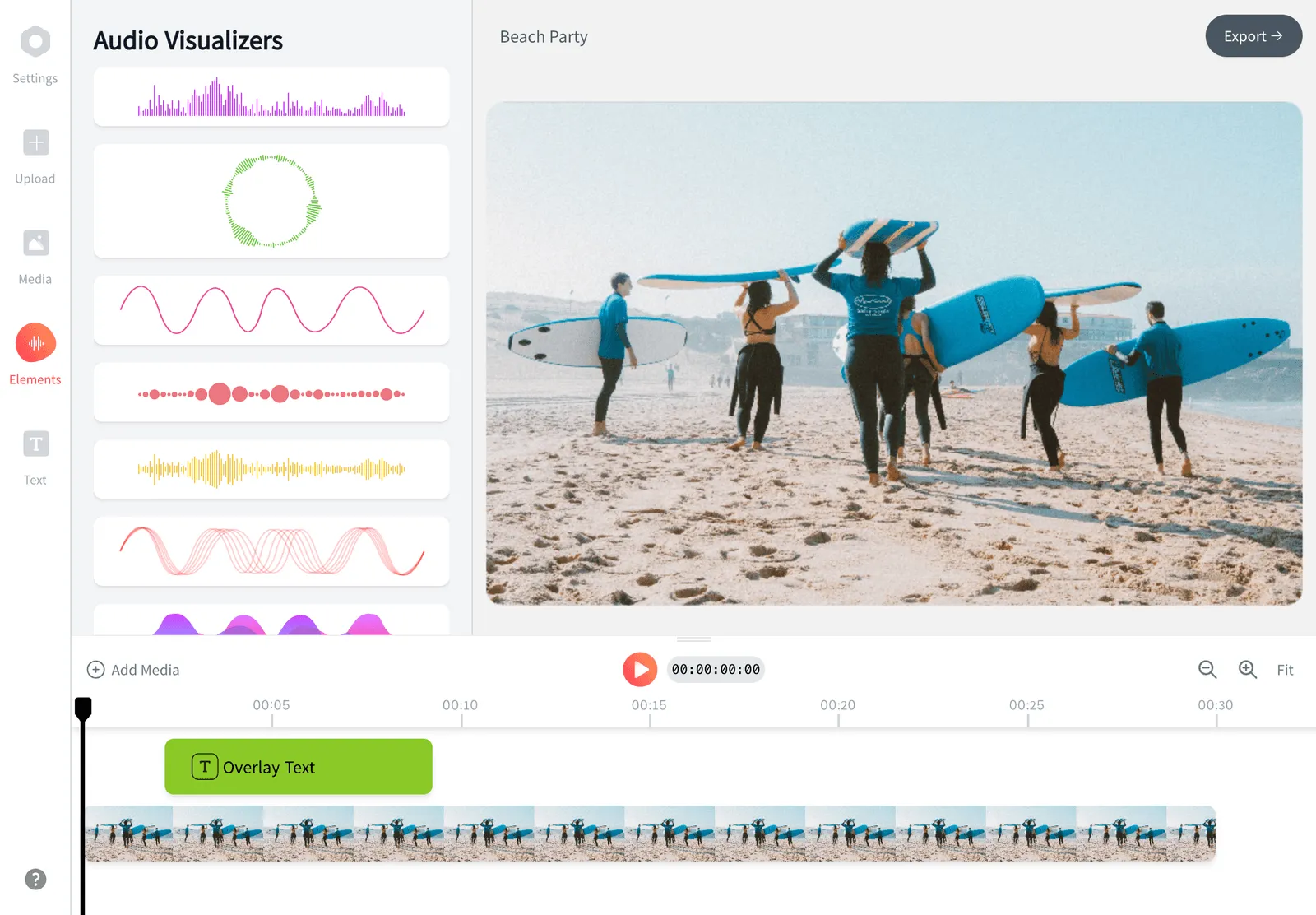
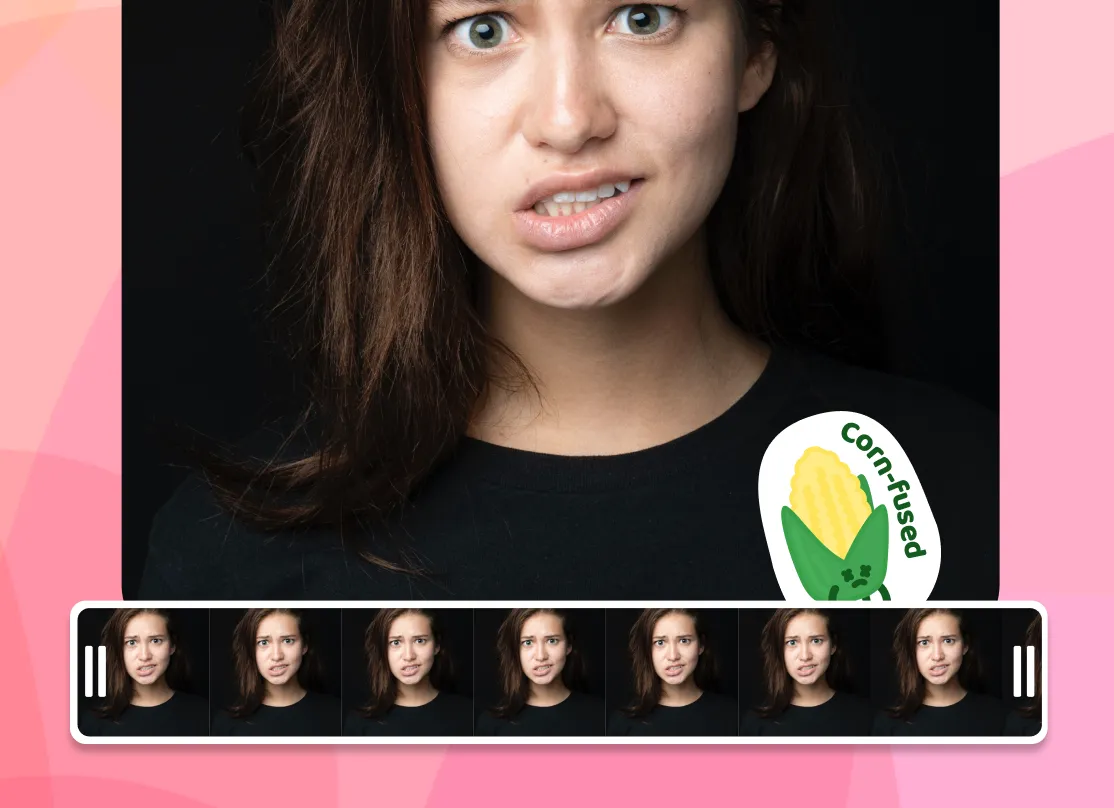
Every sticker you add becomes its own layer on a visual timeline, so you stay in control of what shows when. Drop a sticker on the canvas and you can drag it anywhere, scale it by the corner handles, and rotate it freely. On the timeline you trim the sticker layer so it appears at, say, 0:04 and disappears at 0:09 rather than sitting on screen the whole time.
You are not limited to a built-in library. The elements panel includes emojis, vector shapes, lines and arrows, animated stickers and text labels, and you can upload your own PNG, JPG, SVG, GIF or WebP to use as a custom sticker. Transparent PNG and SVG files keep clean edges with no white box around them, which is what you want for a logo or a cut-out graphic.
Because stickers are layers, you can stack several at once, line them up, and reorder which sits on top. Multiple stickers can play at different times across the same clip, so a single video can open with a logo, show an arrow halfway through, and end on a follow sticker.
Real ways creators use it
Short-form creators add a subscribe or follow sticker near the end of TikTok, Reels and Shorts so the call to action lands while people are still watching. Reaction emojis and speech-bubble stickers punch up commentary and reaction videos. Product sellers drop a price tag or arrow on the feature they want buyers to notice.
Businesses keep a logo sticker in a fixed corner for the full clip so reposts carry the brand. Teachers and explainer creators use circles and arrows to highlight the exact button or word they are talking about. Event and birthday videos get confetti, balloons and themed graphics. If you regularly add the same logo, our add a logo to video tool is built for exactly that, and add text to video covers captions and titles.
Supported formats, sizes and quality
EchoWave accepts the common video formats: MP4 (H.264 and H.265/HEVC), MOV, WebM, AVI, MKV and more. For video sticker files you can upload PNG, JPG, SVG, GIF and WebP. Use a transparent PNG or SVG when you need the sticker to sit on the footage without a background box.
You can size the canvas for any platform before you export. Vertical 9:16 is right for TikTok, Instagram Reels and YouTube Shorts, square 1:1 suits feed posts, and 16:9 is standard for YouTube and most landscape video. Keep important stickers inside the safe area, away from the very edges, because platforms overlay their own buttons and captions there. Exports are rendered on EchoWave's servers, not squeezed by your phone, so the output keeps its resolution and the sticker edges stay crisp.
Platform-specific tips
For TikTok, Reels and Shorts, build on a 9:16 canvas and keep stickers clear of the bottom-right corner and the lower third, where the app puts its own icons and caption. For a YouTube end screen, leave the last five to ten seconds a little open so a subscribe sticker has room to breathe. For Instagram feed posts, 1:1 or 4:5 keeps more of the frame visible than 16:9. Knowing how to add a sticker to a video before you upload, rather than inside each app, means the same branded clip is ready to post everywhere without redoing the work. To add stickers to video on a PC, simply open EchoWave in your desktop browser and drag your footage in: no separate sticker app or download needed.
Privacy, price and what to expect
Editing happens in your browser, so your footage is not handed around between third-party apps while you work. EchoWave is free to use: you can add stickers, position and time them, and export without paying. Free exports carry a small EchoWave watermark, which you can remove by upgrading to a paid plan. If you only need a quick edit with no watermark at all, EchoWave's dedicated quick tools such as crop, trim and compress export with no watermark.
One honest limit worth knowing: stickers sit at a fixed spot on the frame and do not auto-track a moving face or object the way some phone apps do. For most overlays, logos and calls to action that is exactly what you want. If you need a graphic pinned to a face that moves around the shot, a motion-tracking mobile app is the better fit.
Works on any device and browser
EchoWave runs in modern browsers on Windows, macOS, Chromebook, Linux, iPhone, iPad and Android. Chrome, Edge, Safari and Firefox are all supported, with nothing to install and no plugin to add. You can start a project on a laptop and finish it on a phone since everything lives in the browser, which makes it handy for adding stickers on a PC when your footage is already on your desktop.
How to add stickers to a video
Add stickers to any video online in three steps:
-
1. Upload your video
Open the EchoWave editor and upload the clip you want to decorate. MP4, MOV, WebM and more are all supported.

-
2. Add and place your stickers
Open the elements panel, pick an emoji, animated sticker, shape or upload your own image, then drag it onto the canvas, resize it and set when it appears.

-
3. Export your video
Preview the result and export the finished video with your stickers straight from the browser, ready to share.
How creators use EchoWave in real projects
Why add stickers to a video?
Call-to-action stickers
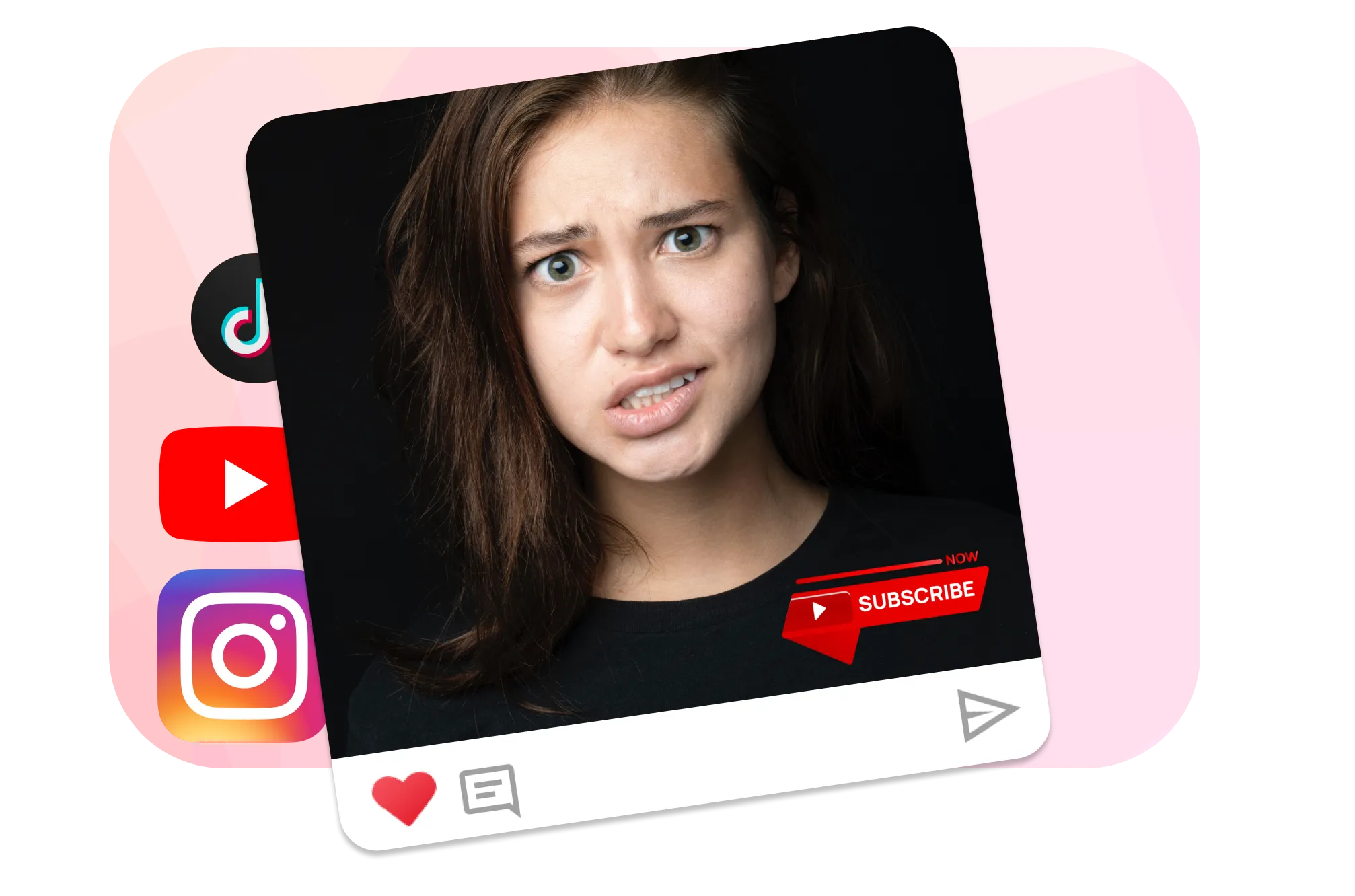
A call-to-action sticker is one of the simplest ways to get a result from a video. A subscribe, follow or swipe-style sticker placed near the end nudges viewers to act while they are still watching, and an animated arrow or website URL points them exactly where to go next.
Custom logo and brand stickers
Upload your logo as a transparent PNG and keep it in a fixed corner so every clip stays branded, even when it gets reposted without credit. You can also build custom stickers in your brand colours and fonts, or add a handle, tagline or website so viewers always know where the video came from.
How to add stickers to a video step by step
- Open the EchoWave editor and upload your clip. MP4, MOV, WebM, AVI and MKV all import, and the file lands straight on the timeline.
- Set the canvas ratio before you place anything: vertical 9:16 for TikTok, Reels and Shorts, 1:1 for a square feed post, 16:9 for YouTube. Choosing it first means you never have to reposition stickers after a crop.
- Open the elements panel and pick your sticker: an emoji, a shape, an arrow, an animated sticker or a text label. To use your own artwork, upload a PNG, JPG, SVG, GIF or WebP instead.
- Drag it onto the canvas. Resize it from the corner handles, rotate it, and move it where it belongs. The align and distribute controls space several stickers evenly when you are placing a row of them.
- Set its timing. Trim the sticker's layer on the timeline so it appears at the second you want and leaves when it has done its job. A sticker left at full length stays on screen for the whole clip.
- Stack as many as the clip needs. Every sticker is its own layer, so reorder them to change which sits in front, and give each one its own in and out point.
- Preview from the start, then export. The render bakes each sticker into the finished video, so the graphics travel with the file wherever it gets uploaded.
The whole thing runs in the browser, so adding a sticker to a video takes a couple of minutes and there is no app to install first.
Types of video stickers and what each one is for
Emoji stickers. The fastest reaction layer: a laughing face on a punchline, a fire emoji on a highlight, a thinking face on a question. There is a full emoji set in the elements panel, and the dedicated add emoji to video tool covers this on its own when emojis are all you need.
Animated and GIF stickers. Movement pulls the eye, which is why an animated arrow beats a static one for pointing at something. The panel includes animated stickers, and you can upload your own animated GIF or WebP as a custom sticker. If you need to make the GIF first, the GIF maker turns a clip into one.
Shapes, arrows and highlights. Circles, boxes, lines and arrows do the explaining in tutorials and product demos: ring the button you are talking about, arrow the setting you just changed, box the number that matters. The annotate video workflow is built around exactly this.
Text and speech bubble stickers. A short label, a price, a name tag or a comment bubble over a talking head. Text carries full styling, so a label can match your brand font and colors instead of looking bolted on. For captions and titles proper, add text to video is the focused tool.
Logo and brand stickers. Your own mark, uploaded as a transparent PNG or SVG and parked in a corner for the full clip. This is the sticker to reuse on every video you publish, and add a logo to video is built around it.
Call to action stickers. Subscribe, follow, link in bio, swipe. These earn their place in the last few seconds, while people are still watching and before they scroll on.
Seasonal and event graphics. Confetti and balloons on a birthday clip, hearts on a wedding edit, themed artwork for a holiday post. Upload your own graphics when you want something specific to the occasion.
Adding stickers for TikTok, Instagram and YouTube Shorts
Each of those apps has its own sticker drawer, so it helps to know when to use theirs and when to bake stickers in beforehand.
TikTok. In-app stickers are quick, but they only exist inside TikTok's editor. Repurpose the same clip for Reels or Shorts and you rebuild them from scratch, and a copy downloaded back out of the app comes with TikTok's own watermark across it. Building on a 9:16 canvas here and exporting a finished file means one edit posts everywhere. Keep stickers out of the bottom third and away from the right edge, where the caption, the username and the action buttons sit.
Instagram Reels and Stories. What is visible in a Reel shifts depending on where it surfaces in the app, so keep anything that matters, a call to action above all, in the middle band of the frame rather than hard against the top or bottom. For a feed post, 1:1 or 4:5 shows more of the frame than 16:9 and leaves more room to place graphics.
YouTube Shorts. Same vertical 9:16 frame and the same rule about the bottom right corner. On longer landscape uploads, a corner logo sticker running the full length of the video is the convention, because it brands the clip even when someone else re-uploads it.
The common thread: a sticker burned into the file is permanent and portable, while a sticker added inside an app lives and dies in that app. If a clip is going to more than one platform, or you want the branding to survive a repost, add the stickers before you upload.

About the EchoWave team
EchoWave is a browser-based video and audio editor built by Lemon Vault LLC since 2018. The people who build the editor write these guides and test every step in the production app before publishing.
Frequently Asked Questions
How do I add stickers to a video online?
Upload your clip to the EchoWave editor, open the elements panel, then drag an emoji, animated sticker, shape or your own image onto the canvas. Resize and position it, set when it appears, and export the finished video from your browser.
Is it free to add stickers to a video?
Yes. You can add, place and time stickers and export at no cost. Free exports include a small EchoWave watermark, which you can remove on a paid plan.
Do I need to download an app or create an account?
No. EchoWave runs in your browser, so there is nothing to install. You can start adding stickers without an account, and you only need one when you save a project or export.
Can I upload my own sticker or logo?
Yes. Upload a PNG, JPG, SVG, GIF or WebP and use it as a custom sticker. Transparent PNG and SVG files keep clean edges with no background box, which is ideal for logos and cut-out graphics.
Can I add animated and moving stickers?
Yes. The elements panel includes animated stickers, and you can upload animated GIF or WebP files of your own to bring movement to the clip.
How do I add stickers to a TikTok, Reels or Shorts video?
Build your project on a 9:16 vertical canvas, place the stickers, and keep calls to action clear of the bottom-right corner where the app shows its own buttons. Export the video, then upload it to TikTok, Instagram or YouTube as normal.
What is a video sticker?
A video sticker is a graphic layered over your footage: an emoji, an animated GIF, a shape or arrow, a speech bubble, a call to action like subscribe, or your own logo. It sits on its own layer above the video, so you control where it appears in the frame and for how many seconds. When the video is exported, the sticker is rendered into the file itself.
How do I add GIF stickers to a video?
Upload an animated GIF or WebP and drop it onto the canvas like any other sticker, then resize, position and time it on the timeline. The elements panel also has animated stickers built in. To make the GIF from a clip first, use the GIF maker.
How many stickers can I add to one video?
As many as the clip needs. Each sticker is a separate layer, so you can stack several at once, reorder them to change which sits in front, and give each one its own start and end time. A single video can open with a logo, show an arrow halfway through and finish on a follow sticker.
Where should I place stickers so the app buttons do not cover them?
On vertical 9:16 video, keep stickers out of the bottom third and away from the right edge: that is where TikTok, Reels and Shorts put the caption, username, like, comment and share buttons. The middle band of the frame is the safest place for anything that has to be read, especially a call to action.
Do stickers stay on the video when I upload it to TikTok or Instagram?
Yes. Stickers added here are rendered into the exported file rather than sitting in an app's editor, so they travel with the video to every platform and survive a repost. That is the advantage over adding stickers inside TikTok or Instagram, where the graphics only exist in that app and have to be rebuilt for each one.
Can I add stickers to a video without a watermark?
Sticker work runs through the full EchoWave editor, and free exports from it carry a small EchoWave watermark and are capped at 720p. A paid plan removes the watermark and raises the export resolution. The dedicated quick tools such as crop, trim and compress export with no watermark, but they do not add stickers.
Can I control when a sticker appears and disappears?
Yes. Each sticker is its own layer on the timeline, so you can trim it to show only between specific seconds, and run several stickers at different points in the same video.
Can I add a sticker to a video on iPhone or Android?
Yes. EchoWave works in mobile browsers on iPhone, iPad and Android, so you can add stickers from your phone without installing anything.
Does the sticker follow a moving face or object?
No. Stickers stay at the position you place them rather than auto-tracking movement. For most overlays, logos and calls to action a fixed position is what you want; for a sticker pinned to a moving face, a motion-tracking mobile app is a better fit.
What video formats can I use?
EchoWave supports MP4 (H.264 and HEVC), MOV, WebM, AVI, MKV and other common formats. The export keeps your video's resolution since rendering runs on our servers.
Can I add emojis instead of stickers?
Yes. There is a full emoji set in the elements panel, or use our dedicated add emoji to video tool if that is all you need.
Will adding stickers reduce my video quality?
No. Stickers are layered over the footage and the whole project is re-rendered at its original resolution, so the underlying video quality stays the same.
Ready to add stickers? We have a free plan!
No credit card required, our free plan includes a small Echowave.io watermark.
Get Started →