Add Image to MP3 Online, Free
Add an image to your MP3 in the browser with EchoWave's free online video editor. Embed it as cover art so the file stays a .mp3, or render an MP4 video with your picture on screen for YouTube. No account, no software to install.

Add Image to MP3 Online, Free Features
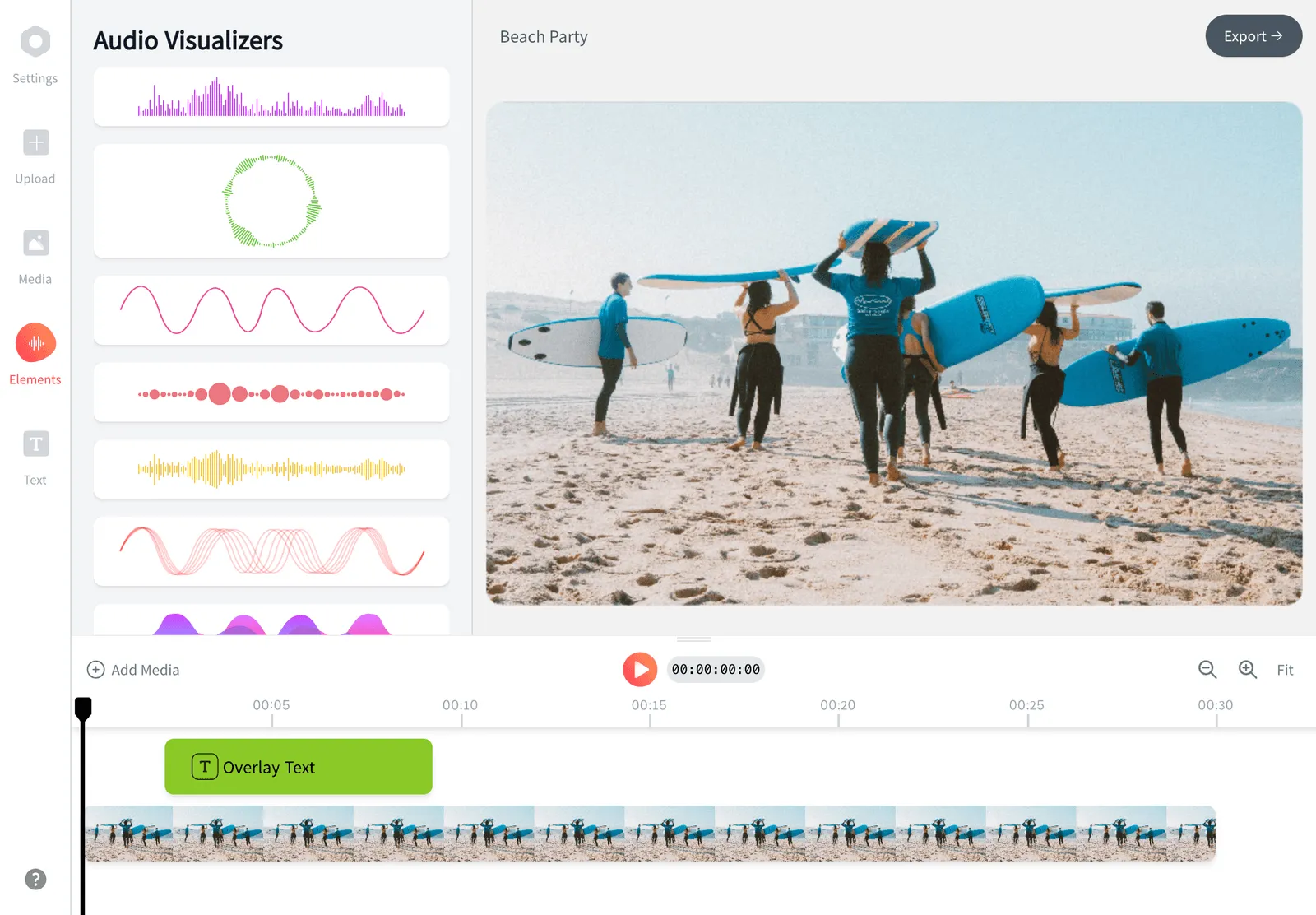
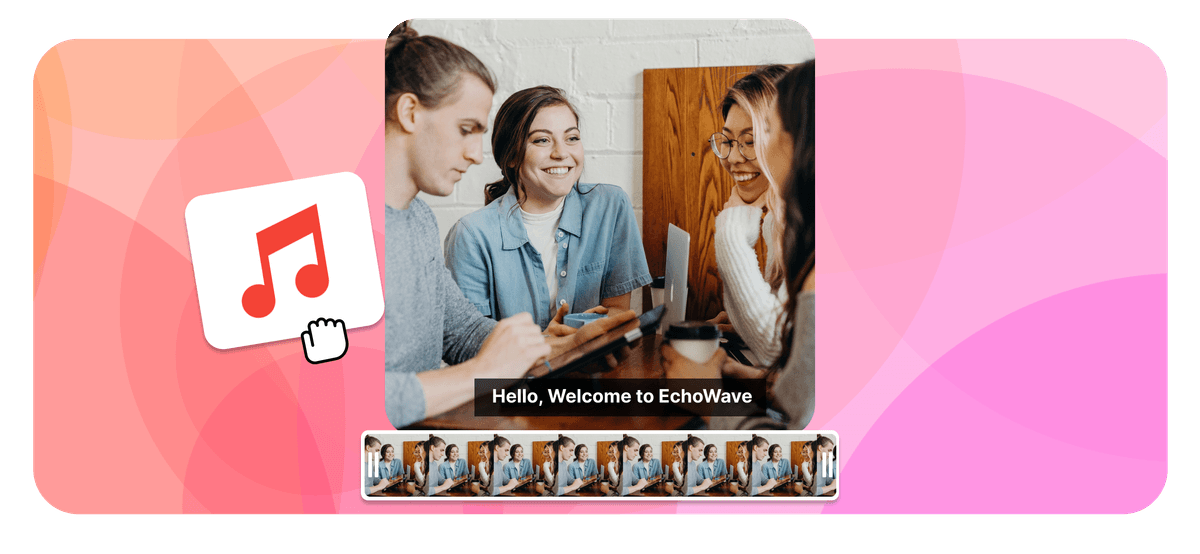
To add an image to an MP3 online free, open EchoWave, upload your audio, click 'Add Image' to drop in a JPG or PNG, then export. You can add a picture to your MP3 as ID3 cover art so the file stays a .mp3, or merge the image and audio into an MP4 music video with the photo on screen for YouTube. It all runs in your browser, with no account and nothing to install.
Echowave is used by thousands of businesses around the world





How to add an image to an MP3 file
Three steps, start to finish, in your browser.
-
1. Upload your MP3
Click 'Upload' on the editor page, or drag and drop your audio into the upload area. MP3, WAV and M4A files all work.

-
2. Add your image
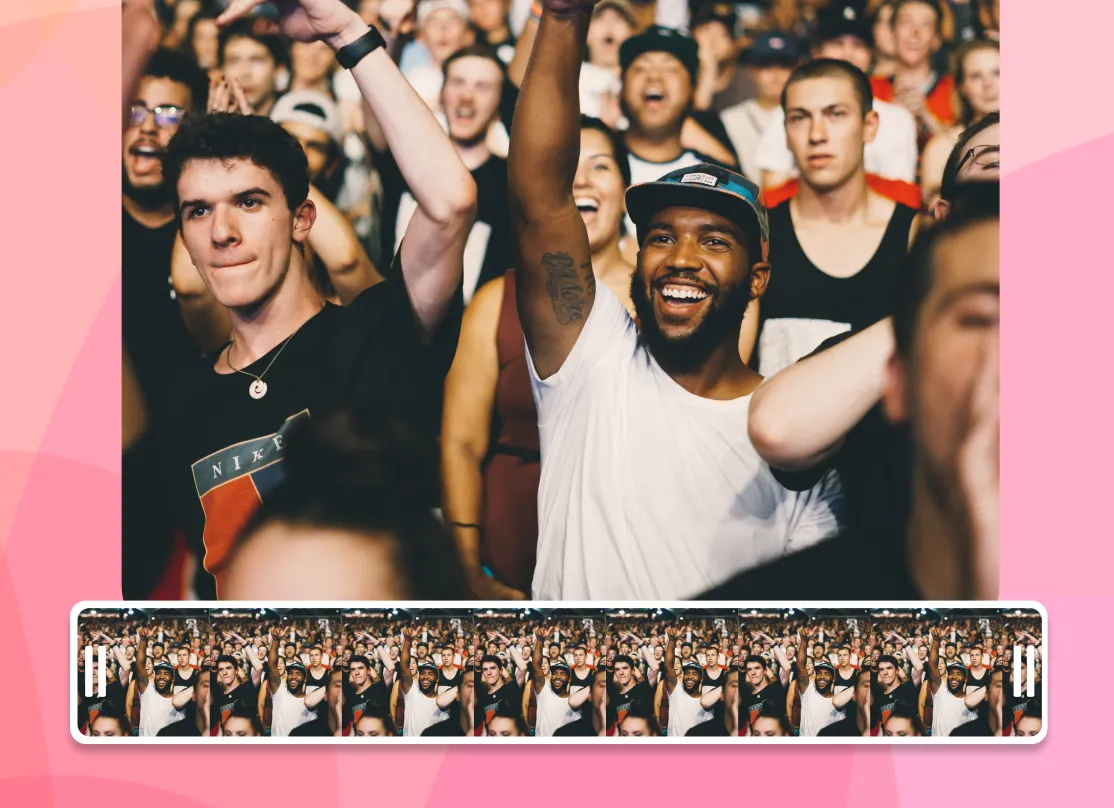
Click 'Add Image' and choose a JPG or PNG. Resize, reposition and apply filters until your picture sits exactly where you want it.
-
3. Export and download
Pick cover art to keep an .mp3, or MP4 to make a music video, then click 'Save and Download'. Your file is ready to share.
What people are saying about EchoWave
Cover art or music video: pick the right output first
When people search for how to add an image to an MP3, they usually want one of two different results. EchoWave is a free online converter that adds an image to audio and does both, and choosing the right one up front saves you a re-export. Whether you call it adding a picture to an MP3, adding a photo to audio, or an image and audio merger, the workflow is the same.
Embed ID3 cover art, and the file stays a .mp3. This tucks your picture inside the audio file's metadata tags (the ID3 frame), so the artwork shows up in music players, car stereos, lock screens and podcast directories. The format does not change and playback is identical: it is the same MP3 with album art attached. Pick this when you are tagging a single, an album or a podcast episode for distribution.
Render an MP4 video with the image on screen. This wraps your audio in a real video file with the picture visible from the first second to the last. YouTube, Instagram, TikTok and Facebook do not play raw MP3s, so a static-image MP4 is how you publish audio there. Pick this when the goal is sharing rather than tagging. Our audio to video and MP3 to YouTube guides go deeper on the video route.
A quick rule of thumb: cover art for music libraries and podcast feeds, MP4 video for anything you upload to a social or video platform.
Add cover art (album art) to an MP3
To add cover art, upload your track, drop in a square image, and export with the cover-art option. EchoWave writes the picture into the file's ID3 tags so it travels with the song wherever it goes. Because the artwork is stored as a tag and the audio is never re-encoded, embedding cover art does not touch your sound quality and barely changes the file size: a 3000 by 3000 pixel JPG typically adds 500 KB to 1 MB to a track that is already several megabytes.
For the cleanest result, use a square image. Most players display album art at a 1:1 ratio and will crop or letterbox anything else. Spotify, Apple Podcasts and Spotify for Podcasters want artwork between 1400 by 1400 and 3000 by 3000 pixels, so a 1500 by 1500 or 3000 by 3000 px JPG or PNG is a safe, future-proof choice. A landscape or portrait image still works, but expect it to be centre-cropped to a square in most apps.
Turn an MP3 into a video for YouTube and social
If you are releasing a track or clip to a video platform, export the MP4 option and your image becomes the full-screen frame for the whole runtime. Match the canvas to where the video is going:
- YouTube and YouTube Music: 16:9 (1920 by 1080) is standard. A 1280 by 720 image will upscale acceptably, but 1080p looks sharper.
- Instagram Reels, TikTok and YouTube Shorts: 9:16 vertical (1080 by 1920).
- Instagram feed and square posts: 1:1 (1080 by 1080).
Because the picture stays still while the audio plays, file size and render time stay low compared with full-motion video. If you want the image to react to the sound, you can swap the static frame for a moving waveform with the audiogram creator, which is the format that performs best on social feeds.
Merge an image and audio in one online converter
EchoWave works as an image and audio merger, so you can add an image to audio and combine a picture with a sound file without juggling separate apps. The same flow lets you add a photo to audio or add a picture to audio: upload your sound, drop in the photo, and the online converter joins the two into a single output, an .mp3 carrying the image as cover art, or an MP4 that plays your picture over the audio. There is no desktop software and no sign-up, so you can merge image and audio from any browser in a few clicks. It is the quickest way to add image to MP3 files and turn a picture and an MP3 into one shareable file, whether you think of it as add picture to MP3 or add photo to MP3.
Supported formats and specs
When you add image to MP3 with EchoWave, the inputs stay broad so you can work with what you already have:
- Audio in: MP3, WAV and M4A.
- Images: JPG, PNG, GIF and BMP.
- Output: MP3 with embedded cover art, or MP4 video with the image on screen.
- Recommended cover art: square, 1500 by 1500 px or larger, JPG or PNG.
- Recommended video frame: 1920 by 1080 for YouTube, 1080 by 1920 for vertical, 1080 by 1080 for square.
If your audio is in a format the browser cannot read locally, the upload and server-side processing still proceed, so you are not blocked by a stubborn file.
Add an image to an MP3 on Windows, Mac, iPhone or Android
Because EchoWave runs in the browser, the steps are identical on every device: open the page in Chrome, Safari, Edge or Firefox, upload, add your image, and export. There is nothing to download and no codec pack to install.
That is the main advantage over the built-in options. On Windows you would normally tag cover art through a desktop app or File Explorer's details pane, and on a Mac you would use the Music app's Get Info window, one file at a time. Those work, but they only embed cover art and they cannot produce a shareable video. EchoWave handles both jobs in one place and works the same on a Chromebook, a Linux laptop or a phone.
Quality, privacy and limits
Embedding cover art is lossless: your MP3's bitrate and audio data are left exactly as they were, and only the tag changes. For the MP4 route, the audio is muxed into the video so the sound stays at its original quality while the image is encoded once at your chosen resolution.
EchoWave is free to use. The dedicated quick tools (crop, trim, compress, convert) export with no watermark. The full editor used for MP4 music videos adds a small, removable EchoWave watermark on the free plan, which a paid plan clears. There is no account required to start.
Common use cases
Adding a picture or photo to MP3 audio covers a surprising number of everyday jobs:
- Podcast artwork. Embed show or episode art so your podcast looks finished in Apple Podcasts, Spotify and every other directory.
- Music release to YouTube. Add an image to a single or full track and export an MP4 to publish an MP3 with a picture on YouTube without a separate editor.
- Audiograms for social. Pair a short clip with branded artwork to create a snippet built for Instagram, TikTok and LinkedIn.
- Album and mixtape tagging. Give a whole release consistent cover art before you distribute or share the files.
Turn an MP3 into an MP4 with an image
A raw .mp3 will not upload to most video platforms, so MP3 to MP4 with image conversion is how creators turn a song, voice memo or podcast clip into something shareable. EchoWave's MP4 output is a standard video file: your picture fills the frame from the first second to the last while your original audio plays underneath. It is encoded as regular H.264 video, so once you convert MP3 to MP4 with an image, the file opens and uploads anywhere, YouTube, a website, email, or a phone's camera roll, without a special player.
Before you export, pick the aspect ratio that matches where the video is going: 16:9 for YouTube and widescreen players, 1:1 for square feed posts, or 9:16 for Reels, Shorts and Stories. The image stays sharp at any of the three because EchoWave scales it to fill the canvas rather than stretching it.
For a closer look at the export settings, the audio to video converter guide covers the options in more detail, and once your MP4 is ready you can upload the result to YouTube just like any other video file.
Add images to your MP3s and albums

About the EchoWave team
EchoWave is a browser-based video and audio editor built by Lemon Vault LLC since 2018. The people who build the editor write these guides and test every step in the production app before publishing.
Frequently Asked Questions
How do I add an image to an MP3 file?
To add image to MP3 files, upload your MP3 to EchoWave, click 'Add Image', drop in a JPG or PNG, position it, then export. Keep it as an .mp3 with the picture as embedded cover art, or export an MP4 video with the image on screen.
How do I add cover art (album art) to an MP3?
Upload the track, add your square artwork, and export with the cover-art option. EchoWave writes the picture into the file's ID3 tags, so it stays a .mp3 and the artwork shows up in music players and podcast apps.
Can I add a photo or picture to an MP3 too?
Yes. Add photo to audio, add picture to audio or add image to audio: a photo, a picture and an image are all handled the same way. Upload your sound, add the JPG or PNG, and export it as cover art on the MP3 or as an MP4 video.
Can I turn an MP3 into a video with an image?
Yes. Choose the MP4 export to wrap your audio in a video with the image on screen the whole time, which is what you need for YouTube, Instagram, TikTok and other video-only platforms.
What is the best image size for MP3 cover art?
Use a square image. A 1500 by 1500 px JPG or PNG is a safe minimum, and 3000 by 3000 px meets the specs for Apple Podcasts and Spotify. Non-square images get centre-cropped by most players.
Is EchoWave free, and is there a watermark?
EchoWave is free to use. The full editor used for MP4 music videos adds a small, removable EchoWave watermark on the free plan, which a paid plan clears. The dedicated quick tools, like crop, trim and compress, export with no watermark.
Can I add more than one image to an MP3?
Yes. In the MP4 video route you can add several images and show them in sequence across the runtime, though only one image is on screen at a time. Embedded ID3 cover art holds a single picture.
Can I resize or reposition the image?
Yes. EchoWave lets you resize, reposition and apply filters to your image so it sits exactly where you want before you export.
What image formats are supported?
You can use JPG, PNG, GIF and BMP images, with MP3, WAV or M4A audio as the input.
How do I add an image to an MP3 on Windows or Mac?
EchoWave works in any browser, so the steps are identical on Windows, Mac, Chromebook, Linux, iPhone and Android. There is nothing to install, and unlike the built-in Music app or File Explorer it can also export a video, not just cover art.
Will adding cover art reduce my audio quality?
No. Cover art is stored as an ID3 tag rather than re-encoded into the sound, so embedding album art leaves your bitrate and audio data untouched. It adds roughly 0.5 to 1 MB to the file.
How long does processing take?
Embedding cover art into an MP3 is near-instant. Rendering an MP4 video takes a little longer depending on the audio length, but a static-image video stays quick because nothing in the frame moves.
Is my file uploaded somewhere, or does it stay private?
You can start editing right away with no account. Cover-art embedding happens in your browser, and video rendering is handled securely so your files are not shared or made public.
How do I convert an MP3 to MP4 with an image?
Upload your MP3 to EchoWave, click 'Add Image' to add a JPG or PNG, then pick the MP4 option instead of cover art when you export. That renders your MP3 to MP4 with an image in one pass, a standard video file with the picture on screen for the whole track, ready to upload anywhere.
What size should the image be for an MP3 video?
Match the aspect ratio to where the video is going: 1920x1080 (16:9) for YouTube, 1080x1080 (1:1) for square feed posts, or 1080x1920 (9:16) for Reels, Shorts and Stories. EchoWave scales your image to fill the frame, so a sharp JPG or PNG at or above those pixel dimensions will look crisp rather than blurry or stretched.
Ready to get started? We have a free plan!
No credit card required, our free plan includes a small Echowave.io watermark.
Get Started →