Add Audio to WMV
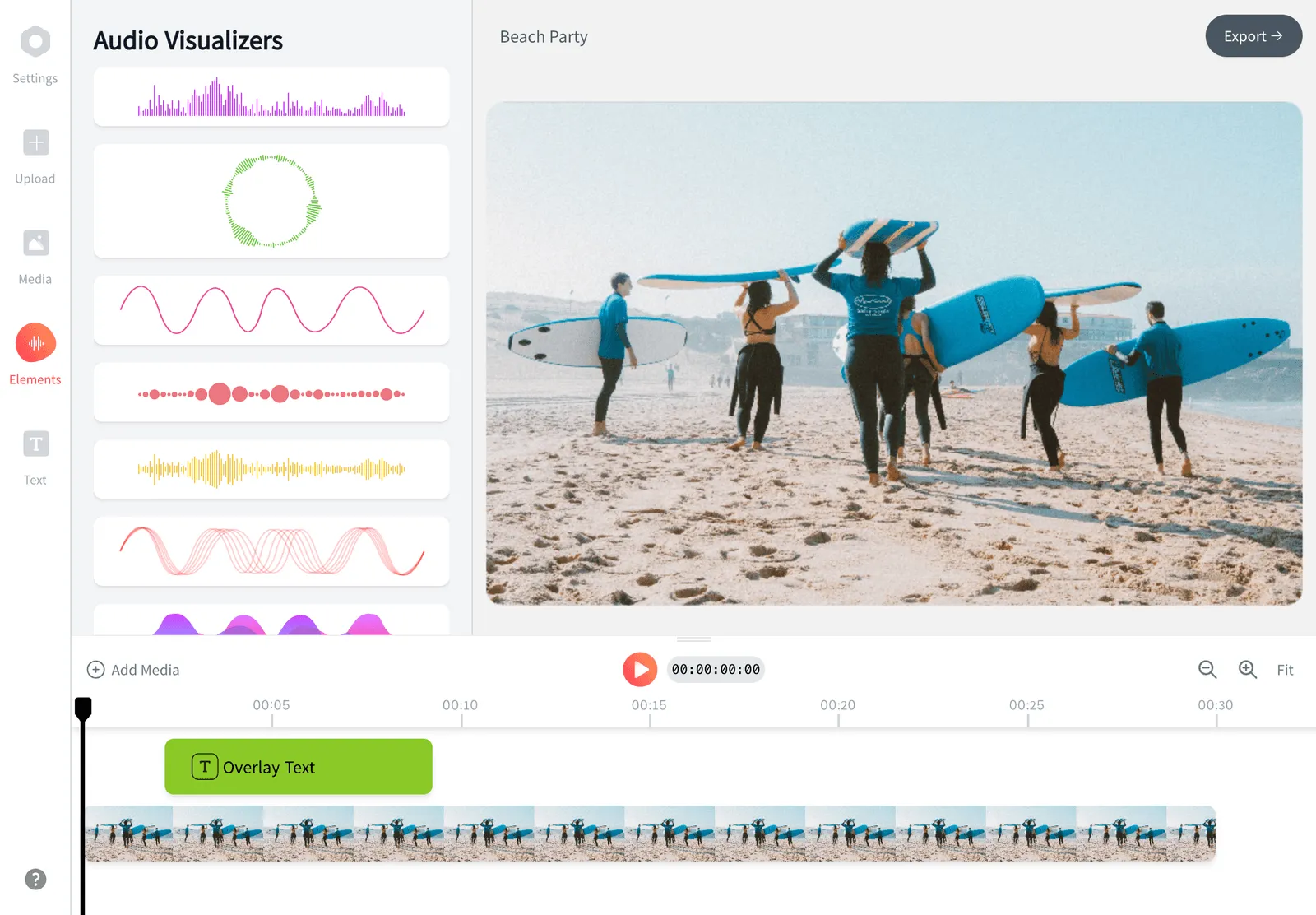
Drop a music track, voiceover, or sound effect onto your WMV video, line it up on the timeline, then export the finished file straight from your browser. No software install and no account needed.

Add Audio to WMV Features
Echowave is used by thousands of businesses around the world





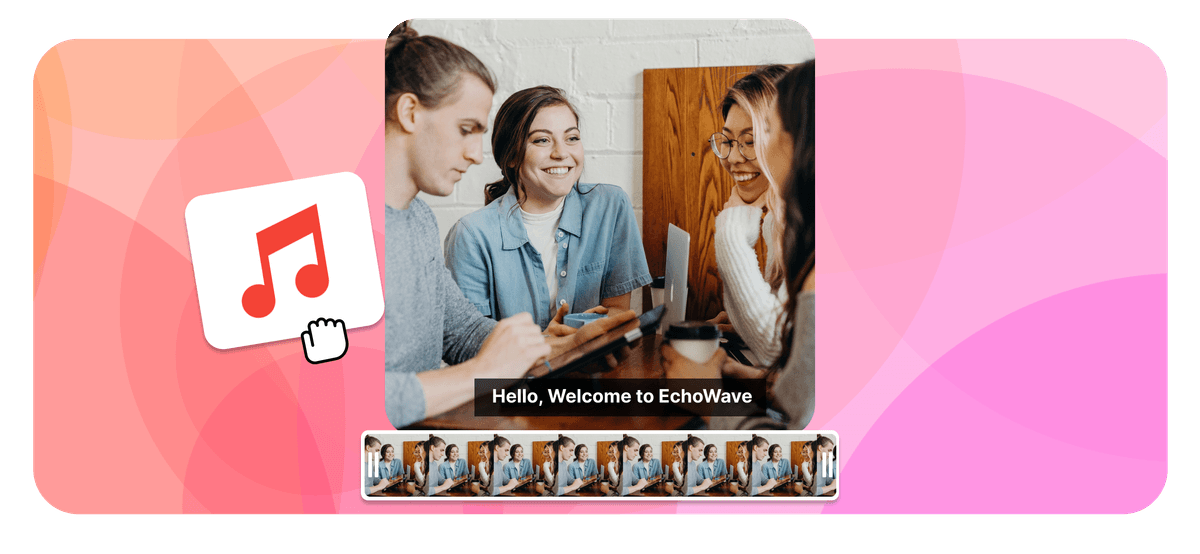
To add audio to WMV online, open EchoWave's free editor, upload your Windows Media video and your audio file, then drag the sound clip onto the timeline beneath the video. Trim it, set the volume or fade, mute the original track if you want, and export. It all runs in your browser, with nothing to install, so you can add audio to a WMV video without any download.
How to add audio to a WMV file
A WMV file is a Windows Media Video container (technically an ASF file) that usually holds a WMV3 or WMV9 video stream alongside a Windows Media Audio (WMA) track. When you add new audio, you are not editing the original clip frame by frame. You are placing a separate audio layer on a timeline and then exporting a new file where the video and your chosen sound are combined into one stream.
EchoWave handles this entirely in the browser. You upload the WMV, drop your audio onto its own track, and position it against the picture. You can keep the video's existing sound and mix the new audio on top, or mute the original so only your track plays. When you export, the editor renders both layers together and gives you a clean video you can download or share. Because the heavy lifting happens server-side after upload, you are not limited by what your own machine can decode, which matters with older WMV files that some local players choke on.
The editor is not a single-purpose converter. As a WMV audio editor it gives you a full timeline, so you can add several audio clips, edit the audio portion of the WMV, line up a voiceover with a specific scene, drop a sound effect on a cut, and adjust each one independently before you render.
What you can add to a WMV
Three kinds of audio cover almost every job, and you can combine all three in the same project:
- Background music. Set a mood or fill silence under footage. Pull a track from EchoWave's library of copyright-free music, or upload your own MP3 or WAV.
- Voiceover and narration. Record straight from your microphone in the editor, or upload a voice file. Useful for tutorials, product demos, explainer clips, and presentation recordings exported as WMV.
- Sound effects. Punch up transitions, button clicks, whooshes, or stingers by dropping short clips exactly where you need them on the timeline.
You can layer these together, for example a music bed under a voiceover with the original camera audio muted, and balance the levels so the narration stays clear over the music.
Supported audio and video formats
Upload audio in the formats people actually use: MP3, WAV, M4A, AAC, OGG, and FLAC. On the video side you can bring in a WMV, and EchoWave also reads MP4, MOV, AVI, MKV, and WEBM, so you are not stuck if your source ends up being something other than Windows Media.
WMV itself is built around the ASF container with a WMV9-class video codec and WMA audio. Modern browsers and phones do not always play WMV natively, which is why a lot of people add the audio and then export to a more portable format. EchoWave lets you export to MP4 (H.264), which plays everywhere, or keep things flexible depending on where the video is headed. If you specifically need the file back as a WMV for a Windows-only workflow or legacy system, plan to convert the export afterward, since MP4 is the safer default for web, mobile, and social.
Replace, mix, or mute the original WMV audio
When you add audio to a WMV file, most questions about the original WMV audio come down to one of three goals:
- Add music on top of the existing sound. Leave the original track playing and lay your music underneath at a lower volume. Good for adding atmosphere to footage that already has dialogue.
- Replace the audio completely. Mute the WMV's original track with the sound icon on the clip, then add your new audio as the only thing the viewer hears. This is the standard move when the source audio is unusable or you are putting a fresh narration over silent footage.
- Mute everything and start clean. Strip the sound entirely, then build the audio from scratch with music, voice, and effects placed exactly where you want them.
Because each audio clip sits on its own track, you can adjust volume, trim the start and end, and add fade-ins or fade-outs per clip rather than to the whole video at once.
Syncing and trimming so the audio lines up
Getting sound to match picture is the part people usually struggle with. On the timeline you drag an audio clip left or right to slide it earlier or later, then trim its edges to cut dead air at the front or a long tail at the end. Zoom in on the timeline to nudge a clip frame by frame when a sound effect needs to land on an exact cut.
For music, fades matter more than precise timing: a one to two second fade-in at the start and a fade-out at the end stops the track from beginning and ending abruptly. For voiceover, watch the levels so speech sits above the music bed, usually by lowering the music a good amount whenever someone is talking.
Quality, file size, and limits
When you add audio to WMV with EchoWave, the editor keeps your video at its source resolution rather than upscaling it, so a standard-definition WMV stays standard definition and an HD one stays sharp. Adding an audio track has almost no effect on visual quality, and exporting to MP4 with H.264 typically produces a smaller, more shareable file than the original WMV while looking the same.
A few practical notes: very long files take longer to upload and render, so trim before you start if you only need a section. If your WMV will not preview in the browser, that is usually a codec the browser cannot decode rather than a problem with the file itself, and the server-side export will still work. Keep an eye on audio levels so nothing clips or distorts on export.
Privacy, devices, and pricing
Everything starts in your browser, so you do not have to install Windows Media software or hand your footage to a desktop app. The tool runs on Mac, Windows, Linux, and ChromeOS in any modern browser, including Chrome, Edge, Safari, and Firefox, and works on a laptop or desktop where the timeline has room to breathe.
EchoWave is free to use. On the free plan, exports carry a small EchoWave watermark, which a paid plan removes along with adding higher export options. The audio library, microphone recording, multiple tracks, trimming, and fades are all available to start without paying.
How to Add Audio to a WMV File
Adding sound to a WMV is a quick, three-step job. Here is the whole process from upload to download:
-
1. Upload your audio
Open the editor and add your audio. Upload an MP3 or WAV, record a voiceover from your microphone, or pick a copyright-free track from the built-in library. Drop it onto the timeline as your sound layer.

-
2. Upload your WMV and sync
Add the WMV video you want to score. Line up the audio against the picture, trim it, and add fades. Mute the original WMV track with the sound icon if you only want the new audio to play.

-
3. Export and download
Hit export. EchoWave combines the video and audio into one file and gives you a download. MP4 (H.264) is the most compatible output for web, phones, and social.
How creators use EchoWave in real projects
Add Audio to WMV

Add music to a WMV
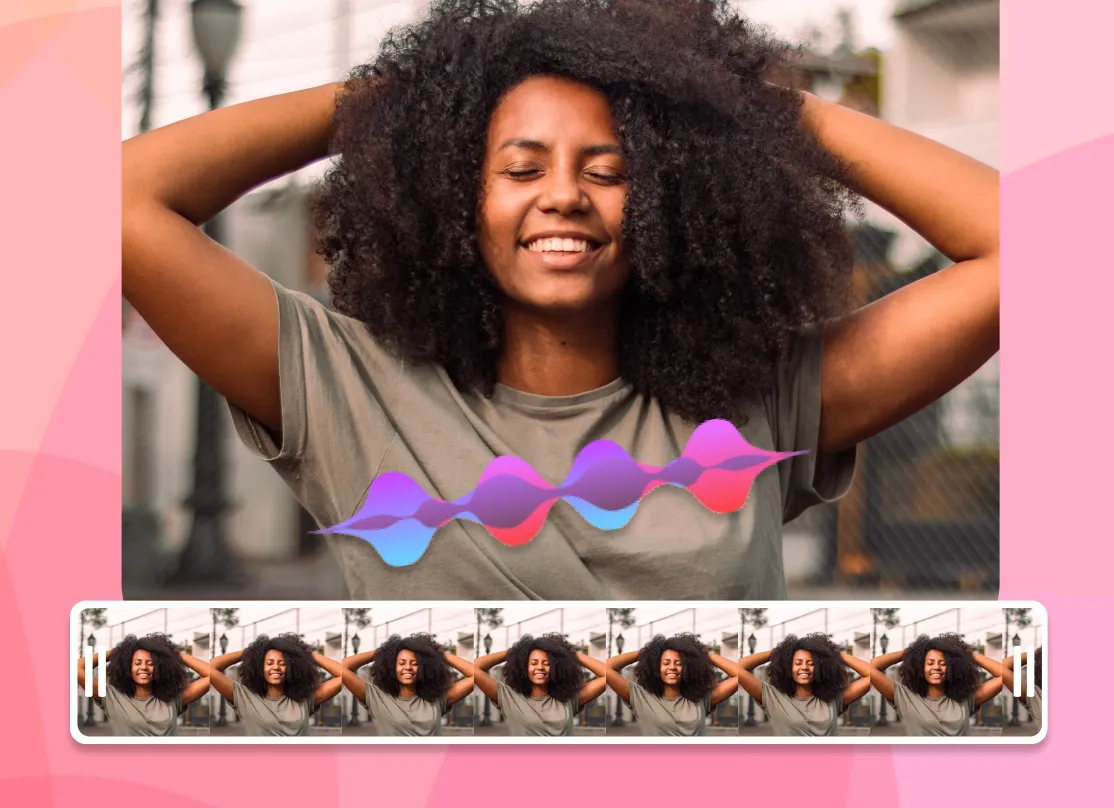
Improve your WMV videos with music using EchoWave's online video editor. To swap the existing audio or layer a new track on top, mute the current sound by clicking the speaker icon on the clip, then drop your chosen music onto the timeline. Set a volume that sits behind any dialogue, add a fade-in and fade-out, and you have a finished audiovisual mix that holds attention.
Add multiple audio tracks and edit them
EchoWave lets you stack several audio tracks on one WMV and edit each one on its own. Record straight from your microphone, then trim the result, shape it with the equalizer, and sync it precisely against the video on a detailed timeline. The library of hundreds of copyright-free tracks covers most moods and themes, and because rendering happens in the cloud, exports come back fast on any device, whether you are on Mac, Windows, Linux, or ChromeOS.

About the EchoWave team
EchoWave is a browser-based video and audio editor built by Lemon Vault LLC since 2018. The people who build the editor write these guides and test every step in the production app before publishing.
Frequently Asked Questions
How do I add audio to a WMV file online for free?
Open EchoWave's free editor, upload your WMV and your audio file, drag the audio onto the timeline under the video, trim and position it, then export. It runs in your browser with no install and no account.
Can I add music to a WMV without downloading software?
Yes. EchoWave is browser-based, so you add music, voiceover, or sound effects entirely online on Mac, Windows, Linux, or ChromeOS without installing anything.
How do I replace the audio in a WMV?
Click the speaker icon on the WMV clip to mute its original track, then add your new audio on its own timeline layer. On export, only your new audio plays over the video.
Can I keep the original WMV sound and add music on top?
Yes. Leave the original track unmuted and add your music as a second layer at a lower volume. Both play together in the exported file, which is ideal for adding a music bed under existing dialogue.
What audio formats can I add to a WMV?
You can upload MP3, WAV, M4A, AAC, OGG, and FLAC. You can also record a voiceover directly from your microphone or choose a copyright-free track from the built-in library.
Does the export stay as a WMV file?
EchoWave exports to MP4 (H.264) by default because it plays on virtually every browser, phone, and social platform. If you specifically need a WMV back for a Windows-only workflow, convert the MP4 afterward.
How do I add audio from one WMV to an MP4?
First extract the audio from the source WMV with an audio extractor, then upload that audio and your MP4 into EchoWave and place the sound on the timeline. You can also upload both files and rebuild the mix from scratch.
Will adding audio reduce my video quality?
No. EchoWave keeps the video at its source resolution and does not re-scale the picture. Adding an audio layer has essentially no effect on how the video looks.
How do I sync the audio with the video?
Drag the audio clip left or right on the timeline to slide it earlier or later, then trim its edges. Zoom in to nudge a sound effect onto an exact cut, and use fades to smooth music in and out.
Is my video private when I upload it?
Editing happens through your browser session and your files are not made public. EchoWave does not sell your footage, and you remove your projects whenever you like.
Is EchoWave really free, and is there a watermark?
The editor is free to use. Free exports include a small EchoWave watermark, which a paid plan removes. Multiple tracks, microphone recording, the music library, trimming, and fades are all available on the free plan.
Can I add audio to a WMV on my phone?
EchoWave works in mobile browsers, but the timeline is far easier to use on a laptop or desktop where you have room to position and trim clips precisely. A computer is recommended for anything beyond a quick edit.
Ready to add audio to your WMV file?
No credit card required, our free plan includes a small Echowave.io watermark.
Get Started →