Add a Watermark to Video Online, Free Logo and Text Marks
Add a watermark to your video online with EchoWave. Drop in a logo or text mark, set the position and opacity, and export your branded clip. It runs in your browser with no signup and nothing to install.


Add a Watermark to Video Online, Free Logo and Text Marks Features
To add a watermark to a video, upload your clip to EchoWave, add a text or logo watermark, drag it into a corner and lower the opacity, then export. The mark is baked into the file so it travels with the video wherever it is shared. Everything runs in your browser, free, with no signup.
Echowave is used by thousands of businesses around the world





How to add a watermark to a video
Watermark any clip in three steps. No account and no download required.
-
1. Upload your video
Drop your MP4, MOV, WebM or other clip onto the editor and add it to the timeline.

-
2. Add and position your watermark
Type a text mark or upload a transparent PNG logo. Drag it into a corner, set the size, and lower the opacity so it marks the video without hiding the action.

-
3. Export your watermarked video
Render the clip with the watermark burned in and download the finished file, ready to upload anywhere.

How creators use EchoWave in real projects
What a video watermark is
A watermark is a small logo, text mark or graphic layered over your footage to show who owns it. It usually sits in a corner of the frame and stays there for the whole clip. Most marks are kept semi-transparent so viewers can still see the video underneath while the brand stays visible.
In EchoWave the watermark is burned into the exported file. That matters: once it is rendered into the video, the mark travels with the clip even when it is downloaded, re-uploaded or reposted on another platform. A separate overlay or platform badge can be stripped, but a baked-in watermark cannot be removed without re-editing the video.
How adding a watermark works in EchoWave
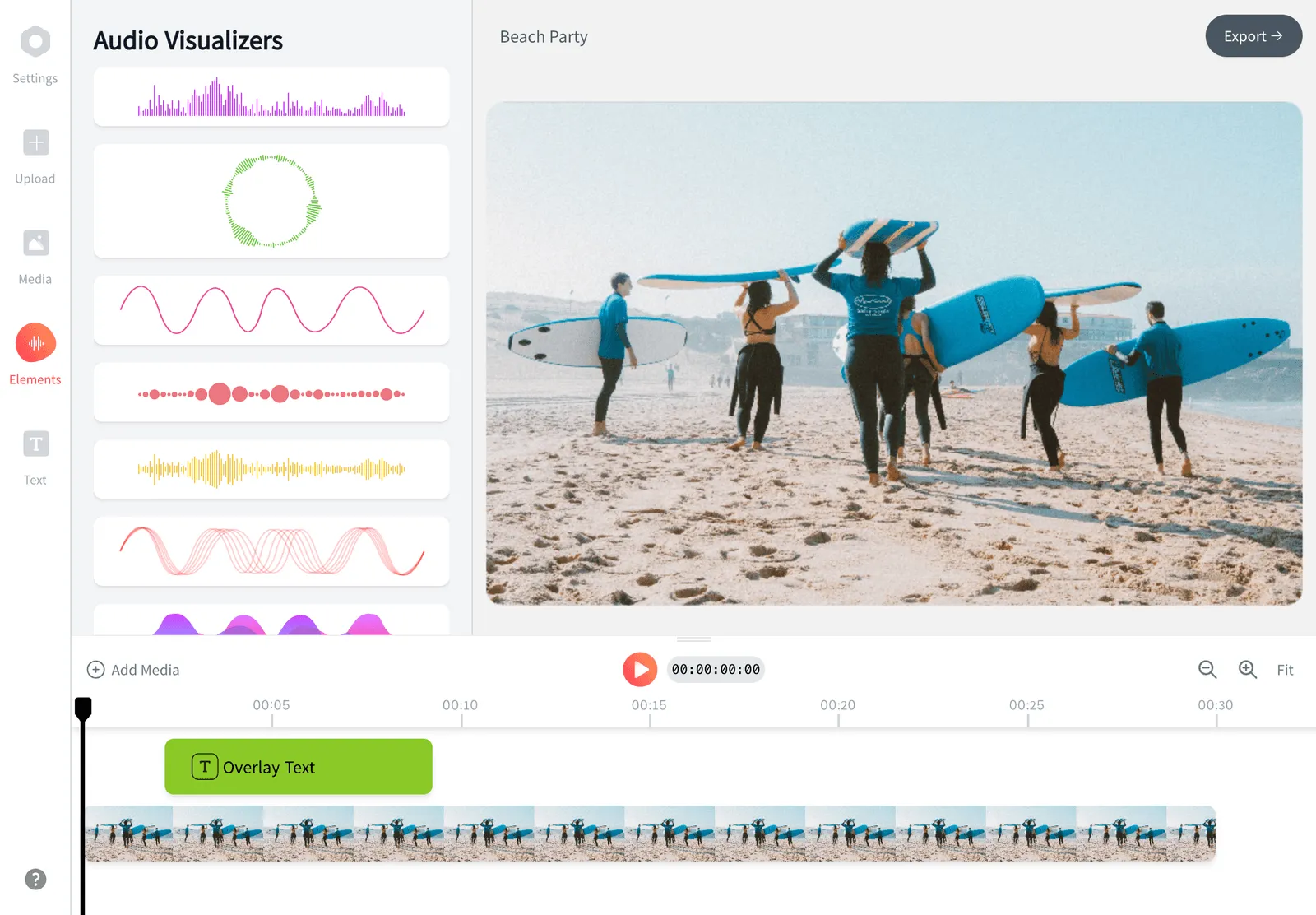
EchoWave is a browser-based editor, so there is no software to install and your video is processed without you needing an account to start. You upload a clip, add your mark on a layer above it, and the rendering step composites everything into a single new video file.
You have full control over the watermark. Drag it anywhere on the canvas, scale it up or down by the corner handles, and set the opacity so it reads clearly without covering the action. You can use a text mark, an uploaded logo, or both at once, and each layer is adjusted independently. Because the watermark sits on its own layer, you can also trim how long it appears, though for ownership you will usually want it on screen for the full duration.
Text watermark vs logo watermark
A text watermark is a line of type: your name, channel handle or website, set semi-transparent over the footage. It is the fastest option, needs no image file, and is ideal when you just want to mark ownership quickly. Pick a clean font, add a subtle drop shadow or outline if your footage is busy, and keep it small.
A logo watermark uses your brand mark, normally a PNG with a transparent background so only the logo shows and not a white box around it. It is the stronger choice for branding because viewers recognise a logo instantly. If you do not have a transparent file yet, a simple wordmark in text works almost as well. With EchoWave you can layer a logo and a line of text together, for example a logo bottom-right and a website handle bottom-left.
Where to place a watermark and what opacity to use
The safest place for a watermark is a top or bottom corner, where it marks ownership without covering faces, captions or the main action. The bottom-right corner is the most common because that is where viewers expect branding and where most platform interface elements avoid sitting. Keep the mark inside the title-safe area, roughly the central 90 percent of the frame, so it is not clipped on different screens.
For opacity, aim for a semi-transparent look: visible enough to notice, light enough that it does not distract. Around 35 to 60 percent works for most footage. If you are mainly protecting content from theft, a larger or more central mark is harder to crop out; if branding is the goal, a smaller corner mark is cleaner. Preview on a phone as well as a laptop, since a mark that looks subtle on desktop can disappear on a small screen.
Supported formats and aspect ratios
Upload the common containers you already work with: MP4 (H.264 or H.265), MOV, WebM, MKV and AVI all import, and you can export a standard MP4 that plays everywhere. PNG is the best format for a logo because it supports transparency; JPG works too but will carry a solid background.
Watermark in whatever aspect ratio your platform needs. Use 9:16 for vertical clips on TikTok, Instagram Reels and YouTube Shorts, 1:1 square for feed posts, and 16:9 for standard YouTube and landscape video. Because you position the mark on the actual canvas, you can move it to suit each ratio rather than guessing where it will land. If your browser cannot read an unusual codec for preview, the upload and server-side render still proceed, so awkward source files are not a dead end.
Add a watermark to a YouTube video
There are two ways to watermark a YouTube video, and they do different things. YouTube Studio has a branding watermark setting (Customisation, then Branding) that overlays a small image in the corner of your videos during playback on YouTube only. It is good for a subscribe prompt but it does not exist on the downloaded file and is gone the moment the clip is reposted elsewhere.
The more durable method is to burn the watermark into the file before you upload it. Follow the steps above in EchoWave, export your watermarked video, then upload that finished file to YouTube. The mark is now part of the footage, so it stays put on Shorts, on TikTok, on Instagram and anywhere the clip ends up. This is also how creators like the Slow Mo Guys keep their branding attached to clips that get reposted across social media.
When to use this tool, and quality notes
Reach for a watermark when you are publishing footage you want credited to you: tutorials, product demos, stock-style B-roll, client previews, course videos and social clips that tend to get reposted. For client review copies, a slightly heavier mark across the frame discourages anyone using the cut before it is paid for.
EchoWave re-encodes the video once to bake the mark in, so use a reasonable export quality to avoid stacking compression on already-compressed source files. The watermark itself is lossless on its own layer; only the final render is encoded. For privacy, the editing happens in your browser session rather than your files being kept, which suits sensitive or unreleased footage. EchoWave is free to use: exports from the full editor carry a small EchoWave mark on the free plan, removable on a paid plan, while the dedicated quick tools such as crop, trim and compress export with no added mark.
Frequently Asked Questions
How do I add a watermark to a video for free?
Upload your clip to EchoWave, add a text or logo watermark, drag it into a corner and set the opacity, then export. It runs in your browser with no signup and nothing to install.
How do I put my logo as a watermark on a video?
Upload a PNG logo with a transparent background so only the logo shows, place it in a corner of the frame, scale it down, and lower the opacity to about 40 to 60 percent.
How do I add a text watermark to a video?
Add a text layer with your name, handle or website, choose a clean font, and make it semi-transparent. A subtle outline or shadow keeps it readable over busy footage.
Where should a watermark go on a video?
A top or bottom corner is best, since it marks ownership without covering faces or captions. The bottom-right corner is the most common choice. Keep it inside the central safe area so it is not clipped on different screens.
What opacity should a video watermark be?
Around 35 to 60 percent suits most footage: visible but not distracting. Go heavier or more central if your priority is stopping theft, lighter if it is purely branding.
How do I add a watermark to a YouTube video?
The most durable method is to burn the mark into your file before uploading, using the steps above, so it stays on the video everywhere it is reposted. YouTube Studio also has a branding watermark, but that only shows during playback on YouTube itself.
Will the watermark stay on the video if it is reposted?
Yes. EchoWave bakes the watermark into the exported file, so it travels with the clip when it is downloaded, re-uploaded or shared on another platform.
Can I add both a logo and text watermark?
Yes. You can layer a logo and a line of text together, for example a logo in one corner and your website in another, and adjust each one independently.
Does EchoWave add its own watermark to my video?
EchoWave is free to use. Exports from the full editor include a small EchoWave watermark on the free plan, which you can remove by upgrading. The dedicated quick tools like crop, trim and compress export with no added watermark.
What video formats are supported?
Common containers import, including MP4, MOV, WebM, MKV and AVI, and you can export a standard MP4 that plays everywhere. PNG is the best format for a logo because it keeps transparency.
Can I remove a watermark from a video?
EchoWave is built for adding watermarks, not removing them. Taking someone else's watermark off their footage may infringe copyright, so only edit marks on content you own.
Is my video uploaded somewhere private?
The watermarking happens in your browser session rather than your library being stored, which suits unreleased or sensitive footage. Nothing is published unless you choose to share the exported file.
Ready to watermark your video? We have a free plan!
No credit card required, our free plan includes a small Echowave.io watermark.
Get Started →