Audio Compressor
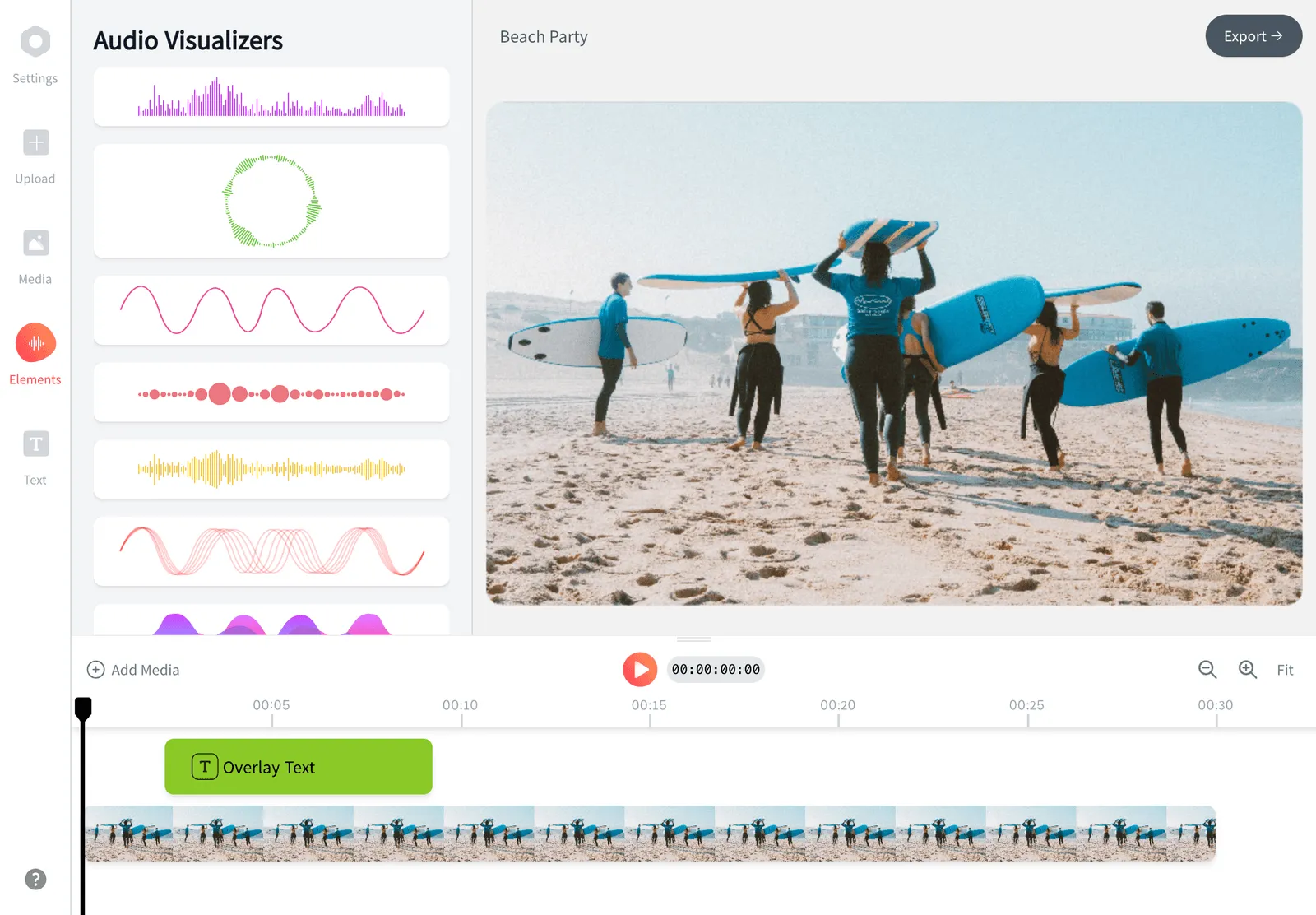
Compress audio files with a free online audio compressor that runs in your browser. Upload an MP3, WAV or M4A, pick a lower bitrate, and shrink the file to fit email caps, Discord limits and podcast hosting quotas. Because EchoWave is a full editor, you can also trim silence and cut dead air before re-encoding, which single-purpose compressors cannot do. It works on Mac, Windows, Linux and Chromebooks with nothing to install.


Audio Compressor Features
EchoWave's audio compressor is used by podcasters, musicians and video creators around the world.





File size compression
Smaller files, on your terms
EchoWave's audio compressor re-encodes MP3, WAV and M4A files at the bitrate you pick, so you control the size against the sound. It sits inside a full audio editor, which means you can cut silence before compressing, and the audio converter handles a straight format change when that is all you need. One quick note: this is file size compression, not the dynamic range kind from music production.
-
176
converter pairs supported
-
93
music visualizer styles
-
63
AI voices for narration
-
30
sound effect packs
What you get
Compression with an editor behind it
Most compressors give you one slider; EchoWave gives you the slider plus everything around it.
-
Bitrate control with a real tradeoff
File size is roughly bitrate times duration, so the bitrate setting is the whole game. Drop a 320 kbps MP3 to 128 kbps and the file shrinks by about 60 percent; clean speech stays perfectly clear down around 64 kbps at a quarter of the size. You pick the number, so you decide how much quality to trade.
-
An audio compressor inside a full editor
Single-purpose compressors re-encode your file and nothing else. EchoWave is a complete audio editor, so you can trim the intro, cut a flubbed take, merge two recordings or change speed (0.25x to 4x) before you re-encode. Shorter audio compresses to a smaller file, every time.
-
Convert while you compress
WAV runs about 10 MB per minute, so the biggest single saving is usually a format change. Upload a WAV or M4A and export it as MP3 in one pass, or use the audio converter when you only need a format swap without any editing.
-
Compress audio straight from a video
Upload an MP4, MOV, WebM or AVI and export only its soundtrack as a compact MP3. It is the quickest way to extract audio from video for a podcast feed or a transcript. If you need the picture too, the video compressor shrinks the whole file instead.
-
Remove silence before re-encoding
Dead air costs the same bitrate as speech. EchoWave's transcript view can cut silences and filler words like ums and uhs automatically, so a rambling recording loses minutes of nothing before compression even starts.
-
Hear it before you commit
Play your file in the browser, scrub the timeline and check every cut point before rendering anything. You can rework the edit as many times as you like, and a free HD MP4 export with a small EchoWave watermark badge lets you check the finished result on any device.
-
Cloud rendering on any device
Files render on EchoWave's cloud render farm, not your machine, so a ten-year-old laptop or a Chromebook handles a long recording as well as a new desktop. Nothing to install; it runs in Chrome, Edge, Firefox and Safari.
-
Do more with the compressed file
Because the compressor lives inside a video editor, the same project can become an audiogram with one of 93 music visualizer styles, or pick up AI captions from 176 presets for a clip you post alongside the audio.
How it works
How to compress an audio file
Four steps from oversized file to something you can actually send.
-
Upload your audio
Drag an MP3, WAV or M4A into the editor, or upload a video (MP4, MOV, WebM, AVI) to compress just its audio track. Everything runs in the browser, so there is nothing to install first.
-
Trim what you don't need
Cut silence, long pauses and false starts on the timeline, or use the transcript view to remove filler words automatically. A shorter file is a smaller file at any bitrate.
-
Choose format and bitrate
Pick MP3 or M4A as the export format, then set the bitrate. Use 128 kbps for music you are sharing casually and 64 kbps for plain speech; both cut the size hard while staying listenable.
-
Render and download
EchoWave renders the file on its cloud render farm and hands you the download. You can export the result as an HD MP4 free, with a small removable EchoWave watermark badge and a short branded end card. Audio-only MP3 and M4A exports come with the Basic plan; WAV and FLAC are available on Pro.
Where it helps
What people compress audio for
-
Podcast episodes
Hosting platforms meter storage and listeners meter their data plans. Re-encoding a stereo episode as 96 kbps mono can cut around three quarters of the size with no audible change for spoken word.
-
Email attachments
Gmail caps attachments at 25 MB and Outlook at 20 MB, which raw WAV blows past within a few minutes of audio. At 128 kbps, roughly 26 minutes of MP3 fits under the Gmail cap.
-
Discord and chat apps
Discord limits free uploads to 10 MB, so voice clips and session recordings often bounce. A 64 kbps mono MP3 fits about 20 minutes of speech inside that limit.
-
Transcription uploads
Transcription services upload faster with smaller files, and some cap file size outright. Speech stays fully legible to a transcription model at low bitrates, so compress first and skip the wait.
-
Demos and rough mixes
Send a bounce to bandmates without a file transfer service. Keep your lossless master and share a 192 kbps MP3, which most listeners cannot tell apart from the original.
-
Web and app audio
Background loops, notification sounds and sample previews should load fast. Smaller audio files mean quicker page loads and lower bandwidth bills.
Compare
How EchoWave compares
| Feature | EchoWave | FreeConvert | XConvert | Audacity |
|---|---|---|---|---|
| Works in the browser, no install | Yes | Yes | Yes | no (desktop app) |
| Adjustable bitrate | Yes | Yes | Yes | Yes |
| Compress MP3, WAV and M4A | Yes | Yes | Yes | yes (M4A needs FFmpeg) |
| Free downloads | yes (720p MP4, watermark badge); audio-only files need a plan | yes (daily limits) | Yes | Yes |
| Dynamic range compressor effect | No | No | No | Yes |
| Trim and cut before compressing | Yes | separate tool | yes (basic trim) | Yes |
| Automatic silence and filler removal | Yes | No | No | silence only |
| Extract audio from video files | Yes | Yes | Yes | yes (with FFmpeg) |
| Cloud rendering, no device slowdown | Yes | Yes | Yes | No |
| Full multi-track timeline editor | Yes | No | No | yes (audio only) |
| Music visualizers and audiograms | yes (93 styles) | No | No | No |
| AI captions for clips | yes (176 presets) | No | No | No |
Based on each tool's public pages as of July 2026. Features and limits change, so check the source before you rely on a row.
Shrink your first file now
Upload an audio file, trim the dead air, and pick the bitrate that fits your limit. Export the result as an HD MP4 free with a small watermark badge; audio-only MP3, WAV and FLAC exports come with paid plans.
What creators say after trying EchoWave

About the EchoWave team
EchoWave is a browser-based video and audio editor built by Lemon Vault LLC since 2018. The people who build the editor write these guides and test every step in the production app before publishing.
Audio Compressor FAQ
How does compressing an audio file make it smaller?
Almost all of the saving comes from bitrate, the amount of data used per second of sound. File size is roughly bitrate times duration, so re-encoding a 320 kbps MP3 at 128 kbps cuts the file by about 60 percent. Lower bitrates discard the audio detail the encoder judges least audible, starting with high frequencies.
Does compressing an MP3 reduce its quality?
Yes. MP3 is a lossy format, and every re-encode throws away data that cannot be recovered. Most listeners start noticing artifacts below 128 kbps on music, while clean speech holds up well down to 64 kbps. Keep your original and compress a copy so you can always go back.
What bitrate should I use for speech and for music?
For spoken word, 64 to 96 kbps mono sounds clear and keeps files small; podcasts commonly ship at 96 or 128 kbps. For music you are sharing casually, 128 kbps is the practical floor and 192 kbps is hard to distinguish from the original for most people. For music you care about keeping, stay at 256 kbps or above, or hold onto a lossless copy.
How much smaller will my audio file get?
It depends on where you start. Uncompressed WAV runs about 10 MB per minute, so converting it to a 128 kbps MP3 removes roughly 90 percent of the size. An MP3 that is already compressed typically drops 40 to 60 percent when you halve its bitrate.
Is an audio compressor the same as the compressor used in music production?
No, the name covers two different tools. This page is about file size compression, which re-encodes audio at a lower bitrate so it takes up less space. A compressor in music production changes dynamic range, evening out loud and quiet passages, and lives in software like Audacity or Logic. EchoWave does the first kind.
How do I compress an audio file to under 25 MB for email?
Export it as MP3 at a bitrate that fits the length. At 128 kbps about 26 minutes fits inside 25 MB, and at 64 kbps about 52 minutes does. Trimming silence and cutting sections you do not need shrinks it further before the encode runs.
Can I compress a WAV file without converting it?
Not meaningfully. WAV is uncompressed by design, so its size is fixed by sample rate, bit depth and duration. The realistic ways to shrink a WAV are converting it to MP3 or M4A, or trimming its length. EchoWave does both, and Pro plans can still export WAV or FLAC if you want a lossless copy of the edited version.
Is EchoWave's audio compressor free?
Yes, with one catch for audio formats. The free plan lets you upload, trim, preview and export an HD MP4 (up to 720p) with a small removable EchoWave watermark badge and a short branded end card. Audio-only exports need a paid plan: MP3 and M4A come with Basic, and WAV and FLAC with Pro. Paid plans also remove the badge and raise video quality, from 1080p on Basic up to 4K on Pro.
Can I shrink just the audio track of a video?
Yes. Upload the video and export its audio on its own as an MP3, which is usually a small fraction of the video's size. If you want to keep the picture, use EchoWave's video compressor to re-encode the whole file at a lower bitrate instead.
Ready to compress your audio files?
Edit free in the browser and export an HD MP4 with a small watermark badge; audio-only MP3, WAV and FLAC exports come with paid plans.
Get Started →