MP3 to WAV Converter
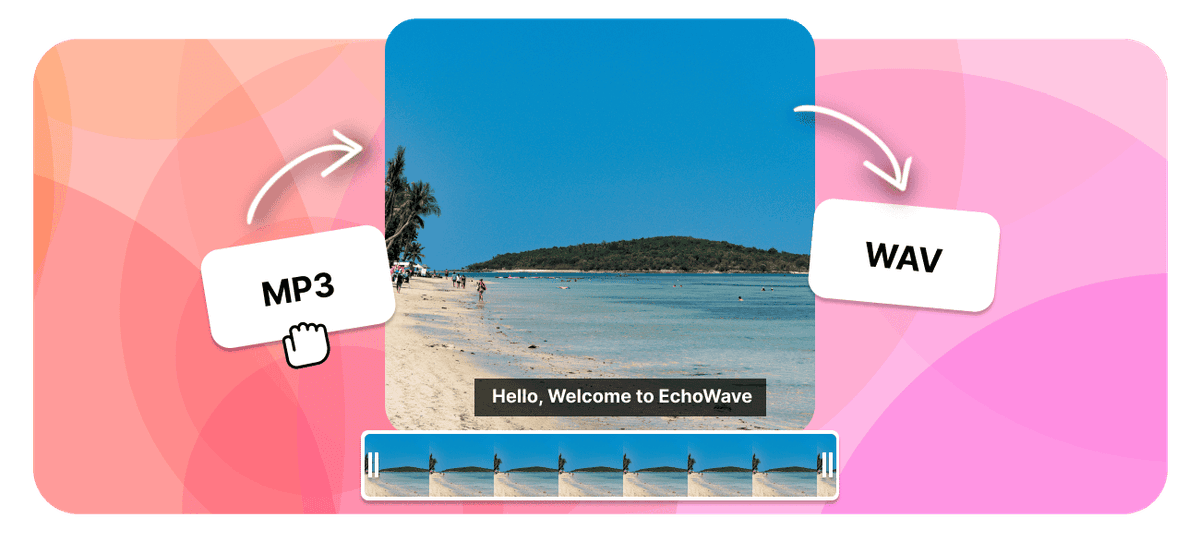
Convert MP3 to uncompressed WAV for editing and mastering. Free, in your browser, no signup and no watermark.


MP3 to WAV Converter Features
EchoWave is used by creators, marketers, educators, and businesses to convert and edit media online.





WAV is uncompressed audio, the format audio editors and mastering tools love because every save stays clean instead of piling on compression. Converting MP3 to WAV decodes your track to raw PCM and stores it without further loss, which makes it easy to import and edit. It does not make a compressed MP3 sound better, but it does keep it from getting worse while you work.
How it works
How to convert MP3 to WAV
- 1
Upload your MP3
Drag your MP3 onto the converter or pick it from your device. Nothing to install.
- 2
Choose WAV and convert
Select WAV as the output, set the bitrate if it applies, then start. Free, with no sign-up.
- 3
Download your WAV
Save the finished WAV, or open it in the editor to trim or adjust it first.
Try it
Estimate your WAV
Pick a quality and a length to see the WAV file size before you convert.
Drag to set the clip length in minutes, from 1 to 60.
WAV is uncompressed, so the size depends only on the quality and length you pick.
The formats
MP3 vs WAV
MPEG-1 Audio Layer III
The most universal audio format ever made
- Type
- Lossy audio format
- Holds
- Audio only
- Typical size
- Small, about 1 MB per minute at 128 kbps
- Plays on
- Effectively everything
Best for:Music, podcasts, and audio you listen to
Waveform Audio File Format
Uncompressed studio-quality audio
- Type
- Uncompressed audio
- Holds
- Raw PCM audio, no compression
- Typical size
- Very large, about 10 MB per minute
- Plays on
- Every device and audio editor
Best for:Editing and mastering at full quality
Will it lose quality?
- Converting a lossy file to a lossless one cannot restore detail that was already discarded. It only makes a larger file.
- Going from a high-quality source to WAV keeps the sound clear while changing the format.
- Each pass between two lossy formats loses a little, so always convert from the best source you have.
Use cases
What people use it for
Troubleshooting
If something looks off
The WAV is larger than I expected
The song details are missing
My app will not open the WAV
FAQ
MP3 to WAV questions
Does converting MP3 to WAV improve the quality?
Why convert MP3 to WAV then?
Why is the WAV file so much larger?
Is the MP3 to WAV converter free?
How do I convert MP3 to WAV?
What sample rate and bit depth will the WAV use?
Can I burn the converted WAV to an audio CD?
What plays WAV files?
Does the MP3 to WAV converter work on iPhone, Android, Mac, and Windows?
Should I keep the original MP3 too?
Why convert MP3 to WAV
Start with the honest part, because it is the reason most people search for this conversion and the answer is not the one they are hoping for.
Converting MP3 to WAV does not improve the audio. MP3 compression works by permanently discarding parts of the signal. That data is gone from the file, and there is nothing left to recover. Decoding the MP3 and writing the result as uncompressed WAV produces a much larger file that sounds exactly like the MP3 did. If a tool promises to restore quality or make a track lossless this way, it is mistaken.
So why do it at all? Because WAV is a working format rather than a listening format, and the reasons are practical rather than sonic.
- Your software demands it. Plenty of DAWs, samplers, hardware loopers, and older audio tools accept WAV and nothing else. Many DJ and karaoke systems are the same.
- Editing without accumulating damage. This is the real technical argument. Every time you open an MP3, change something, and save it again as MP3, the audio goes through another lossy encode and loses a little more. Convert once to WAV, do all your cutting, mixing, and processing there, and export to a compressed format only at the end. The compression then happens once instead of five times.
- No decode cost during playback. WAV is raw PCM, so nothing has to be decompressed as it plays. On a busy timeline with many tracks that is measurably less work for the machine, which is part of why editing software prefers it.
- Precise editing. Working from uncompressed samples avoids the small timing and padding quirks that MP3 encoding can introduce at the very start and end of a file.
The way to think about it: WAV is the format you work in, MP3 is the format you ship in. Converting to WAV does not undo the past, but it does stop things getting worse from here.
How to convert MP3 to WAV
- Upload your MP3. Drag it in or browse for it. Music, a podcast episode, a voice memo, or a downloaded interview all convert the same way.
- Choose WAV as the output. The MP3 is decoded back to raw PCM audio and written into a standard WAV file that any audio application will open.
- Download the WAV. No account, no watermark, and nothing to install on Windows, macOS, a Chromebook, or a phone.
If you want to shorten the file before it lands in your project, the editor will trim it first. That is worth doing here more than usual, because WAV is bulky enough that cutting an hour-long recording down to the three minutes you need is a very large saving.
How creators use EchoWave in real projects
Expect the file to get much bigger
This catches people out, so it is worth knowing the numbers before you start.
Uncompressed stereo audio at CD quality, meaning 44.1 kHz and 16 bits per sample, consumes about 10 MB per minute. That figure does not vary with the material: silence costs exactly as much as a full orchestra, because every sample is written out whether anything interesting is happening or not.
An MP3 at 128 kbps costs roughly 1 MB per minute. So a four-minute track that arrives as a 4 MB MP3 leaves as a 40 MB WAV, ten times larger and not one bit better sounding. A 320 kbps MP3 of the same track is about 9.6 MB and still becomes the same 40 MB WAV, because WAV size depends only on sample rate, bit depth, channel count, and duration, never on the quality of what came in.
Two consequences follow. First, WAV files above 4 GB run into the limits of the classic WAV format, which stores sizes in 32 bits. At CD quality that is roughly six and a half hours, so it only affects very long recordings, but it is the reason long-form archives tend to use other formats. Second, there is no point keeping WAV copies of a music library. Convert what you are actively editing and keep the MP3s for listening.
Working with the WAV, and what to do afterwards
Once the WAV is in your editor, treat it as the master for that session. Do your edits there, then export to whatever the destination needs.
If the finished audio is going out to listeners, WAV to MP3 brings it back down to a shareable size, and this time the single lossy encode happens on your finished mix rather than compounding on top of the old one. For archiving the working file rather than shipping it, WAV to FLAC compresses losslessly and typically halves the size with no change to the audio at all, which is a better long-term storage choice than either WAV or MP3. For Apple workflows, WAV to M4A produces AAC audio that sounds slightly better than MP3 at the same bitrate.
One last piece of advice: if your MP3 is not really the best copy you have, do not start the session with it. FLAC to WAV and M4A to WAV both begin from a better original, and tracking down a lossless source before you commit to a mix is worth more than anything you can do afterwards. When the audio is currently trapped inside a video file, MP4 to WAV pulls it out in one step.
The audio converter handles the remaining formats, and the audio editor covers trimming and adjustment directly in the browser.

About the EchoWave team
EchoWave is a browser-based video and audio editor built by Lemon Vault LLC since 2018. The people who build the editor write these guides and test every step in the production app before publishing.
Convert MP3 to WAV for free Free online converter
Get an uncompressed WAV that drops straight into your audio editor, with no signup and no watermark.
Convert Files →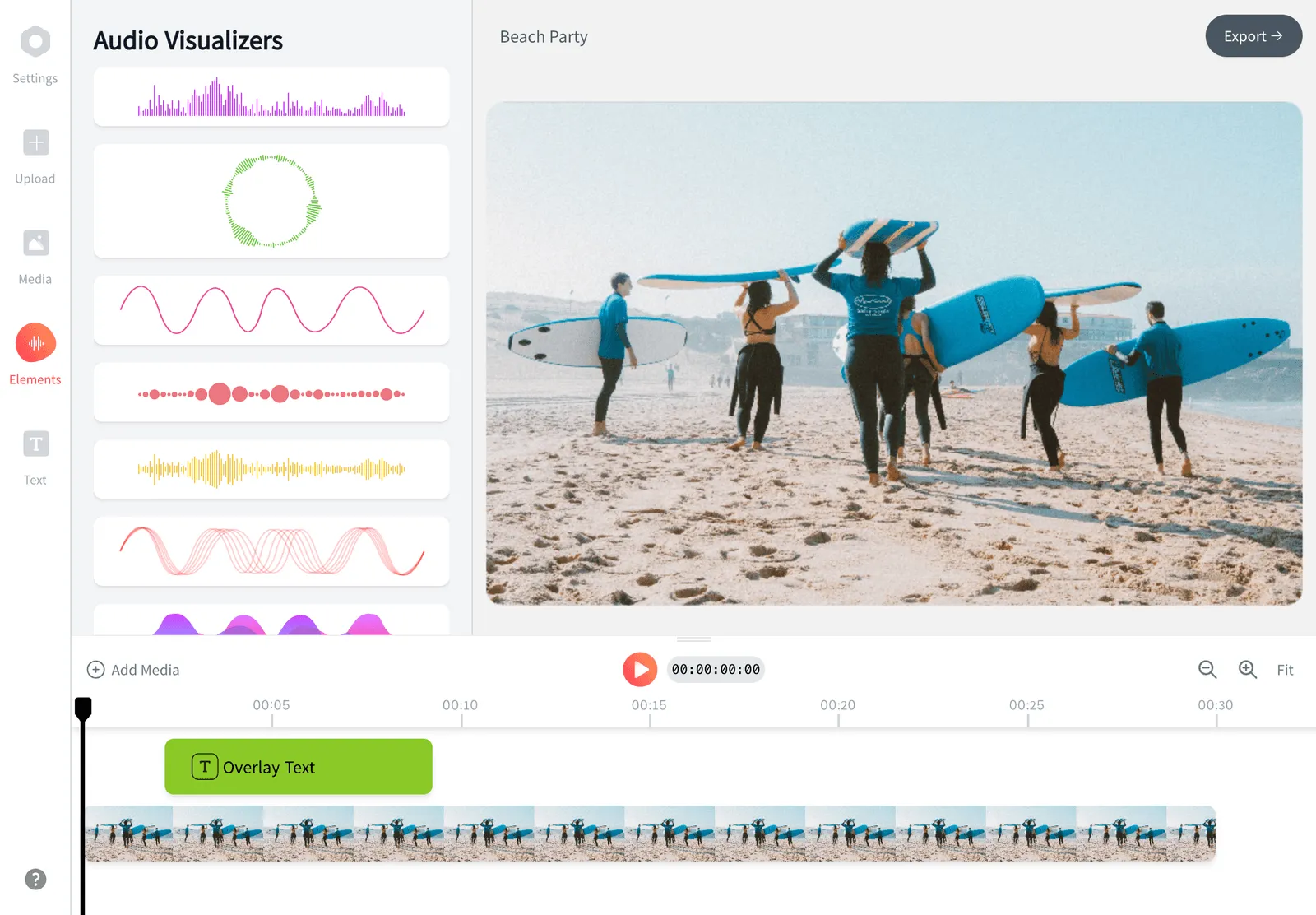
Keep converting