Tutorial Video Maker
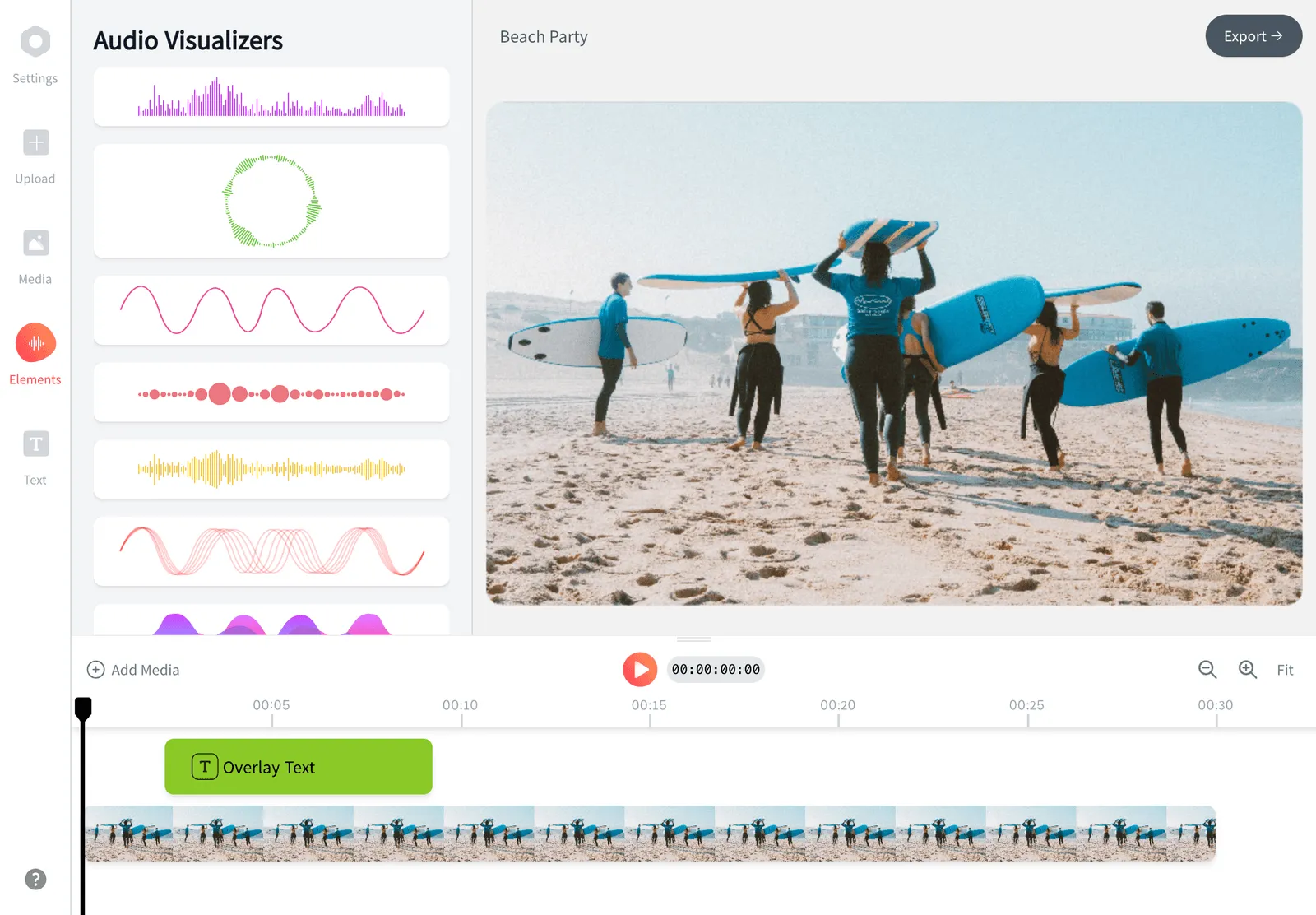
EchoWave is a free tutorial video maker that runs in your browser. Record your screen with mic narration, drop in a webcam bubble, then zoom into the exact button or menu you are explaining. Add arrows, text callouts, and auto-captions so every step lands, even on mute. When the edit is done, the cloud renders your MP4 in HD up to 4K, no matter how old your laptop is.

Tutorial Video Maker Features
EchoWave's tutorial video maker is used by YouTube educators, support teams, and course creators around the world.




Record and edit
A tutorial video maker with a real editor behind it
Most tutorial tools stop at recording. EchoWave pairs a built-in screen recorder with a full multi-track editor, so the capture and the cleanup happen in one tab. Cut mistakes on the transcript, annotate the video with arrows and callouts, and push a zoom keyframe onto any click viewers might miss. It works the same for YouTube tutorials, product walkthroughs, and support docs.
-
176
caption presets
-
81
text and element animations
-
56
transitions
-
63
AI voice over voices
Built for how-to
Record, zoom, annotate, caption
Everything happens on one timeline, so you never export a capture just to re-import it into another app.
-
Record screen, webcam, and voice in one studio
The built-in recorder studio captures your display with mic narration, and there are separate webcam, voice, and presentation modes. A teleprompter keeps your script on screen while you talk. Prefer OBS or QuickTime? Upload MP4, MOV, WebM, or AVI captures instead.
-
Zoom pops that point at the exact pixel
Set two keyframes on scale and position and the canvas glides into the menu you are describing, or ask Echo, the built-in assistant, to drop zoom pops on your button presses. The zoom video page covers the technique in detail.
-
Webcam bubble in the corner
Place your camera feed on a track above the screen capture and shrink it into a picture-in-picture bubble. Because it is a separate layer, you can move it away from important UI, resize it, or hide it during dense sections.
-
Arrows, callouts, and shape annotations
Draw arrows at the field you want clicked, box the setting that matters, and label steps with text callouts. 81 animations (30 entrance, 25 exit, 26 loop) let annotations appear exactly when you mention them and leave when you move on.
-
Auto-captions built into the tutorial video maker
Speech-to-text transcribes your narration with word-level timestamps, and 176 caption presets cover everything from plain subtitles to word-by-word styles. Translate subtitles into 86 languages for international audiences, and export SRT, VTT, TXT, or JSON alongside the video.
-
Cut mistakes on the transcript
Delete a sentence in the transcript and the matching clip disappears from the timeline. One command removes ums, uhs, and long silences, which is the fastest way to tighten a first take without hunting through the waveform.
-
AI voice over when you would rather not record
Write a script and generate narration with one of 63 natural AI voices, then time your screen actions to it. Voice cloning, which reads scripts in your own voice, is available as a paid feature.
-
Chapters with title cards
Insert a title card between sections so viewers can skim to the step they need, and pick from 56 transitions to move between chapters. If you produce longer courses, the training video maker covers series workflows, and there is a dedicated video editor for teachers.
How it works
How to make a tutorial video
From blank canvas to finished MP4 in four steps.
-
Record your screen or upload a capture
Open the recorder studio and capture your display with mic narration while the teleprompter keeps your script in view. Already recorded elsewhere? Upload the MP4, MOV, WebM, or AVI file and the canvas sizes itself to match.
-
Cut the rough takes on the transcript
Automatic speech-to-text turns your narration into an editable transcript. Delete a flubbed sentence there and the clip is cut on the timeline, and one command strips filler words and dead air.
-
Add zooms, annotations, and chapter cards
Keyframe a zoom onto the button you are clicking, draw arrows and callouts over the UI, and shrink your webcam into a corner bubble. Title cards between sections give viewers clear chapter breaks.
-
Caption, render, and export
Generate captions, pick one of 176 presets, and fix any misheard word inline. The cloud renders your MP4 from any device: free exports are HD 720p with a small EchoWave watermark badge, and paid plans remove the badge and render 1080p up to 4K.
Who it's for
One workflow, every kind of tutorial
-
YouTube software tutorials
Record the walkthrough, cut the ums on the transcript, and put a zoom pop on every meaningful click. A word-by-word caption preset keeps mobile viewers following along with the sound off.
-
SaaS product walkthroughs
Show new users the exact clicks from signup to first result, with arrows and callouts on each field. Save your brand colors, logo, and fonts to the brand kit so every video matches the product.
-
Customer support videos
Answer a recurring ticket once with a two-minute screen capture instead of retyping the same steps. Send the MP4 directly or embed it in your help center next to the written article.
-
Internal SOPs and process docs
Capture the process end to end, add a title card for each stage, and burn in captions so it plays fine in a quiet office. Templates keep the same intro and outro across the whole series.
-
Classroom and course lessons
Teachers record lesson walkthroughs with a webcam bubble for presence and a teleprompter for pacing. Subtitle translation into 86 languages helps mixed-language classes keep up.
-
App demos for launches
Pair zoomed UI shots with text animations and transitions for a tight launch demo. Resize the same edit to 16:9 for YouTube and 9:16 for Shorts before rendering each version.
Compare
How EchoWave compares
| Feature | EchoWave | Camtasia | Loom | OBS Studio |
|---|---|---|---|---|
| Screen recording with mic narration | Yes | Yes | Yes | Yes |
| Webcam bubble picture-in-picture | Yes | Yes | Yes | yes (scenes) |
| Keyframed zoom into UI details | Yes | Yes | No | No |
| Text, arrow, and shape annotations | Yes | Yes | limited | No |
| Auto-captions | yes (176 presets) | Yes | Yes | No |
| Subtitle translation | yes (86 languages) | No | No | No |
| Filler word and silence removal | Yes | yes (Audiate) | yes (paid) | No |
| AI voice over | yes (63 voices) | yes (Audiate) | No | No |
| Runs in a browser, no install | Yes | No | Yes | No |
| Free video downloads | yes (720p, watermark badge) | no (trial watermark) | yes (with limits) | Yes |
| Instant share links with viewer insights | No | No | Yes | No |
| Live streaming | No | No | No | Yes |
Based on each tool's public pages as of July 2026. Plans and features change often, so check vendor sites before you decide.
Make your first tutorial in one tab
Open the editor, record your screen, and cut the rough parts on the transcript. Free exports are HD with a small removable EchoWave badge; paid plans remove it and render up to 4K.
What creators say after trying EchoWave

About the EchoWave team
EchoWave is a browser-based video and audio editor built by Lemon Vault LLC since 2018. The people who build the editor write these guides and test every step in the production app before publishing.
Tutorial Video Maker FAQ
What is the best tutorial video maker for beginners?
Pick a tool that records and edits in one place so you are not exporting files between apps. EchoWave runs in the browser with nothing to install, and the editor is free to use while you learn. If keyframes feel intimidating, ask Echo, the built-in assistant, to add zoom pops or captions for you.
How do I make a tutorial video for free?
EchoWave is free to record, edit, and export: the free plan renders an HD 720p MP4 with a small removable EchoWave watermark badge and a short branded end card. Paid plans remove the badge and render 1080p up to 4K. OBS Studio also records at no cost, but you will still want an editor for the zooms, cuts, and captions that make a tutorial watchable.
How do I record my screen and my face at the same time?
In EchoWave, record your screen, then add your webcam clip on a second track and shrink it into a corner bubble with picture-in-picture. Because the two are separate layers, you can reposition or hide the bubble at any point in the edit, for example when it would cover a menu.
How do you zoom in on part of the screen in a video?
Set two keyframes on scale and position and the canvas glides from full view into a close-up of the area you are explaining. For quick punch-ins on a button or a form field, ask Echo, the built-in assistant, to add zoom pops for you. Keep each zoom to a second or two so viewers never lose their bearings.
How long should a tutorial video be?
Most how-to videos work best between two and ten minutes, covering one task per video. If a topic needs more time, split it into a series with clear titles rather than one long recording. Cutting silences and filler words on the transcript tightens the pace without losing any steps.
What resolution should I record tutorials in for YouTube?
Record at 1080p or higher so interface text stays readable after YouTube's compression. For small UI details, zoom in during the edit rather than hoping viewers switch to fullscreen. EchoWave's free plan renders HD 720p with a small watermark badge, and paid plans render 1080p, with 1440p and 4K on Pro.
Can I add captions to a tutorial video automatically?
Yes. EchoWave transcribes your narration automatically with word-level timestamps, and you choose from 176 caption presets, including word-by-word styles. Captions can be burned into the export, or downloaded as SRT, VTT, TXT, or JSON files for YouTube's caption uploader.
Do I need to show my face in a tutorial video?
No, plenty of successful tutorial channels are narration only. A webcam bubble during the intro and outro adds a human touch without covering the interface for the whole video. If you do go on camera, the built-in teleprompter keeps your delivery natural.
Can I make a tutorial video without recording my own voice?
Yes. Write or paste a script and generate narration with one of 63 natural AI voices, then time your screen recording to the audio. Voice cloning, which reads scripts in a copy of your own voice, is available as a paid feature.
Ready to record your next tutorial?
Record, edit, and export free in your browser with a small EchoWave badge; paid plans remove it and render up to 4K.
Get Started →