Video Editor for Podcasters
EchoWave is a free, browser-based video editor for podcasters. Upload your episode as audio or video, get an automatic transcript, then cut the episode the way you would edit a document: delete a sentence and the footage goes with it. Remove ums and dead air automatically, add word-by-word karaoke captions from 176 presets, and turn strong moments into audiograms and vertical clips. Rendering happens in the cloud, so an old laptop handles a two-hour episode fine.

Video Editor for Podcasters Features
EchoWave's podcast video editor is used by interview shows, solo hosts and production teams around the world.




Built for podcasts
One editor for the whole episode workflow
A video editor for podcasters should cover the full chain, from transcript to cuts to captions to promo clips, in one place. EchoWave does that in a single browser tab. Polish audio-only shows in the podcast editor, turn a finished episode into a YouTube upload with podcast to video, then pull highlights with the podcast clip maker.
-
176
caption presets
-
93
waveform visualizer styles
-
86
subtitle translation languages
-
63
AI voice-over voices
The podcast toolkit
Everything an episode needs, in one tab
These are the tools podcasters use on every episode, from the first cut to the last clip.
-
An audio-first video editor for podcasters
The multi-track magnetic timeline is built around sound, with waveforms you can read clearly even on an hour-long file. Trim, split and rearrange host and guest tracks without knocking audio out of sync, and stack picture-in-picture or split-screen layouts for interview shows.
-
Cut filler words and dead air from the transcript
EchoWave transcribes your episode, flags every um, uh, repeat and long silence, then removes them in a click. Deleting a sentence from the transcript deletes the matching footage too. It cuts what was said rather than processing the sound, so your voice stays untouched. Try it on its own with the filler word remover.
-
176 caption presets, including karaoke styles
Word-level timestamps drive word-by-word karaoke captions with active-word fill, and you can recolor or emphasize any single word. Translate subtitles into 86 languages or run bilingual captions for international audiences. Export the transcript as SRT, VTT, TXT or JSON for show notes with the podcast transcript generator.
-
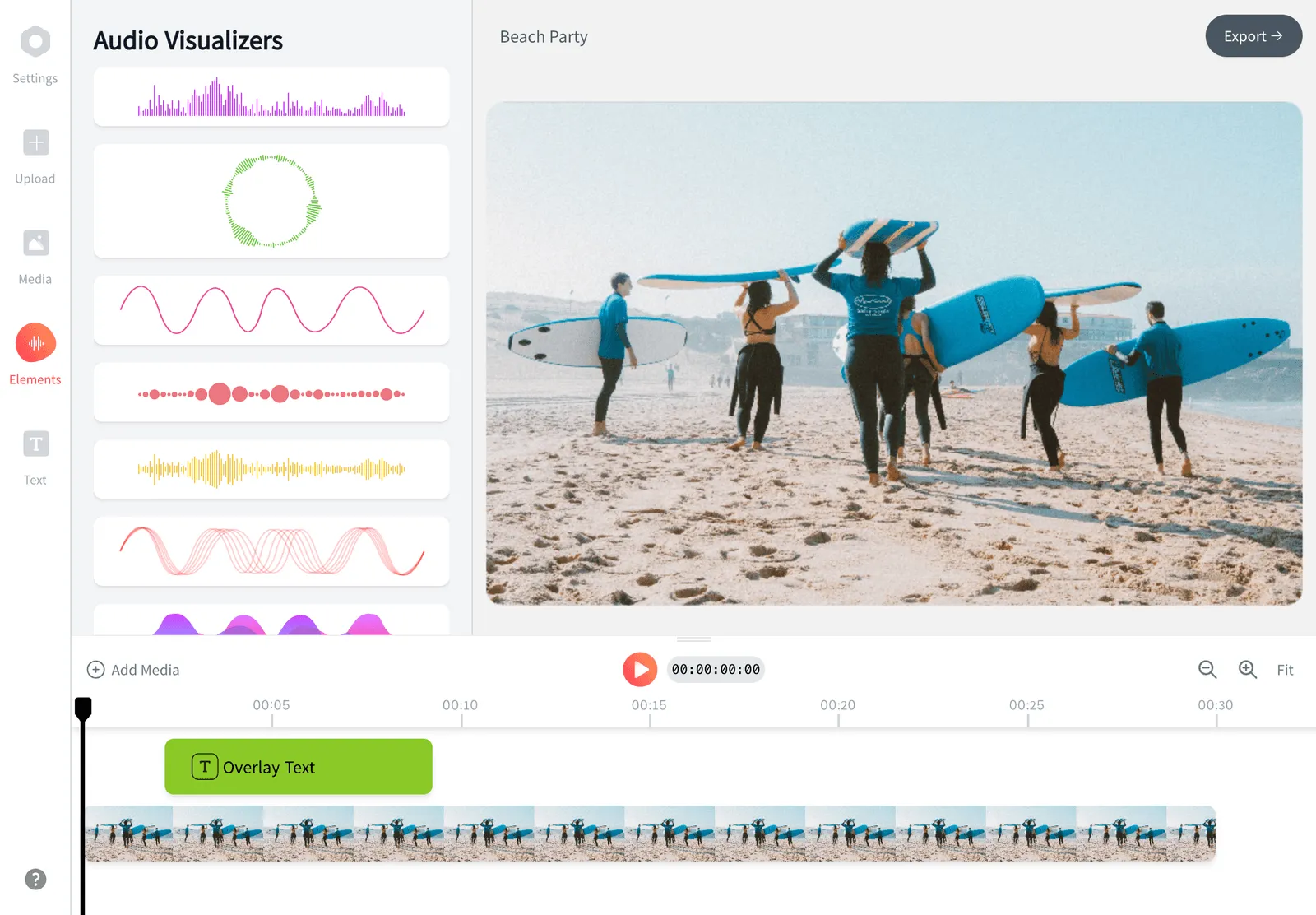
93 visualizer styles for audiograms
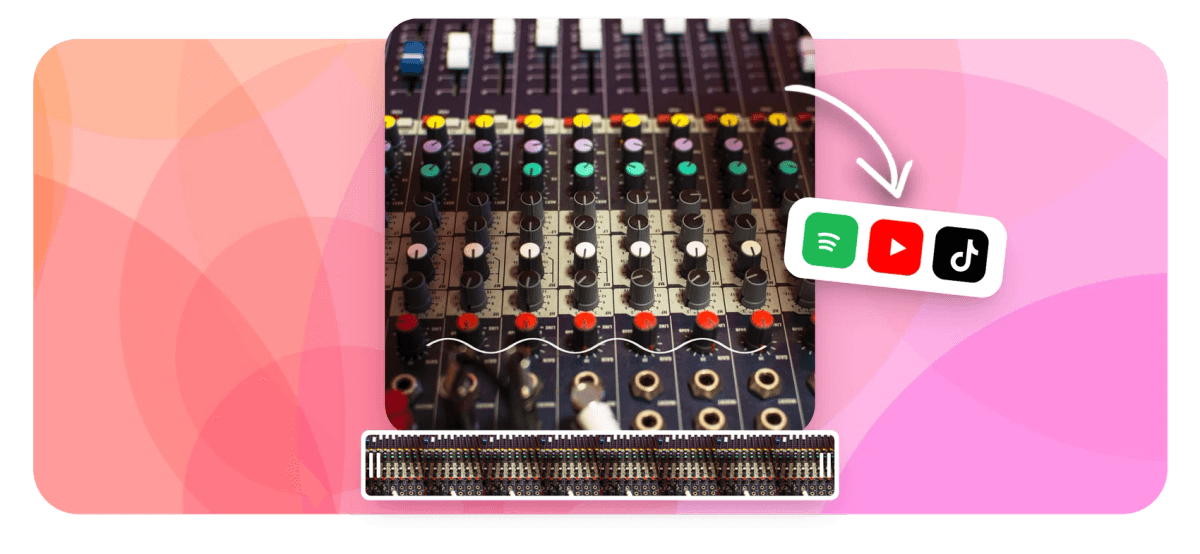
Pick from 93 waveform, bar and FFT spectrum visualizers, drop in your cover art, and an audio-only highlight becomes a video worth posting. The audiogram creator walks the same flow if audiograms are all you need this week.
-
Clips and trailers from the same project
Search the transcript for the quote you remember, split it out, and resize the canvas to 9:16 for TikTok, Reels and Shorts. Reframe with crop and zoom, then let the karaoke captions carry viewers who watch muted. No re-uploading, no second app.
-
A recorder studio with a teleprompter
Record webcam, screen with audio, voice-only takes or full presentations without leaving the browser. The built-in teleprompter keeps intros, ad reads and solo episodes on script, and the recording lands straight on your timeline for editing.
-
Templates for repeatable episode branding
Save your intro card, lower thirds and end screen as a template with text and image placeholders, then fill in the episode title and guest name each week. The brand kit stores your colors, logos and custom fonts, and a CSV upload batch-renders up to 100 clips at once.
-
Echo handles the busywork
Echo is a chat assistant inside the editor with 39 editing tools. Tell it to cut the silences, caption the episode in a Beast Mode style, or add a zoom pop on the punchline, and it does the clicking. It saves a checkpoint before big changes, so one click undoes everything.
How it works
How to edit a video podcast
From raw recording to a finished episode and its first clip, here is the whole pass.
-
Upload or record your episode
Drag in your recording as video or audio: MP4, MOV, WebM and AVI work, and so do MP3, WAV and M4A. No file yet? Open the recorder studio and capture webcam, screen or voice right in the browser. The canvas sizes itself to your first file.
-
Transcribe, then cut like a document
Auto-transcription supports dozens of languages, with word-level timestamps on every line. Delete a rambling tangent by deleting its sentences, then run filler word and silence removal in one click to tighten the whole episode.
-
Caption and brand it
Pick one of 176 caption presets and swap in your brand fonts and colors from the brand kit. Audio-only show? Add cover art and one of the 93 visualizers. Finish with an intro card, transitions and scrolling end credits.
-
Render in the cloud and download
Free renders export as HD MP4 (up to 720p) with a small removable EchoWave watermark badge and a short branded end card. Paid plans remove the badge and add 1080p, with 1440p and 4K on Pro and 8K on Business, plus bitrate and fps controls if your host has specs. Basic and up also export MP3 or M4A audio for your RSS feed. Then duplicate the project, resize to 9:16, and cut your first clip.
Sized to post
The right shape for every platform
-
16:9 Landscape
- YouTube
- Spotify video
-
9:16 Vertical
- TikTok
- Reels
- Shorts
-
1:1 Square
- Audiograms
- Feed posts
Podcast workflows
Six ways podcasters use EchoWave
-
Full episodes for YouTube
Edit the complete conversation at 16:9 with split-screen layouts for host and guest, then burn in captions so the episode reads with the sound off. Color adjustments and presets help two mismatched cameras sit together.
-
Vertical clips for TikTok, Reels and Shorts
Search the transcript for the moment, split it into its own clip, and resize to 9:16 with a manual crop and zoom to frame the speaker. Karaoke captions with active-word fill keep muted scrollers watching.
-
Audiograms for audio-first shows
No cameras, no problem. Put your cover art on a square canvas, add one of 93 visualizer styles that moves with the voice, and caption the quote. A sixty-second audiogram promotes the episode everywhere your listeners scroll.
-
Episode trailers
Stack the two or three strongest moments into a 30 to 90 second teaser, using the 81 text animations and 56 transitions to keep it moving. A riser from the 30 sound-effect packs and a scrolling end card finish it off.
-
A weekly template you fill and render
Build your episode announcement once with placeholders for the title, guest name and artwork, then fill and render it each week in minutes. A CSV upload batch-renders a whole season, and the REST API and MCP server automate it entirely.
-
Solo episodes and ad reads
Load your script into the teleprompter, hit record on the webcam recorder, and read straight down the lens. The take lands on the timeline where transcript editing strips the stumbles before anyone hears them.
Compare
How EchoWave compares
| Feature | EchoWave | Descript | Riverside | Headliner |
|---|---|---|---|---|
| Edit video by editing the transcript | Yes | Yes | Yes | No |
| Automatic filler word and silence removal | Yes | Yes | Yes | No |
| Word-by-word karaoke captions | yes (176 presets) | Yes | Yes | Yes |
| Waveform audiograms | yes (93 styles) | Yes | No | Yes |
| Screen, webcam and voice recorder | Yes | Yes | Yes | No |
| Remote multi-guest recording | No | Yes | Yes | No |
| AI noise removal | No | Yes | Yes | No |
| Direct social publishing | No | Yes | No | Yes |
| AI voice over | yes (63 voices) | Yes | No | No |
| Subtitle translation | yes (86 languages) | Yes | No | No |
| Free downloads | yes (720p, watermark badge) | yes (720p, watermark) | yes (watermark) | yes (watermark) |
| Template batch rendering with an API | yes (100 rows per CSV) | No | No | No |
Based on each tool's public pages as of July 2026. Plans and features change often, so check current pricing before you commit.
Cut your next episode in the browser
Upload a raw recording, edit it from the transcript, and export a free HD render with a small removable EchoWave watermark badge. Paid plans remove the badge and add 1080p up to 4K, plus MP3 audio exports for your RSS feed.
What people are saying about EchoWave

About the EchoWave team
EchoWave is a browser-based video and audio editor built by Lemon Vault LLC since 2018. The people who build the editor write these guides and test every step in the production app before publishing.
Video Editor for Podcasters FAQ
What is the best video editor for podcasters?
It depends on where your time goes. Descript and Riverside are strong if remote guest recording and noise cleanup matter most. EchoWave is the better fit for the editing and promotion side: transcript-based cutting, 176 caption presets, 93 audiogram visualizers and clip resizing in one browser tab, with free HD exports that carry a small removable watermark badge.
Can I edit a podcast video by editing the transcript?
Yes. EchoWave transcribes the episode automatically, and deleting words from the transcript cuts the matching video and audio. It also flags filler words and silences so you can remove them all in one click. Transcription works in dozens of languages.
How do I turn a podcast episode into clips for TikTok, Reels and Shorts?
Find the quote in the transcript, split it into its own segment, and resize the canvas to 9:16. There is no automatic reframing, so you position the speaker with a quick crop and zoom, then add karaoke captions and export. Three to five clips per episode is plenty to keep a weekly promotion schedule fed.
Do podcast clips need captions?
In practice, yes. A large share of social video plays muted, and a clip of two people talking gives a muted viewer nothing without text. Word-by-word captions with active-word highlighting hold attention, and they make your clips accessible to deaf and hard-of-hearing audiences.
Is EchoWave free for podcasters?
Yes. The free plan covers the whole flow: upload, transcribe, edit and export a full episode as an HD MP4 (up to 720p) with a small removable EchoWave watermark badge and a short branded end card. Paid plans remove the badge and add 1080p up to 4K video, 8K on Business, and MP3 or M4A audio exports from the Basic plan.
Can I make a video podcast from an audio-only recording?
Yes. Drop the MP3 or WAV on the timeline, add your cover art, and pick one of 93 visualizer styles that animates with the audio. Add captions from the transcript and export an MP4 that YouTube and Spotify accept as a video episode.
Can EchoWave record my podcast?
It records solo material well: the recorder studio captures webcam, screen with audio, voice and presentations, with a built-in teleprompter for scripted intros and ad reads. It does not record remote multi-guest calls, so tape interviews in your usual call tool and upload the file to edit.
What export settings should I use for a YouTube podcast episode?
A 16:9 MP4 at 1080p suits most shows, and 4K is available on the Pro plan if your cameras support it. EchoWave exposes bitrate, fps and codec controls, and every render runs on cloud servers, so a long episode exports at the same speed on any laptop.
How long should podcast clips and trailers be?
Clips perform best between 15 and 60 seconds, long enough for a complete thought and short enough to hold a feed scroller. Trailers usually run 30 to 90 seconds. Cut to the strongest sentence first, then trim the setup until the hook lands inside three seconds.
Ready to edit your next episode?
Free exports come in HD with a small removable watermark badge, and paid plans remove it and add 1080p up to 4K.
Get Started →