SRT to VTT Converter
Convert SRT to VTT online without installing anything. Import your .srt file into EchoWave's subtitle editor, check every cue against the actual video, fix typos and timing, then export a clean WebVTT file with the header and dot-separated timestamps that HTML5 players expect. The same panel also exports SRT, TXT and JSON, translates cues into 86 languages, and can burn the captions straight into the video.


SRT to VTT Converter Features
EchoWave's SRT to VTT converter is used by web developers, course creators and video teams around the world.





SRT in, VTT out
Turn an SRT file into WebVTT your web player can actually read
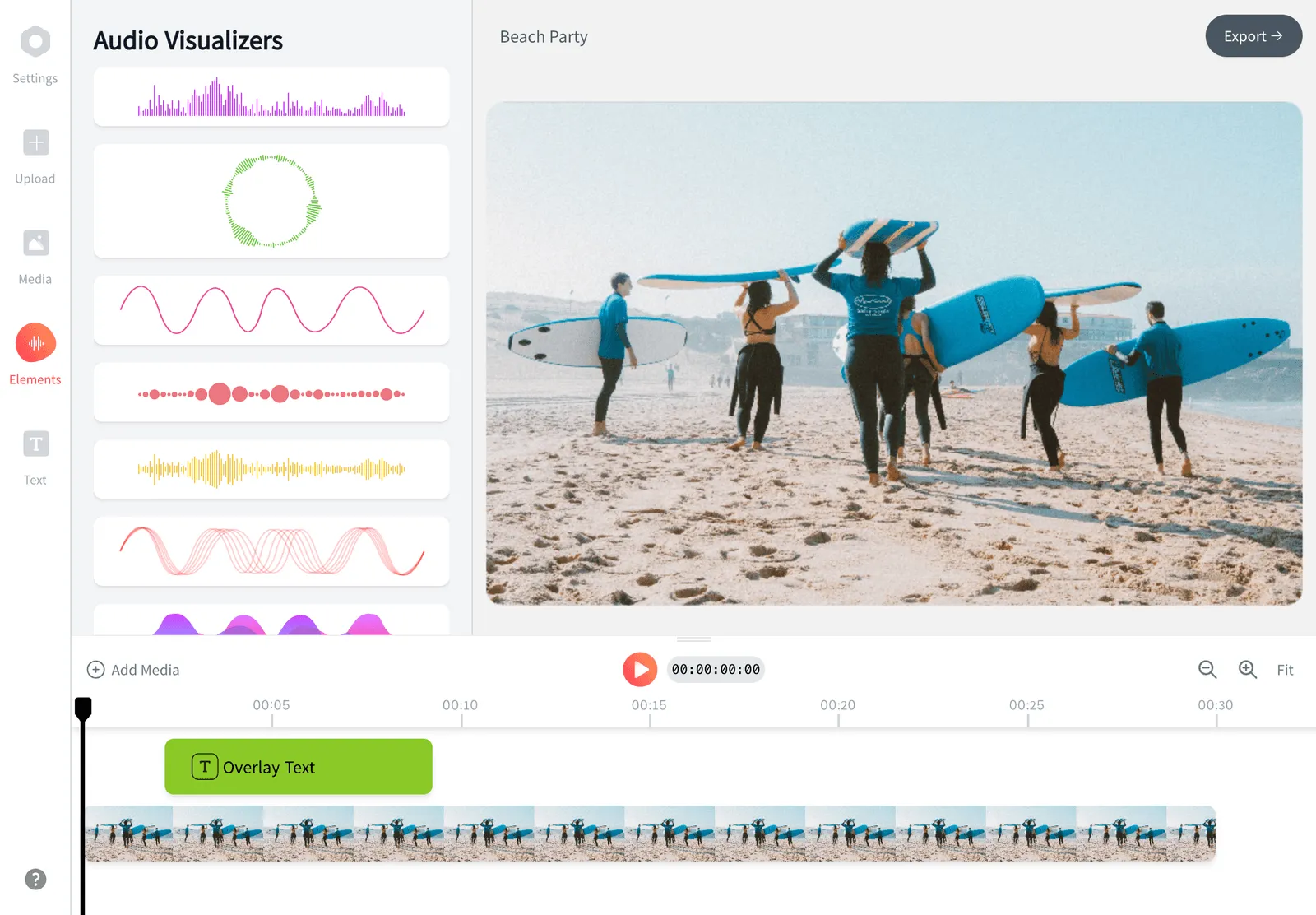
Renaming .srt to .vtt does not work: browsers expect a WEBVTT header and dot-separated timestamps. EchoWave handles the SRT to VTT conversion properly. It reads your .srt, puts every cue on an editable timeline, and writes a valid .vtt on export. The same panel powers our full subtitle converter, and if you have no subtitle file yet, the caption generator creates one from speech.
-
4
subtitle export formats
-
176
caption style presets
-
86
translation languages
-
4K
video export on Pro plans
More than a file swap
A converter with an editor attached
Blind converters copy your mistakes into a new extension. EchoWave shows you the cues first.
-
SRT to VTT conversion done properly
Import any .srt file and EchoWave parses the cue numbers, timestamps and text into editable subtitle segments. On export it writes the WEBVTT header, swaps comma milliseconds for dots, and produces a file HTML5 track elements accept. One honest note on direction: conversion runs SRT to VTT one way, so keep your original .srt.
-
Fix cues before you publish
Machine-generated SRTs usually carry typos, mistimed lines and cues that linger too long. Click any cue to correct the text, drag its edges to retime it, or split a long line in two in the subtitle editor. You export a cleaner file than the one you imported.
-
Preview against the actual video
Timing errors are invisible in a text editor and obvious on a timeline. Drop your video onto the canvas, import the SRT, and scrub through to watch every line appear exactly when it should before you commit to the VTT.
-
Translate while you convert
Need a Spanish or Japanese caption track for the same video? EchoWave translates subtitle cues into 86 languages, with bilingual dual-language layouts available, and each translated track exports as its own VTT file.
-
Four subtitle export formats
One import gives you SRT, VTT, TXT and JSON exports. Use VTT for web players, SRT for broad compatibility, TXT for a plain transcript, and JSON when a script or app needs structured cue data. For other format pairs, see the subtitle converter.
-
No SRT yet? Generate one from speech
If all you have is the video, the SRT generator transcribes speech automatically with word-level timestamps in dozens of languages. Edit the result like any imported file, then export it as SRT for your archive and VTT for your site.
-
Burn captions in when players cannot read VTT
Some embeds and platforms ignore sidecar subtitle files entirely. Style your cues with one of 176 caption presets, including word-by-word karaoke styles, and render them permanently into the picture with add SRT to video.
-
Nothing to install
The whole flow runs in Chrome, Edge, Firefox or Safari on Mac, Windows, Linux and Chromebooks. Your cues stay saved in the project, so you can come back next week, fix one line, and export a fresh VTT in seconds.
How it works
How to convert SRT to VTT
Four steps, and the middle two are what separate this from a blind file converter.
-
Open the editor and add your video
Open the EchoWave editor in your browser and drop in the video the subtitles belong to. The editor is free to use, and the canvas auto-sizes to match your footage.
-
Import your SRT file
Open the Subtitles panel and import your .srt. Every cue lands on the timeline as its own segment with the original text and timing intact.
-
Review and fix the cues
Play the video and watch the captions run. Correct typos, nudge start and end times, split crowded lines, or translate the track into any of 86 languages before export.
-
Export as VTT
In the subtitle export options choose VTT and download the file. It arrives with the WEBVTT header and dot-separated timestamps, ready for an HTML5 track element. SRT, TXT and JSON sit in the same menu.
Where VTT wins
What people convert SRT to VTT for
-
HTML5 video on your own site
The track element in HTML5 video only accepts WebVTT, so the .srt from your transcriber will not display. Convert it once, point the track src at the .vtt with a language label, and the browser renders captions natively with no JavaScript subtitle parser required.
-
Web players like Video.js and JW Player
Most embeddable players standardize on VTT for caption tracks. Export one VTT per language and wire them up as selectable tracks in the player config.
-
Course platforms and LMS uploads
Many course tools accept a sidecar caption file and expect WebVTT. Clean the cues in EchoWave first so students never read raw machine transcription errors.
-
Accessibility compliance
Captions are a baseline requirement under WCAG guidance, and web-delivered video usually means VTT. Reviewing every cue against the video takes minutes and beats fielding a complaint later.
-
Multilingual caption tracks
Translate one SRT into 86 languages and export a VTT for each. Viewers pick their language from the player menu instead of you rendering separate videos.
-
Cleaning up machine-generated SRTs
Auto-transcribed files are close but rarely clean. Fix names, jargon and timing drift on the timeline, then export the corrected track as both SRT and VTT.
Compare
How EchoWave compares
| Feature | EchoWave | Subtitle Edit | HappyScribe | GoTranscript |
|---|---|---|---|---|
| Convert SRT to VTT in the browser | Yes | yes (Subtitle Edit Online) | Yes | Yes |
| Convert VTT back to SRT | No | Yes | Yes | Yes |
| Edit cue text and timing before export | yes (timeline) | Yes | yes (paid editor) | No |
| Preview cues on the actual video | Yes | Yes | Yes | No |
| Batch convert many files at once | No | Yes | No | No |
| Handles 300+ subtitle formats | no (SRT in; VTT, SRT, TXT, JSON out) | Yes | No | No |
| Generate captions from speech | Yes | yes (Whisper) | yes (paid) | yes (paid) |
| Styled caption presets | yes (176) | No | No | No |
| Burn captions into the video | Yes | No | yes (paid) | No |
| Translate subtitles | yes (86 languages) | yes (auto-translate) | yes (paid) | yes (paid) |
| Works on Mac, Linux and Chromebooks | Yes | partial (Windows first) | Yes | Yes |
| Full video editor included | Yes | No | No | No |
Based on each tool's public pages as of July 2026. Subtitle Edit is a free desktop application with a browser version, Subtitle Edit Online; HappyScribe and GoTranscript pair free converters with paid transcription services.
Convert your SRT and check every cue on the way
Import the .srt, watch the captions run over your actual video, fix what is wrong, and export a valid WebVTT file. The whole flow is free in any modern browser, with no software to install.
What people are saying about EchoWave

About the EchoWave team
EchoWave is a browser-based video and audio editor built by Lemon Vault LLC since 2018. The people who build the editor write these guides and test every step in the production app before publishing.
SRT to VTT Converter FAQ
How do I convert SRT to VTT?
Open the EchoWave editor, add your video, and import the .srt through the Subtitles panel. Each cue appears on the timeline, where you can correct text and timing. When everything reads right, choose VTT in the subtitle export options and download the file. The same menu also offers SRT, TXT and JSON.
What is the difference between SRT and VTT?
Both are plain-text formats built from timed cues, but they differ in three visible ways. A VTT file must begin with the line WEBVTT, its timestamps use a dot before the milliseconds (00:00:01.000) where SRT uses a comma (00:00:01,000), and cue numbers are optional rather than required. VTT also supports things SRT lacks, such as cue positioning, styling hooks and NOTE comments, and it is the native caption format for HTML5 video. SRT dates back to the SubRip ripping tool and stays deliberately minimal, which is why nearly every player can read it.
Can I just rename a .srt file to .vtt?
No. The renamed file still lacks the required WEBVTT header and still uses comma-separated milliseconds, so browsers will refuse to display it in a track element, usually without any error message to tell you why. The content itself has to change, which is exactly what a converter does. The same trap exists in reverse: a VTT renamed to .srt confuses players that choke on the header line.
How do I convert SRT to VTT manually in a text editor?
Open the .srt, add a line reading WEBVTT at the top followed by a blank line, then replace every comma in the timestamps with a period (00:00:05,200 becomes 00:00:05.200) and save with a .vtt extension. This works for short files. On a 400-cue transcript, though, one missed comma breaks playback from that point onward, which is why an automatic converter is safer.
Can EchoWave convert VTT back to SRT?
Not currently. The importer reads SRT files only, so conversion runs SRT to VTT one way. Keep your original .srt as the master copy, and since one project exports SRT, TXT and JSON alongside VTT, you rarely need the reverse direction anyway.
Is VTT better than SRT?
Neither wins outright; they serve different players. VTT is required for HTML5 track elements, preferred by most web players, and supports positioning and styling. SRT enjoys broader support in desktop players like VLC and is accepted almost everywhere subtitles can be uploaded. The practical answer is to keep both, which EchoWave exports from the same project.
Does YouTube use SRT or VTT?
YouTube accepts both .srt and .vtt uploads for caption tracks, so no conversion is needed there. Converting matters when you self-host video or use a web player that only reads WebVTT, which describes most of them.
Is the SRT to VTT converter free?
Yes. Importing an SRT, editing cues on the timeline and exporting subtitle files are all part of the free editor. Rendering the video itself, for example a version with burned-in captions, is free too: the free plan exports HD MP4 up to 720p with a small removable EchoWave watermark badge and a short branded end card. Paid plans remove the badge and end card and add 1080p up to 4K, with 8K on Business, plus more formats.
Does VTT work in every video player?
No. Browsers and web players handle VTT natively, but some desktop players and smart TVs prefer SRT, and a few platforms ignore sidecar files entirely. That is why it helps to export both formats, or to render a hardcoded-caption version of the video from the same project.
Ready to convert your subtitles?
Import an SRT, fix the cues on a free timeline editor, and export WebVTT plus three other formats.
Get Started →