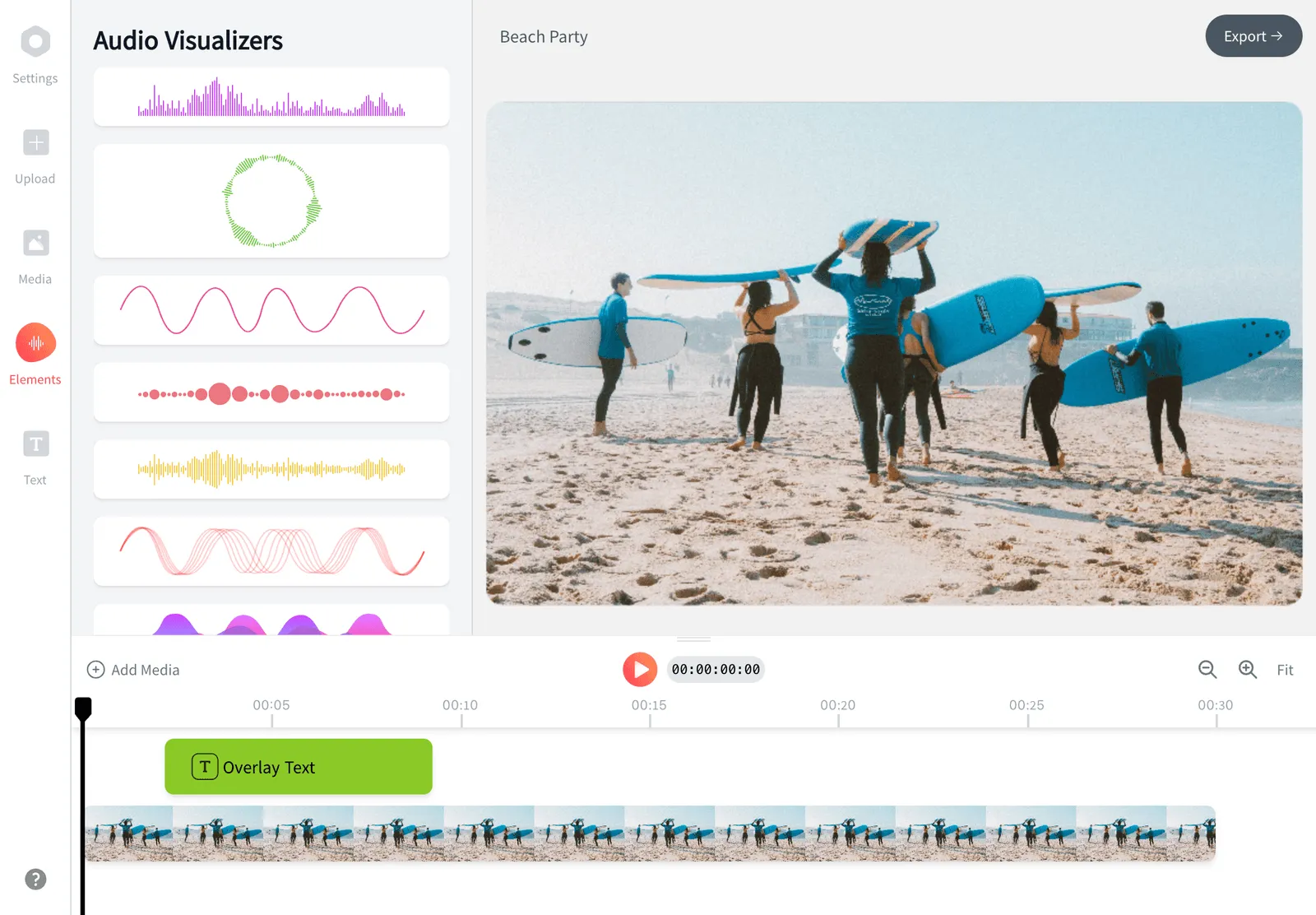
Japanese Subtitle Generator
Upload a video and the AI detects the Japanese and writes word-timed captions in natural mixed script. Edit any cue, pick from 176 styles, then burn the subtitles in free or download an SRT on a paid plan.

Japanese Subtitle Generator Features
EchoWave's Japanese subtitle generator is used by creators, localization teams and language learners around the world.





Built for Japanese
A Japanese subtitle generator that gets the script right
Japanese is written without spaces, mixes three scripts and is full of homophones, so generic caption tools stumble on it. EchoWave transcribes the audio, keeps every word timed, and lets you fix any cue before you export. It sits inside the same editor as our subtitle translator, bilingual subtitles tool and general caption generator, so one upload covers transcription, translation and styling. Related: transcribe Japanese audio.
-
176
caption style presets
-
86
Pro translation languages
-
4
subtitle file formats
-
20
video formats accepted
Why EchoWave
Japanese captions handled properly
Free to start in your browser, with no install needed.
-
A Japanese subtitle generator with auto language detection
Upload your video and hit generate. Whisper-class speech recognition detects that the audio is Japanese on its own, so there is no language picker to set first, and a manual From-language override exists if a noisy clip ever needs it. It is the same engine behind the add subtitles tool, tuned by nothing more than what it hears.
-
Kanji, hiragana and katakana render natively
Captions come out in natural mixed script, the way Japanese is actually written: kanji for content words, hiragana for particles and endings, katakana for loanwords and foreign names. Full-width punctuation such as 「」, 、and 。displays correctly in every preset. You can also upload a Japanese font like Noto Sans JP through the brand kit and it appears in the text style picker.
-
176 caption presets, including karaoke styles
Style the Japanese track with 176 named presets, from clean broadcast looks to word-by-word karaoke fills where the active word lights up as it is spoken. Per-word color and emphasis editing lets you make a single kanji compound pop. Browse the full range on the caption generator page.
-
Fix homophones cue by cue
Japanese speech recognition sometimes picks the wrong kanji for a sound-alike word, a classic case being げきじょう transcribed as 劇場 (theater) when the speaker meant 激情 (passion). Click any cue to correct the text, split a long line at a phrase boundary, or drag its timing on the timeline. Names and technical terms are worth a quick pass too.
-
Translate between Japanese and 85 other languages
One click translates the whole subtitle track; Japanese is a verified entry in the 86-language translation catalog. Turn Japanese footage into English subtitles, or go the other way and localize English content for the Japan market. Translation is a Pro feature. It rewrites the subtitle text only, it does not dub the voice audio.
-
Dual Japanese and English subtitles
Show the original Japanese line with a translation directly underneath, something learners and language teachers ask for constantly. The bilingual subtitles tool sets this up in a couple of clicks, and both lines stay editable.
-
Burn in, or download SRT, VTT, TXT and JSON
Hardcode the Japanese captions into the video so they display identically on every platform, or, on a paid plan, download the track as SRT, VTT, TXT or JSON for YouTube uploads and translation workflows. Existing SRT and VTT files import straight onto the timeline as editable cues, free; the add subtitles page covers that path.
-
Add a Japanese voice over
The editor includes 63 AI text-to-speech voices, five of them native Japanese (four female, one male), useful for narration, intros or an accessibility version of a clip. Try them on the Japanese text to speech page.
How it works
How to generate Japanese subtitles
From upload to a captioned export in four steps, all in your browser.
-
Upload your video
Drag in a file in any common format: MP4, MOV, WebM and MKV are accepted along with 16 others.
-
Generate the Japanese captions
Open the captions panel and hit generate. Speech recognition detects the spoken Japanese automatically and returns word-timed cues in kanji, hiragana and katakana. No settings to configure first.
-
Proofread and style
Read through the cues, correct any homophone slips or name spellings, then pick one of 176 caption presets and adjust the font, size and position. Keep lines short; professional Japanese subtitling commonly runs about 13 full-width characters per line.
-
Translate, burn in and export
Optionally translate the track into any of 86 languages (a Pro feature) or add a second bilingual line, then export. Free exports are 720p MP4 with a small removable watermark badge; paid plans add 1080p, 4K and clean exports.
Who it's for
What people caption in Japanese
-
YouTube videos for Japanese viewers
Burned-in Japanese captions keep muted viewers reading, while an SRT file, available on paid plans, feeds YouTube's own subtitle system and helps search pick up your content. Both come from the same generated track.
-
Shorts, Reels and TikTok in Japan
A lot of Japanese short-form viewing happens muted, on trains and in shared spaces, so the on-screen text carries the message. Karaoke presets with active-word fill hold attention through the whole clip, and the same captioned cut also works for X and LINE VOOM, both of which have outsized reach in Japan.
-
Japanese learners and teachers
Pair the original Japanese line with an English translation using dual subtitles, and let the word-by-word highlight show exactly what is being said as it is said. Editing a hard cue into kana is a quick way to simplify a line for beginners.
-
Interviews and podcasts
Transcribe a Japanese interview, tidy the transcript, then cut quote clips with captions already timed. Text-based editing means deleting a sentence from the transcript deletes the matching footage.
-
Localizing content for the Japan market
Take an English video, generate captions, translate them into Japanese and burn them in. Subtitles are the standard, honest route into Japan when a dubbed voice track is out of budget.
-
Company training and demos
Caption product demos, onboarding videos and all-hands recordings so Japanese-speaking staff can follow along in open offices or on mute. On a paid plan, download the TXT or JSON track when someone needs a written record.
Compare
How EchoWave compares
| Feature | EchoWave | Kapwing | VEED | HappyScribe |
|---|---|---|---|---|
| Auto Japanese subtitles | Yes | Yes | Yes | Yes |
| Free plan with video export | yes (720p, watermark badge) | yes (watermark) | yes (watermark) | trial (10 minutes) |
| Caption style presets | yes (176) | Yes | Yes | limited |
| Word-by-word karaoke highlight | Yes | Yes | Yes | No |
| Subtitle translation | yes (86 languages, Pro) | Yes | yes (paid) | yes (paid) |
| Bilingual dual subtitles | Yes | No | No | No |
| SRT import and export | yes (export on paid plans) | Yes | Yes | Yes |
| Full timeline video editor | Yes | Yes | Yes | basic |
| AI voice over included | yes (63 voices) | Yes | Yes | No |
| Human-made subtitle service | No | No | No | yes (paid) |
| AI dubbing of the voice track | No | yes (paid) | yes (paid) | yes (paid) |
| Stock music library | Yes | Yes | Yes | No |
Based on each tool's public pages as of July 2026. Plans and features change, so check current pricing pages before deciding.
Caption your Japanese video now
Upload a video, let the AI write word-timed Japanese captions, fix anything it misheard, and export. No install, no language settings, and no card required to start.
How creators use EchoWave in real projects

About the EchoWave team
EchoWave is a browser-based video and audio editor built by Lemon Vault LLC since 2018. The people who build the editor write these guides and test every step in the production app before publishing.
Japanese Subtitle Generator FAQ
How accurate is a Japanese subtitle generator?
Accuracy depends mostly on the audio: a clear single speaker transcribes very well, while crosstalk, loud background music or strong dialect lowers it. The most common Japanese-specific error is a homophone written with the wrong kanji, since so many words share a reading; katakana renderings of foreign names are the other usual suspect. EchoWave keeps every cue editable, so a proofread pass fixes these in minutes.
Does it output kanji, hiragana and katakana?
Yes. Transcription comes out in standard mixed script, the way Japanese is normally written: kanji for content words, hiragana for particles and verb endings, katakana for loanwords and foreign names. All 176 caption presets render these scripts natively, including full-width punctuation.
Do I need to tell it the video is in Japanese?
No. Speech recognition auto-detects the spoken language, so there is no upfront menu to set. If detection ever goes wrong on a noisy clip, a manual From-language override is available after transcription.
Can I translate the Japanese subtitles into English?
Yes. Subtitle translation is a Pro feature that covers 86 languages, and Japanese to English is the most requested pair. This translates the subtitle text only, it does not re-voice the audio, and you can keep the Japanese line on screen alongside the English one as bilingual subtitles.
How long should a line of Japanese subtitles be?
Professional Japanese subtitling conventions commonly run to about 13 full-width characters per line, two lines maximum, at a reading speed near 4 characters per second. Since Japanese has no spaces, break lines at natural phrase boundaries rather than mid-word. You can split or merge any cue on the timeline to match this.
Can it add furigana readings above kanji?
No, EchoWave does not render ruby text above kanji. Two practical workarounds exist for learner or child audiences: edit a difficult cue into kana, or switch on bilingual subtitles so a translated line carries the meaning.
Can I make vertical (tategaki) Japanese subtitles?
No, captions render horizontally, which is also what YouTube, TikTok and other web platforms use for subtitles. You can still position the caption block anywhere on the frame and control the font, size and colors per preset.
What subtitle formats can I export?
Burned-in captions rendered permanently into the video are free at 720p. On a paid plan you can also download SRT, VTT, TXT and JSON files. You can import an existing SRT or VTT file and restyle it, free.
Is the Japanese subtitle generator free?
Yes, the free plan covers upload, transcription, cue editing, styling and a burned-in video export. Free exports are HD 720p MP4 with a small removable EchoWave badge and a short end card; paid plans remove those and add 1080p, 4K and further formats such as WebM and MOV.
Ready to caption your Japanese video?
Generate word-timed Japanese subtitles free in your browser; free exports carry a small removable badge.
Get Started →