What Is a Video Podcast (Vodcast)?
A video podcast, also called a vodcast or videocast, is a podcast that pairs video with the audio so people can watch as well as listen. This guide covers what a video podcast is called, why it matters in 2026, the gear you need, and how to start one. No camera yet? Turn your existing audio into a watchable video free with EchoWave.

What Is a Video Podcast (Vodcast)? Features
A video podcast is a podcast you watch, not just one you hear. It combines a normal audio episode with video, which can be anything from a full camera recording of the hosts to a simple still image or an animated waveform over the sound. The format is also called a vodcast, a videocast, or a vidcast, and a single show is often published in both audio and video at once.
The quick version:
- A podcast is audio only. A video podcast adds a visual layer, so the audience can see faces, screens, and on screen graphics.
- It is published the same way a podcast is, but on video friendly platforms like YouTube and Spotify as well as Apple Podcasts.
- You do not need a film crew. You can start with a phone and a microphone, or skip the camera entirely and convert your audio into a video with a cover image or waveform.
What people are saying about EchoWave
What is a video podcast called?
There is no single official term, which is why people search for it so often. The same format goes by several names, and they all mean the same thing:
- Video podcast is the clearest and most searched name, and the one YouTube and Spotify use.
- Vodcast is a blend of video and podcast (sometimes expanded as video on demand cast). It is common in the UK and Europe.
- Videocast is the same word with the join spelled out. EchoWave uses videocast and vodcast interchangeably with video podcast.
- Vidcast is an older, less common variant.
A podcast that includes video is most often just called a video podcast or a vodcast. If you are picking a label for SEO and clarity, use video podcast in titles and descriptions, since that is the phrase audiences actually type and the term platforms surface.
Video podcast vs audio podcast
The simplest way to think about it: a podcast is radio, a video podcast is television. An audio show built around the microphone with the camera bolted on afterwards is still essentially a podcast with a video file attached. A show built to be watched, with framing, lighting, and on screen visuals planned from the start, is a true video podcast. Here is how the two formats compare.
| Factor | Audio podcast | Video podcast (vodcast) |
|---|---|---|
| What the audience does | Listens | Watches and listens |
| Core gear | Microphone, recording app | Microphone, camera, lighting |
| Main platforms | Apple Podcasts, Spotify, RSS apps | YouTube, Spotify, plus audio feeds |
| Best moments to consume | Driving, gym, chores | Sitting, lunch break, second screen |
| Editing effort | Audio cleanup | Audio plus video sync, color, graphics |
| Repurposing | Audiograms, quotes | Clips, Shorts, Reels, TikToks |
| Trust and connection | Voice only | Faces, body language, expressions |
You do not have to choose one. Most shows now record video and publish both: the video goes to YouTube and Spotify, and the audio goes to the regular podcast apps from the same recording.
Why video podcasts matter in 2026
Video has moved from a nice extra to the default expectation. The numbers behind the shift are hard to argue with:
- Around 51% of Americans aged 12 and over have watched a video podcast at least once, and roughly 37% watch one every month, according to Edison Research.
- YouTube is now the top podcast destination, with about 37% of weekly listeners naming it their primary platform, ahead of Spotify, and over 1 billion monthly podcast viewers reported in early 2025.
- Just over half of shows now post full video episodes on YouTube, more than double the share in 2022.
- Discovery is visual. Clips autoplay muted as people scroll, so a video episode hands you ready made content for Shorts, Reels, and TikTok, and a strong SEO presence on the world's second largest search engine.
The practical takeaway: adding video roughly multiplies the places a single recording can live. The same hour of conversation becomes a YouTube video, a Spotify video episode, an audio episode, and a dozen short vertical clips.
Types of video podcasts
Video podcasts are not one thing. They sit on a scale from almost no extra work to a full production, and you can move up the ladder as your show grows.
| Type | What it is | Gear needed | Effort |
|---|---|---|---|
| Static image or waveform | Your audio over a cover image or an animated waveform | None beyond an audio file and a tool | Lowest |
| In studio | Cameras film the hosts in one room | One or more cameras, lighting | Medium |
| Remote interview | Each guest is recorded on their own webcam | Remote recording app, decent webcams | Medium |
| Interview plus B roll | Camera footage cut with extra clips and graphics | Cameras, footage, editing time | Highest |
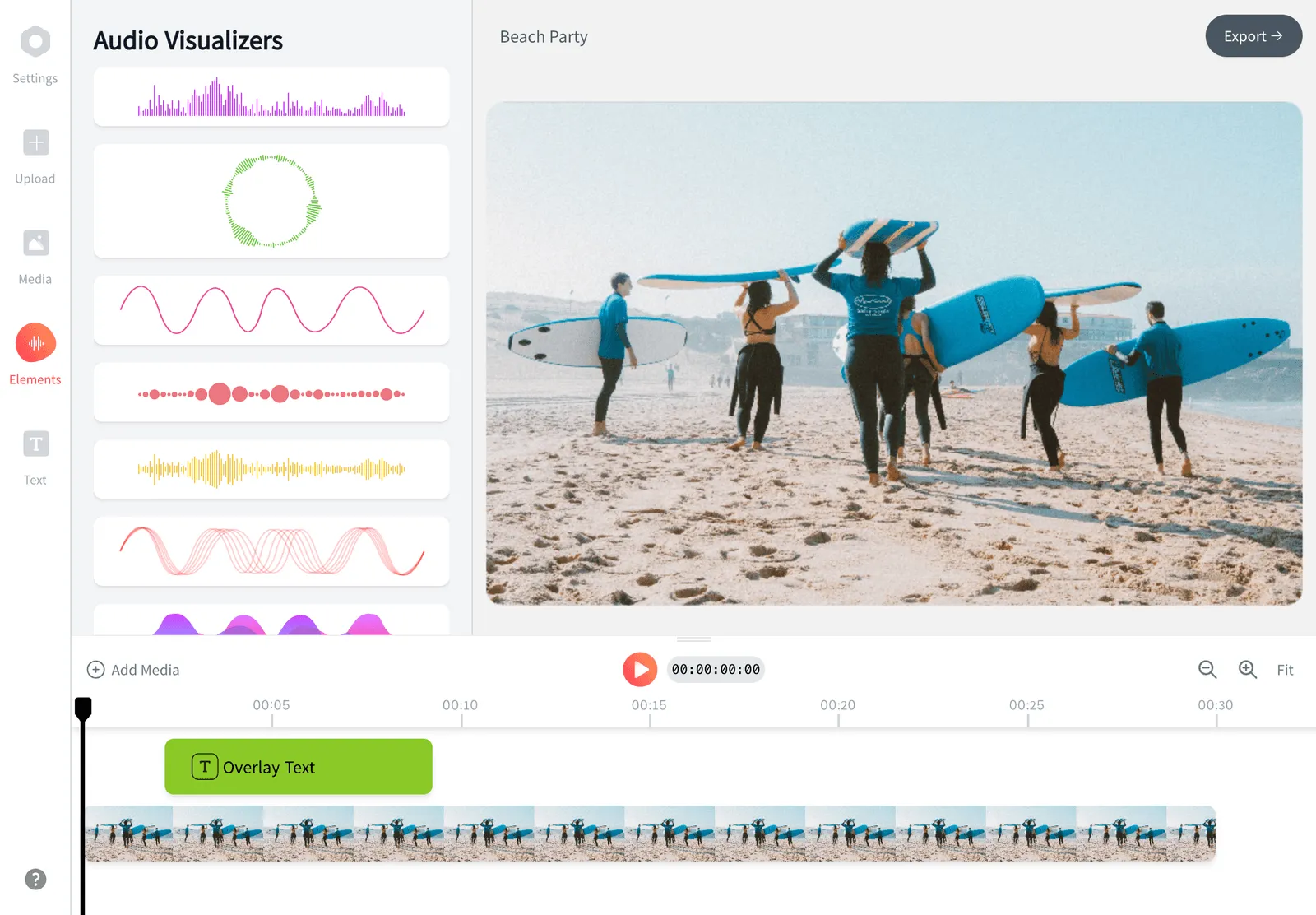
The static image or waveform type is the easiest entry point and the one most people overlook. If you already publish an audio podcast, you can turn each episode into a video for YouTube and Spotify in minutes without buying a single piece of camera gear. EchoWave's podcast to video tool does exactly this: drop in your MP3, add your cover art or a moving waveform, and export a video that platforms accept.
Start a video podcast with zero camera gear
Video podcast equipment: what you actually need
You can spend nothing or thousands. Here is a realistic ladder based on 2026 prices, so you only buy what your show needs.
Free, no camera (best place to start):
- An audio recording you already have
- A cover image or logo, plus EchoWave to turn it into a video with a waveform and captions
Starter kit, around $150 to $400:
- A USB microphone such as the Audio-Technica ATR2100x or Rode PodMic (roughly $90 to $130)
- A webcam like the Logitech C920, or your phone on a tripod
- One LED light or a ring light to kill shadows
- Closed back headphones to monitor sound
Upgraded setup, $1,000 and up:
- A mirrorless or DSLR camera, ideally one camera per host for angles
- Softbox lighting and an audio interface for XLR microphones
- Acoustic treatment for the room and a tidy, on brand background
A hard rule worth repeating: audio quality beats video quality every time. People will forgive a soft image but they will click away from bad sound. Spend on the microphone and the room before the camera.
How to start a video podcast in 6 steps
- Plan the show. Pick a clear topic and audience, decide on a format (solo, interview, panel), and line up at least a handful of episode ideas before you record anything.
- Set up to record. Frame the camera at eye level, get the microphone close, light your face, and put your phone in airplane mode so nothing interrupts. For remote guests, use a recording app that captures each person on a separate track.
- Record audio and video. Hit record on both, do a clap or countdown to sync later, and let the conversation breathe. Record audio separately when you can, since clean isolated sound is far easier to fix in the edit.
- Edit. Sync the audio to the video, trim dead air and mistakes, balance the sound, then add titles, lower thirds, and a simple intro. Keep cuts tight; pace keeps people watching.
- Add a visual layer if you have no camera. No footage? Use EchoWave to put your audio over your cover art or a waveform, add captions, and you have a video episode without filming.
- Publish and promote. Upload to YouTube and Spotify, send the audio to your podcast host, then cut the best 30 to 60 seconds into vertical clips for Shorts, Reels, and TikTok.
Best size and format for video podcasts
For YouTube and Spotify, export a 16:9 widescreen video at 1080p or higher, as MP4 with H.264 video and AAC audio, which is what every major platform recommends. For social clips, cut vertical 9:16 or square 1:1 versions and keep them under about 60 seconds. EchoWave exports a platform ready MP4 by default, so you do not have to think about codecs.
How long should a video podcast be?
There is no single right answer, but these ranges work well by format: 15 to 20 minutes for solo updates and quick tips, 20 to 40 minutes for interviews (the sweet spot for most shows), 40 to 60 minutes for deep dives, and 60 minutes or more once you have a loyal audience. For the social clips you cut from each episode, aim for 30 to 60 seconds. Consistency of schedule matters more than hitting an exact length.
Where to publish a video podcast
You will usually publish to more than one place from the same recording. The big three:
- YouTube is the default home for video podcasts. It is free, it is searchable, and it is now the most popular podcast platform for weekly listeners. Add chapters, a strong thumbnail, and a clear title.
- Spotify supports video episodes through Spotify for Creators, so the same upload reaches people who already listen to audio there but want to watch.
- Apple Podcasts and other audio apps take your audio feed through your podcast host, so listeners who prefer audio still get every episode.
A common, efficient workflow: record once, upload the video to YouTube and Spotify, and let your podcast host push the audio to Apple Podcasts and the rest. If you started as an audio show, the missing piece is a video file for YouTube, and that is the exact gap EchoWave's podcast to video and MP3 to YouTube tools fill.
A video podcast example
A well known example is Still Untitled: The Adam Savage Project, which publishes as both a YouTube video and a standard audio podcast from the same recording. That dual approach, one recording feeding both a watch audience and a listen audience, is the model most successful shows now follow.
Tips for a better video podcast
- Get the sound right first. Record audio on a dedicated microphone, mute the camera's built in mic in the edit, and add your clean track back.
- Light your face. A single soft light in front of you beats an expensive camera in a dark room.
- Look at the lens, not the screen. Eye contact with the camera reads as eye contact with the viewer.
- Add captions. Most social viewing happens muted, so on screen captions keep clips understandable without sound.
- Repurpose every episode. One recording should produce a long video, an audio episode, and several short clips. Plan the clips while you record.
- Improve from feedback. Watch your retention graphs and read comments to learn which topics and lengths hold attention.
Sources & further reading
- The Infinite Dial 2026, Edison Research
- Celebrating 1 billion monthly podcast users on YouTube, YouTube Official Blog
- Upload your video podcasts to Spotify, Spotify for Creators

About the EchoWave team
EchoWave is a browser-based video and audio editor built by Lemon Vault LLC since 2018. The people who build the editor write these guides and test every step in the production app before publishing.
Video Podcast FAQ
What is a video podcast called?
A podcast that includes video is most commonly called a video podcast or a vodcast. You will also see videocast and the older vidcast. They all mean the same thing: a podcast you watch as well as hear. For titles and search, video podcast is the clearest term to use.
What is a podcast with video called?
A podcast with video is called a video podcast, a vodcast, or a videocast. Vodcast is a blend of video and podcast and is common in the UK and Europe. The format is the same whichever name you use.
What is the difference between a podcast and a video podcast?
A podcast is audio only and is consumed by listening. A video podcast adds a visual layer so the audience can watch the hosts, screens, and graphics as well as listen. Most shows now record video and publish both an audio and a video version from one recording.
How do I make a video podcast without a camera?
Take an audio episode you already have, add your cover art or an animated waveform with captions using EchoWave, and export an MP4. That gives you a video episode for YouTube and Spotify with no filming, no camera, and no studio.
What equipment do I need to start a video podcast?
At a minimum, a microphone and a camera (a phone works) plus one light. A solid starter kit runs about $150 to $400: a USB microphone, a webcam or phone on a tripod, a light, and headphones. If you have no camera, you can start free by turning your audio into a video instead.
Where can I publish a video podcast?
YouTube is the main home for video podcasts, followed by Spotify, which supports video episodes through Spotify for Creators. Send the audio version to Apple Podcasts and other apps through your podcast host so listeners get every format from one recording.
How long should a video podcast be?
Solo updates work at 15 to 20 minutes, interviews at 20 to 40 minutes, and deep dives at 40 to 60 minutes or more for loyal audiences. Cut 30 to 60 second clips for social. Consistency matters more than hitting an exact length.
What format and size should I export a video podcast in?
Export a 16:9 widescreen MP4 at 1080p or higher using H.264 video and AAC audio for YouTube and Spotify. For social clips, export vertical 9:16 or square 1:1 versions under about 60 seconds. EchoWave produces a platform ready MP4 by default.
Are video podcasts worth it?
For most creators, yes. Around half of US listeners have watched a video podcast, YouTube is now the top podcast platform, and a video episode produces clips for Shorts, Reels, and TikTok. The extra effort can be as small as adding a waveform to audio you already record.
Can I turn my existing audio podcast into a video podcast?
Yes. Upload your MP3 or WAV to EchoWave, add your cover image or a waveform, add captions, and export a video. You can then upload it to YouTube and Spotify alongside your usual audio feed without re-recording anything.
Is a vodcast the same as a video podcast?
Yes. Vodcast is simply another name for a video podcast, short for video podcast or video on demand cast. Videocast and vidcast are also the same thing. There is no functional difference between the terms.
Do video podcasts help with SEO and growth?
They can. Publishing on YouTube puts your show on the world's second largest search engine, video clips autoplay in social feeds, and a watchable episode builds more trust through faces and expressions. That combination usually widens reach beyond an audio only feed.
Ready to make your video podcast? Free, in your browser
Turn the audio you already record into a watchable video for YouTube and Spotify in minutes, with a waveform, cover art, and captions.
Turn Audio into a Video Podcast