How to Choose Your First Podcast Topic
Your first podcast topic decides almost everything that follows: who listens, what episodes you can record, which guests will say yes, how easily a fan can describe the show to a friend, and whether you still want to record episode 40. Pick well and the rest of the work gets easier. Pick a topic that is too broad, too narrow, or built on a subject you do not actually enjoy, and most shows quit inside seven episodes. That cliff has a nickname in the industry: podfade.
There is a lot of room, but most of it is empty. In 2026 there are roughly 4.7 million podcasts indexed worldwide, yet only about 350,000 to 450,000 are truly active and publishing, which is 8 to 9 percent of the total. The other 90 percent stopped. A focused topic is the single biggest reason a show survives long enough to find an audience.
This guide gives you a repeatable way to choose a podcast topic: how to find the overlap between what you can talk about, what people search for, and what you can keep doing for years. It includes the 50-episode test, demand checks you can run in an afternoon, a niche worksheet, real examples, the mistakes that kill new shows, and a one-sentence show promise you can write today.
Quick answer: how to choose a podcast topic
A strong podcast topic sits at the overlap of four things:
- You can talk about it on repeat without forcing it or running dry.
- A specific person cares about it, not "everyone."
- You bring a useful angle, from experience, access, curiosity, or a point of view.
- It can produce dozens of episodes, so the show has somewhere to grow.
To pick your first podcast topic, run any candidate through these questions:
- Who exactly is the listener, and what brings them back?
- Can you write 50 episode ideas without repeating yourself?
- Do you have credibility, access, real curiosity, or hard-won experience?
- Is the topic narrow enough to stand out in a search result?
- Is it broad enough to last two or three years?
- Can you explain the whole show in one clear sentence?
If a topic clears all six, you have a contender. The rest of this guide shows you how to pressure-test it.
Start with the listener, not the subject
A podcast topic is far stronger when it points at a person rather than a category.
- Weak: "A podcast about marketing."
- Stronger: "A podcast for solo consultants who want practical marketing systems without hiring an agency."
The second version does work for you. It tells you which episodes to make, which guests to invite, what examples will land, what language to use in titles, and even what your cover art should signal. "About marketing" tells you none of that, which is why broad shows feel generic and hard to recommend.
Write a one-line listener portrait before you commit. For example: "A 34-year-old freelance designer with ADHD who has tried five productivity systems and abandoned all of them." When the listener is that vivid, episode ideas almost write themselves.
Choose a topic you can repeat, package, and promote
A strong podcast topic does not just sound interesting once. It creates a repeatable lane for episode ideas, guest outreach, clips, newsletters, and search-friendly guides.
What our creator community is saying
Find the overlap: passion, skill, and demand
The most durable podcast topic lives where three circles meet:
- Passion: subjects you already talk about for free, the ones friends are tired of hearing about.
- Skill or experience: what you can do, have lived through, or have spent years learning.
- Demand: questions real people are already searching for and paying to solve.
Miss one circle and you can predict the failure. Passion plus skill with no demand is a hobby nobody finds. Skill plus demand with no passion burns you out by episode 10. Passion plus demand with no skill is fine if you build a learning-in-public or interview show, where you bring curiosity and your guests bring the expertise. Two of the most cited examples, Smart Passive Income and Eventual Millionaire, started exactly this way: the host was the student, and the guests were the experts.
Make three lists, then circle the topics that appear on at least two. Those are your shortlist.
Use the 50-episode test
Open a blank document and write 50 episode ideas for your candidate topic. This is the fastest way to separate a real topic from a passing interest. If you run dry at 12, the topic is probably too narrow, or it interests you less than you thought. Established planners use a higher bar, the 100-episode test, because a topic that can sustain 100 episodes can sustain a show for years.
As you write, sort the ideas into clusters. Natural clusters are a green light:
- Beginner questions
- Advanced tactics
- Common mistakes
- Case studies and teardowns
- Guest interviews
- Tools and gear
- Trends and news reactions
- Personal stories
- Listener questions
- Contrarian takes
If the clusters fill out on their own, the topic has depth. If three clusters are empty, widen the topic slightly or pick a different angle.
Pick a defensible angle
Most worthwhile topics are already crowded. Your angle is what makes the show memorable and recommendable, and it is usually a combination rather than a brand-new subject. Common angles:
- Audience: "for first-time founders," "for nurses switching to tech."
- Format: "15-minute teardown episodes," "one guest, one decision."
- Belief: "growth without paid ads," "slow over hustle."
- Access: "interviews with local business owners no one else books."
- Style: "plain-English breakdowns of dense topics."
- Outcome: "helping creators sell their first digital product."
A reliable trick is to combine two niches you already belong to. "Running" is crowded. "Running for people with desk jobs and bad knees" is yours. "Personal finance" is saturated. "Personal finance for touring musicians" is wide open. Two overlapping niches turn a red ocean into a blue one.
Check demand before you commit
Research keeps you from making a show no one asked for. You can validate a topic in an afternoon with free tools. Look for the questions, not just the competitors.
- Podcast apps: search your topic in Apple Podcasts and Spotify. A few strong shows is healthy demand. Zero shows is a warning, not an opportunity, because it often means no audience.
- YouTube autocomplete: type your topic and read the suggestions. Five or more related searches is a good sign.
- Google Trends and autocomplete: rising interest and a long tail of "how to" queries mean people are actively searching.
- Reddit and Quora: the exact wording of questions in your niche is the wording you should use in episode titles.
- Amazon and Udemy: search your topic for books and courses, then read the tables of contents and module lists. Each chapter is a potential episode, and a busy market means people pay to learn this.
- Your own inbox: the questions friends, clients, or customers ask you again and again are pre-validated episode topics.
Do not copy a successful show. Study the gaps around it: the questions its reviews complain are unanswered, the audience it ignores, the format nobody is using yet.
Broad topic vs. better podcast topic
The single most common beginner mistake is choosing a topic that is too broad. Here is what narrowing looks like in practice, plus why the narrower version wins.
| Broad topic | Better podcast topic | Why it works |
|---|---|---|
| Fitness | Strength training for busy parents over 40 | Clear listener, clear constraint, easy to recommend |
| Business | Pricing and packaging for solo SaaS founders | Specific pain, buyers with budget, strong guest pool |
| Movies | Practical lessons from low-budget horror films | Fresh angle on a crowded subject |
| Food | Regional baking traditions and the families behind them | Built-in stories and guests, endless episodes |
| Productivity | ADHD-friendly systems for freelance designers | Underserved audience that shares obsessively |
| Travel | Slow travel for remote workers with families | Combines two niches into one ownable lane |
| Personal finance | Money for touring musicians and gig artists | Specific life, almost no competition |
| True crime | Solved cold cases from one US state | Local angle, repeatable structure, loyal niche |
Notice the pattern: each "better" version names a person and adds one constraint. That is the whole move.
Know your motivation and goal
Before you lock a topic, get honest about why you are making the show, because the right topic depends on it.
- For fun or a hobby: pick something you would happily talk about with no audience at all.
- To grow a business or skill: pick a topic loosely tied to what you sell, so listeners become leads. Be careful here, a how-to show attracts do-it-yourselfers, not buyers of a done-for-you service.
- To build authority: pick a topic where you can demonstrate, not just discuss.
- To make money: check that the niche has products, courses, or sponsors before you start, not after.
Then set one concrete goal instead of a vague wish. "Grow my audience" is not a goal. "Reach 1,000 downloads a month within six months" is, and it tells you whether your topic is working.
Avoid these topic traps
These are the patterns behind most shows that fade:
- Picking a topic only because it is trending right now.
- Choosing a niche you do not actually want to research deeply for years.
- Making the show "for everyone," which means it is for no one.
- Starting with a clever title before the audience is clear.
- Copying another show's format with no new angle.
- Choosing a topic that cannot generate repeat episodes.
- Picking a subject so expensive or hard to produce that you cannot sustain a schedule.
Write your show promise
A topic becomes a show when you can say it in one sentence. Use this template:
"[Show name] helps [specific listener] understand [topic] so they can [outcome]."
Example: "Small Studio Systems helps freelance video editors build repeatable workflows so they can deliver better client projects without working nights."
If that sentence is clear and a stranger instantly knows whether the show is for them, you are close. If it needs a paragraph of explanation, narrow the topic until it fits.
Turn the topic into launch assets
Once the topic holds up, build the launch kit so the first month is not a scramble:
- 10 episode titles drawn from your 50-idea list
- 3 guest ideas with a one-line pitch each
- 3 solo episode outlines
- 1 trailer script (60 to 90 seconds)
- Podcast cover art
- A short show description and a longer website version
- 5 social clip ideas pulled from your strongest episodes
This is where the topic starts paying off. A focused show is far easier to promote, because every clip, title, and guest reinforces the same promise.
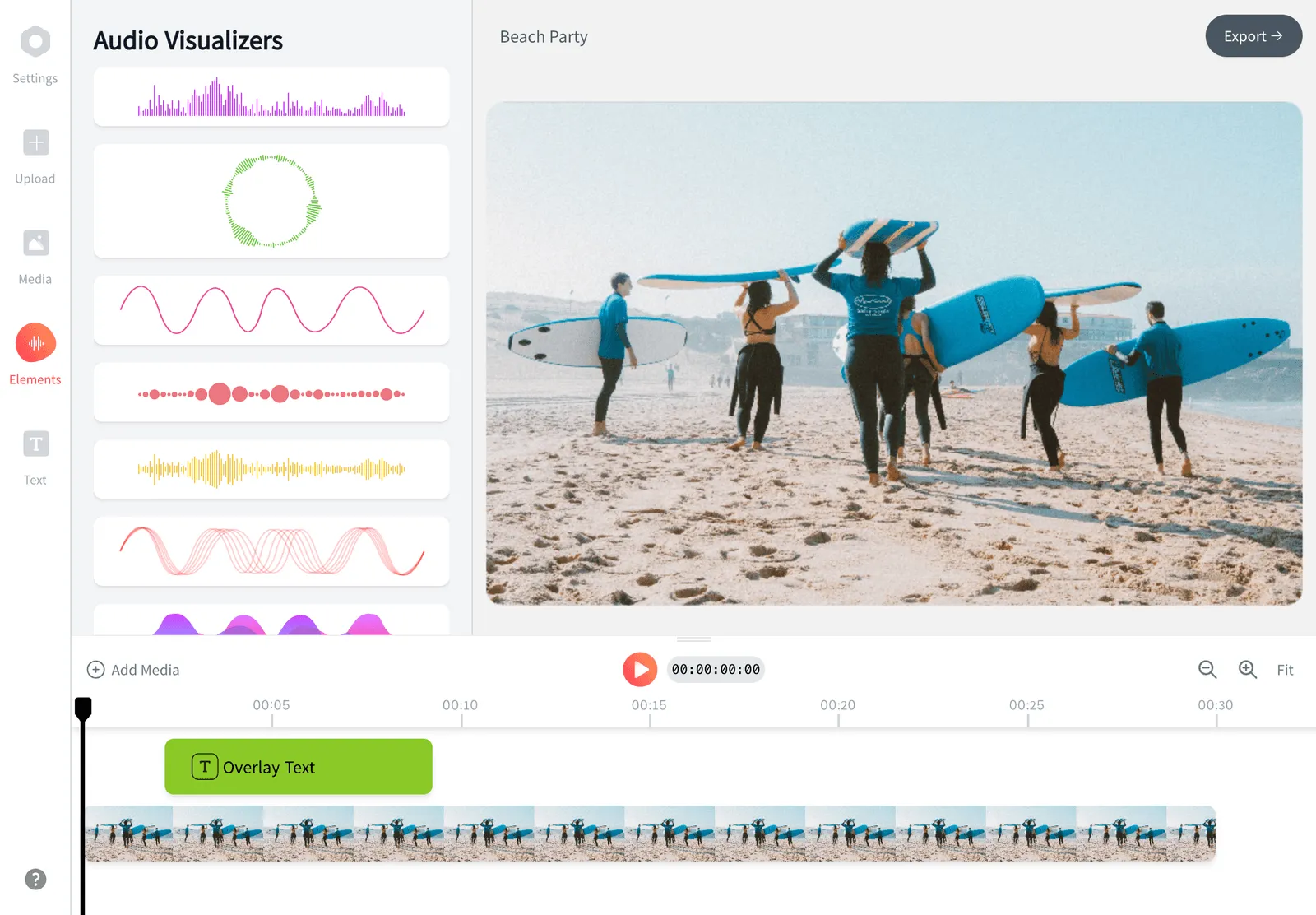
When it is time to put the show in front of people, EchoWave turns your audio into shareable video right in the browser. Build a podcast trailer with an audio waveform, add cover art to an episode with the add image to MP3 tool, or caption short clips for social in the online video editor. Audiograms and captioned clips are the most reliable way to get a podcast discovered on feeds that autoplay muted video.
Final recommendation
Choose a podcast topic you can sustain. The best first topic is specific enough that a listener immediately thinks "this is for me," yet flexible enough that you can keep learning in public for years. Run your shortlist through the 50-episode test, validate demand with free tools in one afternoon, write the one-sentence promise, and commit. A clear topic is what carries a show past the seven-episode cliff to the audience on the other side.
The fastest test: can you describe it in one sentence?
Sources & further reading
- Podcast Stats: How many podcasts are there?, Listen Notes
- Get started with Google Trends, Google Trends Help

About the EchoWave team
EchoWave is a browser-based video and audio editor built by Lemon Vault LLC since 2018. The people who build the editor write these guides and test every step in the production app before publishing.
Frequently Asked Questions
How do I choose a podcast topic?
Find the overlap of three things: a subject you enjoy talking about, real experience or access you can bring, and demand you can verify. Then narrow it to a specific listener, run the 50-episode test, and write a one-sentence show promise. If you can fill 50 episode ideas and describe the show in one line, you have a strong topic.
What makes a good first podcast topic?
A good first podcast topic is narrow enough to stand out and broad enough to last years. It names a specific listener, lets you bring a useful angle, and can generate dozens of episodes. The test is whether a stranger instantly knows if the show is for them.
How specific should my podcast topic be?
Specific enough to name one listener and one constraint. "Fitness" is too broad. "Strength training for busy parents over 40" is right: it is clear, recommendable, and still has room for hundreds of episodes. Narrow the topic until you can picture exactly who presses play.
How do I know if there is demand for my podcast topic?
Validate it in an afternoon with free tools. Search the topic in Apple Podcasts and Spotify, read YouTube and Google autocomplete suggestions, scan Reddit and Quora for the questions people ask, and check Amazon and Udemy for books and courses on it. A busy market is a healthy sign, not a closed door.
Do I need to be an expert to start a podcast?
No. If you have passion and demand but limited expertise, build a learning-in-public or interview show where your guests bring the knowledge and you bring curiosity. Many well-known shows started with the host as the student rather than the authority.
What is the 50-episode test?
Open a blank document and write 50 episode ideas for your topic. If they come easily and group into natural clusters like beginner questions, case studies, and interviews, the topic has depth. If you run dry around 12 ideas, the topic is too narrow or interests you less than you thought.
How do I find a unique angle for a crowded topic?
Combine two niches you already belong to. "Running" is crowded, but "running for people with desk jobs and bad knees" is open. You can also differentiate by audience, format, belief, access, style, or the outcome you promise. The angle, not the subject, is what people remember.
What are common mistakes when choosing a podcast topic?
Picking a topic only because it is trending, making a show for "everyone," choosing a niche you do not want to research for years, starting with a clever title before the audience is clear, copying a format with no new angle, and choosing a topic that cannot produce repeat episodes.
How many podcast topic ideas should I brainstorm first?
Start with a wide list of every topic you feel excited about, then circle the ones that match your experience, clear demand, and long-term interest. Test your top two or three against the 50-episode test before you commit to one.
Can my podcast topic change later?
Yes, and many shows refine their topic after the first season once they see which episodes land. Choose a topic flexible enough to evolve, but resist switching subjects entirely, since a consistent focus is what builds a loyal audience.
How do I turn my podcast topic into a show people can find?
Write a one-sentence promise, then build launch assets: 10 episode titles, a trailer, cover art, and a handful of social clips. Convert episodes and trailers into video with EchoWave's audio waveform generator, add cover art to your audio, and caption clips so they get discovered on muted, autoplaying feeds.
Ready to launch your podcast? We have a free plan!
Turn your episodes and trailer into shareable video clips right in your browser. No credit card required, our free plan includes a small Echowave.io watermark.
Get Started →