How to Name Your Podcast
Your podcast name is the first thing a new listener reads, often before they hear a second of your audio. It shows up in search results, in app directories, on social profiles, and in every word of mouth recommendation. A good name makes people curious and easy to find you again. A confusing one quietly costs you listeners you never knew you lost.
This guide walks through exactly how to name your podcast: how to brainstorm, how to check the name is free, how long it should be, and how to pick a final title that is clear, searchable, and easy to say out loud. If you want the short version, here it is.
How to name your podcast (quick answer):
- Brainstorm 20 or more rough ideas without filtering.
- Cut to a shortlist of names that are clear about your topic.
- Check each one against Apple Podcasts, Spotify, Google, social handles, a domain, and trademark records.
- Keep it short, ideally around 16 to 29 characters, and easy to pronounce.
- Say the finalists out loud, test them on your target audience, then commit.
The rest of this page explains each step, with the specifics most other guides skip.
What makes a good podcast name
Before you brainstorm, it helps to know what you are aiming for. The best podcast names share five traits. Use them as a scorecard for every idea on your list.
- Clear about the topic. A listener should get a rough idea of what the show is about from the name alone. "Crime Junkie" and "TED Radio Hour" tell you exactly what you are in for. Clarity beats cleverness almost every time.
- Short and memorable. Across an analysis of more than 650,000 podcasts by Pacific Content, the median title length is 20 characters and the most common length is 16. Three quarters of all podcast titles are 29 characters or fewer. Short names are easier to remember, easier to say, and far less likely to be cut off in an app.
- Easy to say and spell. Word of mouth is still one of the biggest drivers of new listeners. If a friend cannot repeat your title without stumbling, they will not recommend it. Avoid ambiguous spellings, made up words that sound like something else, and punctuation that does not read aloud.
- Unique and ownable. A name that clashes with an existing show splits your search traffic and confuses listeners. You want a title you can claim across directories, social media, and ideally a domain.
- True to your tone. A comedy show and a true crime show should not sound the same. The name sets an expectation, so match the energy of your content.
If an idea fails on clarity or pronounceability, drop it no matter how clever it feels.
What our creator community is saying
Step 1: Brainstorm as many podcast names as you can
Great names come from quantity first, judgement second. Open a notes doc or grab a notebook and write down every word and phrase tied to your show: the topic, the format, the audience, the feeling you want, key vocabulary your listeners use, and any in jokes from your niche.
Do not edit while you write. Your first ten ideas are usually the obvious ones. The interesting names tend to show up around idea fifteen or twenty, once the safe options are out of your head. Aim for at least 20 candidates before you stop.
A few prompts that reliably produce ideas:
- Describe the outcome. What does a listener walk away with? "Sleep With Me" and "How I Built This" both name the payoff.
- Use wordplay carefully. Puns like "Pod Save America" work when they are instantly understandable. If a joke needs explaining, it will not survive being said out loud.
- Combine two words. "Radiolab" and "Freakonomics" show how a coined word can feel ownable while still hinting at the theme.
- Try a subtitle format. A short brand name plus a clarifying tagline, joined with a colon, gives you a memorable hook and a searchable description in one line.
Keep the list open for a day or two. Names you sleep on tend to sort themselves into keepers and throwaways.
Step 2: Refine your list to a shortlist
Now switch from generating to cutting. Read each idea against the five traits above and ask three questions: Is it clear about the topic? Could a stranger spell it after hearing it once? Does it fit the tone of my show? Anything that fails twice comes off the list.
There is no magic number, but a shortlist of five to eight names is a good target. That is enough variety to test, without so many that you stall. Read each survivor out loud and imagine saying it as the first line of every episode: "Welcome to ...". The ones that feel natural stay.
Descriptive vs brandable names
Most podcast names fall into one of two camps, and knowing which you are leaning toward sharpens your shortlist.
- Descriptive names say what the show is, like "The Wellness Way" or "Marketing Made Simple". They win at discoverability because they contain the words people search, and a brand new listener understands them instantly.
- Brandable names are coined or abstract, like "Serial" or "Radiolab". They are more distinctive and easier to trademark, but they need marketing to teach people what they mean, so they suit creators with an existing audience or budget.
New and independent shows usually benefit from leaning descriptive, because search and clarity do the heavy lifting that a marketing budget would otherwise have to.
Step 3: Check the name is actually available
This is the step that saves you from a painful rename six months in. Run every shortlisted name through the following checks before you fall in love with it.
- Podcast directories. Search Apple Podcasts, Spotify, and a catalog like Listen Notes. If a show with the same or a near identical name already exists, cross the name off. Two shows sharing a title split search traffic and confuse listeners.
- A plain Google search. Look for businesses, products, or media using the name. You want the search results page to be clear, not crowded with stronger brands you will never outrank.
- Social handles. Check the same handle on the platforms you plan to use. You do not need a perfect match across every network, but the handle should clearly relate to the name, and using one consistent handle everywhere makes you far easier to follow.
- A domain name. A matching .com is a bonus, not a must, but check it. A clean domain makes a show page, an email address, and any future website simpler.
- Trademark records. For anything you plan to build a brand around, search the USPTO Trademark Electronic Search System (or your country's equivalent) for the exact name and close variations. Even an unregistered name can carry common law trademark rights if someone has used it commercially, so a clear search protects you later.
If a name passes all five, it is genuinely yours to take. If it fails one of the first two, drop it and move on.
Skip the word "podcast" in your title
Step 4: Get the length and format right
Length is where good names quietly go wrong. Technically, a podcast title can run up to 255 characters, but that is a hard limit, not a target. The data on real shows is clear: the median title is around 20 characters, the most common length is 16, and three quarters of titles sit at 29 characters or fewer. Apple clips longer titles in its directory at roughly 30 characters on smaller screens, so anything past that risks being cut off mid word.
A few format rules that keep your title clean and findable:
- Front load the meaningful words. Directories and search engines ignore filler like "the" and "a", so put the words that matter first.
- Avoid special characters and emoji. They break search, look unprofessional, and can get a show flagged.
- Do not keyword stuff. Cramming a list of search terms into your title is against Apple's guidelines and can get your show removed from the directory. Choose one clear name with one or two natural keywords, not a sentence of them.
- Mind numbers and acronyms. "24/7" and "Q&A" read fine on a page but cause confusion when spoken or searched. Spell out anything ambiguous.
Recommended podcast title length
| Title length | Verdict | Notes |
|---|---|---|
| 1 to 15 characters | Ideal | Punchy, fully visible everywhere, easy to recall |
| 16 to 29 characters | Recommended | Where most successful shows land, room for a keyword |
| 30 to 60 characters | Use with care | Risks being clipped in Apple Podcasts on mobile |
| 60 to 255 characters | Avoid | Allowed but reads as spam and gets truncated |
When in doubt, cut a word. A shorter name is almost always the stronger one.
Step 5: Make it searchable without sounding like a robot
Most people find new shows by typing a topic into Apple Podcasts, Spotify, or Google rather than searching a brand name they have never heard. That makes the words in your title a real discoverability lever. Directories scan the show title and the publisher name for matches, so a name that contains the actual phrase your ideal listener searches has a built in advantage.
The trick is to do this naturally. A travel show called "Wanderlust Weekly" reads like a brand and still signals the topic. A show stuffed with "travel tips destinations guide podcast" reads like spam and gets penalised. One or two real keywords woven into a name that a human would actually say is the sweet spot.
If you genuinely cannot tell what a name promises, picture the search bar. Type the topic your dream listener would search and ask whether your title would plausibly come up. If the answer is no, lean a little more descriptive.
Step 6: Test it on real people, then commit
You are not naming the show for yourself, you are naming it for a specific group of listeners, and what they hear in the name matters more than what you intended.
Say each finalist out loud, then test it on people who match your target audience. The cleanest test is to say the name with no context and ask, "What do you think this show is about?" Their guess tells you whether the name is doing its job.
Imagine a travel show called "Discover the World with Dave." In testing, someone at a travel agency guesses it is about scientific discoveries. That feedback is gold: a small tweak to "Travel the World with Dave" removes the ambiguity and makes the topic obvious. The lesson is to be as clear and specific as the name allows.
Once a name survives the availability checks, the length test, and real audience feedback, commit to it. Lock the handles, grab the domain if you want it, and stop second guessing. A clear, available, easy to say name that you stop overthinking beats a perfect name you never ship.
Common podcast naming mistakes to avoid
- Naming it after yourself when nobody knows you yet. Unless you already have an audience, your own name tells a stranger nothing about the show. Build name recognition first, then a personal brand name can work.
- Being too vague. "Real Talk" or "The Daily Chat" could be about anything. A name with no topic gives search and word of mouth nothing to grab.
- Copying an existing show. Even without a registered trademark, an established name can carry common law rights, and you will lose the search battle anyway.
- Over relying on a pun. Cleverness that needs explaining dies the moment someone says it out loud. Test every joke by ear.
- Going too long. A name that gets clipped in the directory or takes a breath to say is working against you.
- Forgetting how it sounds. A title can look great written down and fall apart when spoken on a smart speaker or recommended to a friend. Always say it aloud.
Avoid these and you have already cleared the bar that most new podcasts trip over.
Turn your finished podcast into shareable video
Once your show has a name, the next job is getting it heard, and short video clips are the most reliable way to do that on social media. Audio alone does not autoplay or get recommended on Instagram, TikTok, Facebook, or YouTube, but a video does.
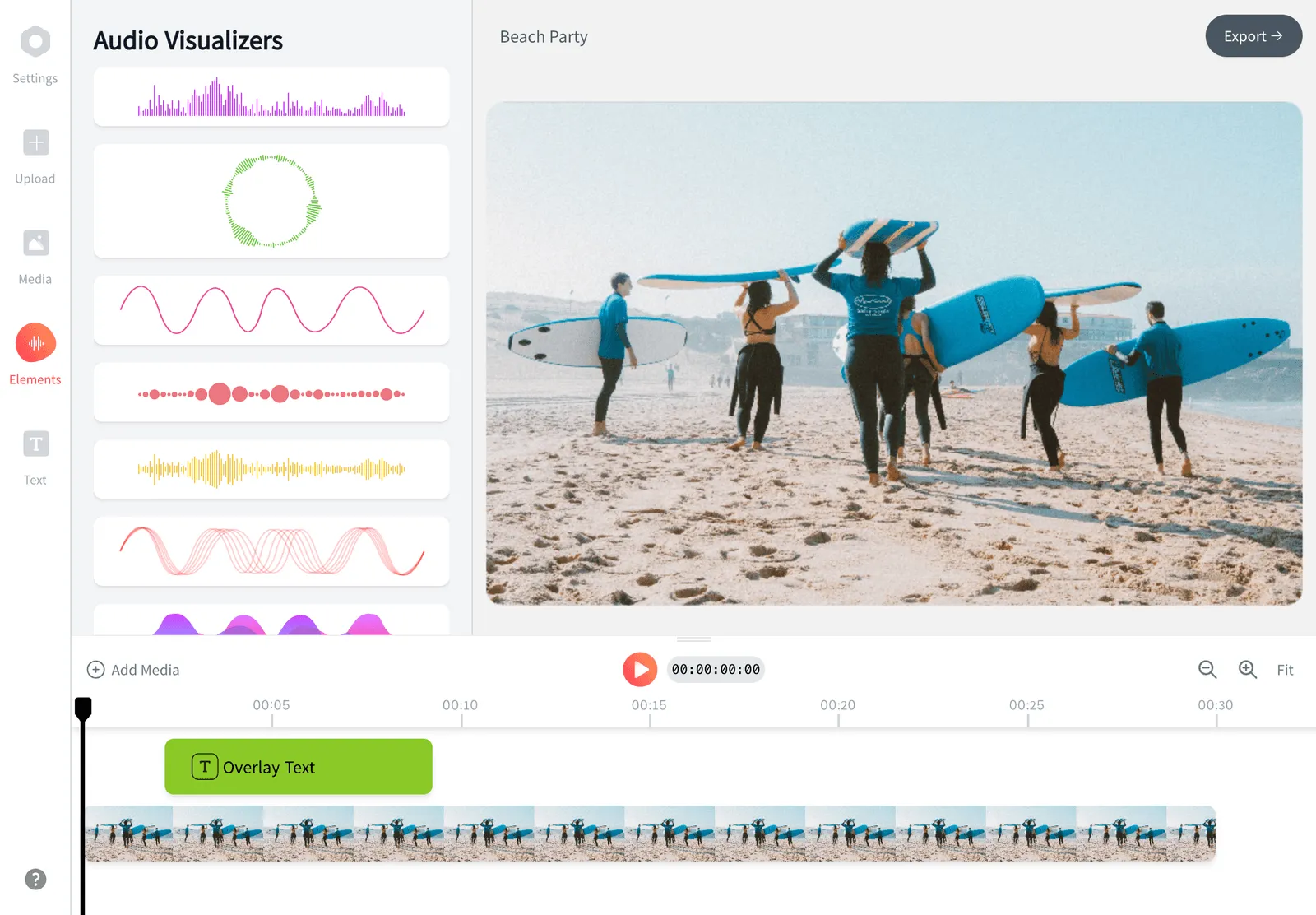
With EchoWave you can turn a podcast clip into a video right in your browser, free, with no software to install. Drop in an audio clip and add an animated waveform, your cover art, the new podcast name, and burned in captions so it plays with the sound off. EchoWave reads MP3, WAV, M4A, and the other common formats and exports a social ready MP4 you can post anywhere.
That means the name you just chose shows up, on screen and on brand, in every clip you share. It is the simplest way to make a new show look established from episode one.
Sources & further reading
- Content guidelines - Apple Podcasts for Creators, Apple Podcasts for Creators
- Search our trademark database, USPTO

About the EchoWave team
EchoWave is a browser-based video and audio editor built by Lemon Vault LLC since 2018. The people who build the editor write these guides and test every step in the production app before publishing.
Frequently Asked Questions
How do I name my podcast?
Brainstorm at least 20 rough ideas, cut to a shortlist of names that are clear about your topic, then check each one against Apple Podcasts, Spotify, Google, social handles, a domain, and trademark records. Keep it short and easy to say, test the finalists on your target audience, and commit.
Should I put the word "podcast" in my podcast name?
Usually no. Directories already label your show as a podcast, so the word wastes space you could use on a keyword that describes your topic. It can also confuse smart speakers. The main exception is a show that is actually about podcasting.
How long should a podcast name be?
Keep it short. The median podcast title is about 20 characters and the most common length is 16, with three quarters of titles at 29 characters or fewer. Apple clips longer titles around 30 characters on mobile, so aim for under 30 to stay fully visible.
How do I check if a podcast name is already taken?
Search Apple Podcasts, Spotify, and a catalog like Listen Notes for the exact and similar names. Then run a plain Google search, check social handles and a domain, and search USPTO trademark records for anything you plan to brand around.
Can two podcasts have the same name?
Legally it is possible unless the name is trademarked, but it is a bad idea. Two shows with the same name split search traffic and confuse listeners, and an established name may carry common law trademark rights even without registration.
Should I name my podcast after myself?
Only if you already have an audience or are deliberately building a personal brand. For most new shows, a name that signals the topic helps strangers understand and find the show far better than your name alone.
Do I need a matching domain name for my podcast?
It is helpful but not required. A matching domain makes a show page, a branded email, and a future website simpler, so check availability while you are checking handles. If the exact .com is gone, a close variation or a different extension still works.
Should I trademark my podcast name?
If you plan to build a brand, sell products, or run ads around the show, a trademark protects the name and is worth filing. Search the USPTO database first to confirm the name is free, then submit an application for your category.
How do I make my podcast name searchable?
Include one or two real keywords that describe your topic, since directories scan the title and publisher name. Front load the meaningful words and skip filler like "the" and "a". Do not keyword stuff, because Apple can remove shows that cram search terms into a title.
What makes a bad podcast name?
Names that are vague, hard to spell or pronounce, too long, identical to an existing show, or built on a pun that needs explaining. If a stranger cannot guess the topic or repeat the name after hearing it once, it is working against you.
Can I change my podcast name later?
Yes, you can rename a show, but it costs you. You lose name recognition, existing links and reviews point at the old name, and you have to update handles and artwork. It is far cheaper to check availability and test the name properly before you launch.
Should my podcast name be descriptive or brandable?
New and independent shows usually do better with a descriptive name, because the words people search are right there in the title. A brandable, coined name is more distinctive and easier to trademark, but it needs marketing to teach people what it means.
Got a name? Now make your podcast pop on social Free, in your browser
Turn a podcast clip into a video with a waveform, your cover art, and captions in minutes. No credit card required, the free plan adds a small EchoWave watermark.
Make a Podcast Video →