MP3 to OGG Converter
Convert MP3 to open, royalty-free OGG Vorbis for games, apps, and the web. Free, in your browser, no signup and no watermark.

MP3 to OGG Converter Features
EchoWave is used by creators, marketers, educators, and businesses to convert and edit media online.




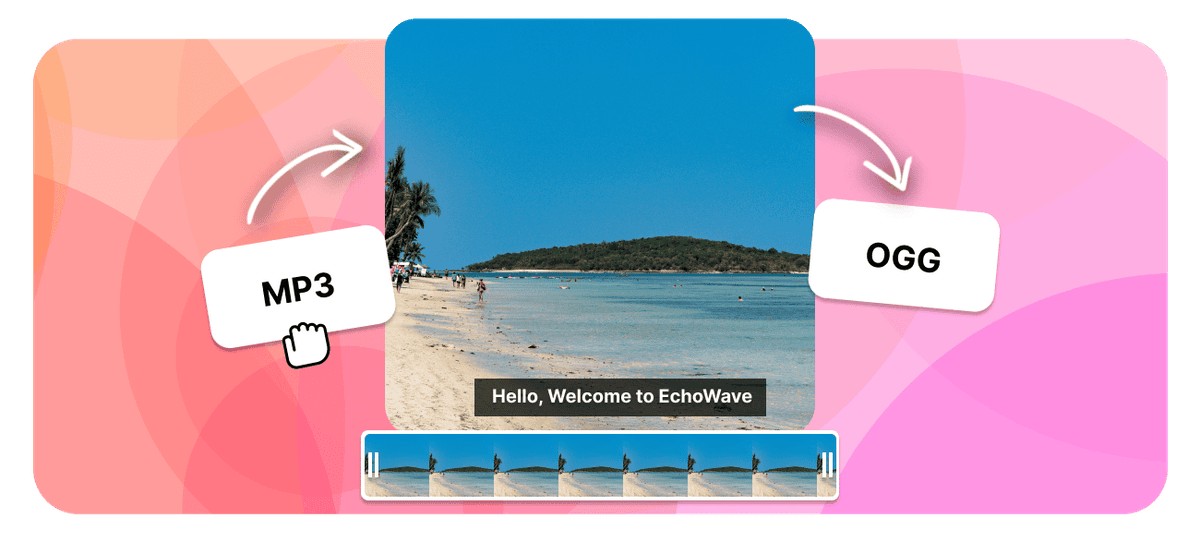
OGG Vorbis is an open, royalty-free audio format that plays natively in Firefox, Chrome, Android, and game engines like Unity, Godot, and Unreal. Converting your MP3 to OGG gives you a format with no licensing fees, which is why it is a common choice for games and web apps. Both formats are lossy, so convert from the best MP3 you have for the cleanest result.
How it works
How to convert MP3 to OGG
- 1
Upload your MP3
Drag your MP3 onto the converter or pick it from your device. Nothing to install.
- 2
Choose OGG and convert
Select OGG as the output, set the bitrate if it applies, then start. Free, with no sign-up.
- 3
Download your OGG
Save the finished OGG, or open it in the editor to trim or adjust it first.
Try it
Estimate your OGG
Pick a bitrate and a length to see the OGG file size before you convert.
Drag to set the clip length in minutes, from 1 to 60.
An estimate. Real size varies a little with the encoder and the audio itself.
The formats
MP3 vs OGG
MPEG-1 Audio Layer III
The most universal audio format ever made
- Type
- Lossy audio format
- Holds
- Audio only
- Typical size
- Small, about 1 MB per minute at 128 kbps
- Plays on
- Effectively everything
Best for:Music, podcasts, and audio you listen to
Ogg Vorbis
Open, royalty-free lossy audio
- Type
- Lossy audio (Vorbis)
- Holds
- Vorbis audio in an Ogg container
- Typical size
- Small at good quality
- Plays on
- Android, Firefox, Chrome, and VLC
Best for:Open audio for games and the web
Will it lose quality?
- Converting a lossy file to a lossless one cannot restore detail that was already discarded. It only makes a larger file.
- Going from a high-quality source to OGG keeps the sound clear while changing the format.
- Each pass between two lossy formats loses a little, so always convert from the best source you have.
Use cases
What people use it for
Troubleshooting
If something looks off
The OGG is larger than I expected
The song details are missing
My app will not open the OGG
FAQ
MP3 to OGG questions
Why convert MP3 to OGG?
Is OGG better quality than MP3?
Is the MP3 to OGG converter free?
How do I convert MP3 to OGG?
After converting MP3 to OGG, what plays the file?
Will I lose quality going from MP3 to OGG?
What bitrate should I pick for OGG?
Does the MP3 to OGG converter work on iPhone, Android, Mac, and Windows?
What is an OGG file?
Do I need to install software to convert MP3 to OGG?
Is OGG good for Unity, Godot, or Unreal?
Can I convert a lot of files or a long track?
Does the OGG file have a watermark?
Why convert MP3 to OGG
The short answer is licensing, and it is a better reason than it sounds. Ogg Vorbis was designed from the start as an open, royalty-free format with no patent licensing attached to shipping it, which is why it became the default audio format in places where the format itself has to be free to distribute: game engines, open-source projects, and web applications.
That shows up most clearly in game development. Unity, Godot, and Unreal all handle Vorbis natively, and OGG is the conventional choice for music beds, ambience, and longer cues where a compressed streaming format makes more sense than dropping uncompressed WAV into the build. Web and Android developers reach for it for much the same reason, since Vorbis decodes natively in Firefox, Chrome, and Android without anything extra.
There is a technical argument alongside the licensing one. At the same bitrate, Vorbis generally holds up as well as MP3 and often does slightly better at the low end of the range, around 96 to 128 kbps, which is exactly where game and web audio tends to live. If you are packaging a lot of audio and every megabyte in the download matters, that efficiency is worth having.
Converting MP3 to OGG step by step
- Add your MP3. Drag it onto the converter or pick it from your device. Nothing installs, and there is no account to create.
- Choose OGG as the output. This produces Ogg Vorbis, which is what game engines and browsers mean when they ask for an OGG file.
- Pick a bitrate. Around 192 kbps is comfortable for music, while 96 to 128 kbps keeps voice lines and ambience small, which matters when you are shipping hundreds of them. The estimator higher up this page shows the size before you commit.
- Convert and download. Save the OGG, or open it in the editor first to trim it, loop a section cleanly, or adjust the level so it sits properly under whatever it is playing behind.
There is no file-count limit, so a whole folder of cues or voice lines can be converted one after another rather than in a paid batch.
Where OGG plays, and where it does not
This is the thing to check before you commit a library to the format, because OGG support is excellent in some places and simply absent in others.
Reliable: Firefox, Chrome, and Chromium-based browsers such as Edge; Android; VLC on every platform; Audacity and most open-source audio tooling; and the major game engines, including Unity, Godot, and Unreal.
Patchy or absent: Apple's ecosystem is the main gap. Safari, the stock iOS Music app, and much of macOS handle OGG poorly or not at all without extra software. Plenty of car stereos, older hardware players, smart speakers, and TVs do not recognise it either, and some podcast platforms and social uploaders will reject it on the extension alone.
The practical rule: OGG is the right choice when you control the playback environment, such as a game you are building, a web app you are writing, or an Android target you are shipping to. When the file is going out to other people to play on whatever device they happen to own, MP3 is still the safer format and the difference in quality is not what will determine whether they can hear it.
Bitrate, and the double compression question
Both MP3 and OGG are lossy, which means this conversion is a re-encode rather than a copy, and a small amount of detail is shed on the way through. That is unavoidable when moving between two lossy formats, and it leads to two practical rules.
First, convert from the best source you have. If the audio also exists as a WAV or FLAC master, convert that to OGG directly instead of routing it through an MP3 that has already thrown detail away. Each lossy generation compounds the last, and skipping one is free quality.
Second, do not set the OGG bitrate above the MP3 it came from. Encoding a 128 kbps MP3 out at 320 kbps OGG cannot restore anything the MP3 discarded; it just produces a substantially bigger file containing the same audio. Matching the source bitrate, or sitting a little under it, is the sensible target.
In practice, starting from a good 192 or 256 kbps MP3 and encoding to OGG at a similar rate produces a result most listeners will not be able to distinguish from the original, particularly once it is playing underneath a game or a video rather than being listened to critically on its own.
Streaming, web apps, and shipping a lot of audio at once
Beyond games, the other place OGG earns its keep is anywhere audio is served rather than downloaded. Vorbis decodes natively in Firefox, Chrome, and Chromium-based browsers, so an OGG can be dropped straight into an HTML audio element or a Web Audio project without a licensed decoder or a fallback library. Icecast-based internet radio has streamed Vorbis for years for the same licensing reason, and open-source and Linux-oriented projects tend to standardise on it as a matter of course.
Scale is what turns a small per-file saving into a real one. A single track converted from MP3 to OGG might save a few hundred kilobytes, which is not worth the effort on its own. A few hundred voice lines, ambience loops, and UI sounds in a mobile game, or an entire library of sound effects in a web app, is a different calculation: the same saving repeated across every asset comes off the total download, and download size is one of the things that decides whether people finish installing at all.
It is worth being clear about what OGG is not going to fix, though. It will not shrink a file dramatically at the same quality, since MP3 and Vorbis are broadly comparable encoders and the gap between them is modest rather than transformative. And it will not make an audio file play in more places overall. The reason to convert is that a specific destination wants an open, royalty-free format, not that OGG is universally better. When no destination is asking for it, MP3 is the more useful file to have.
Related conversions and tools
OGG to MP3 is the reverse trip, and the one you want when a file needs to play on an iPhone, a car stereo, or anything else outside the Vorbis-friendly list. MP3 to WAV gives you an uncompressed copy for editing, and MP3 to M4A is the better re-compression target when Apple devices are the destination.
Coming from other sources, M4A to OGG converts Apple audio directly, and OGG to WAV unpacks an OGG for editing. If you are assembling audio before exporting it, the audio merger joins clips and layers a voice over a music bed on one timeline, and the audio cutter trims cues to length first.
What people say after converting with EchoWave

About the EchoWave team
EchoWave is a browser-based video and audio editor built by Lemon Vault LLC since 2018. The people who build the editor write these guides and test every step in the production app before publishing.
Convert MP3 to OGG for free Free online converter
Get an open, royalty-free OGG Vorbis file for your game or web project, with no signup and no watermark.
Convert Files →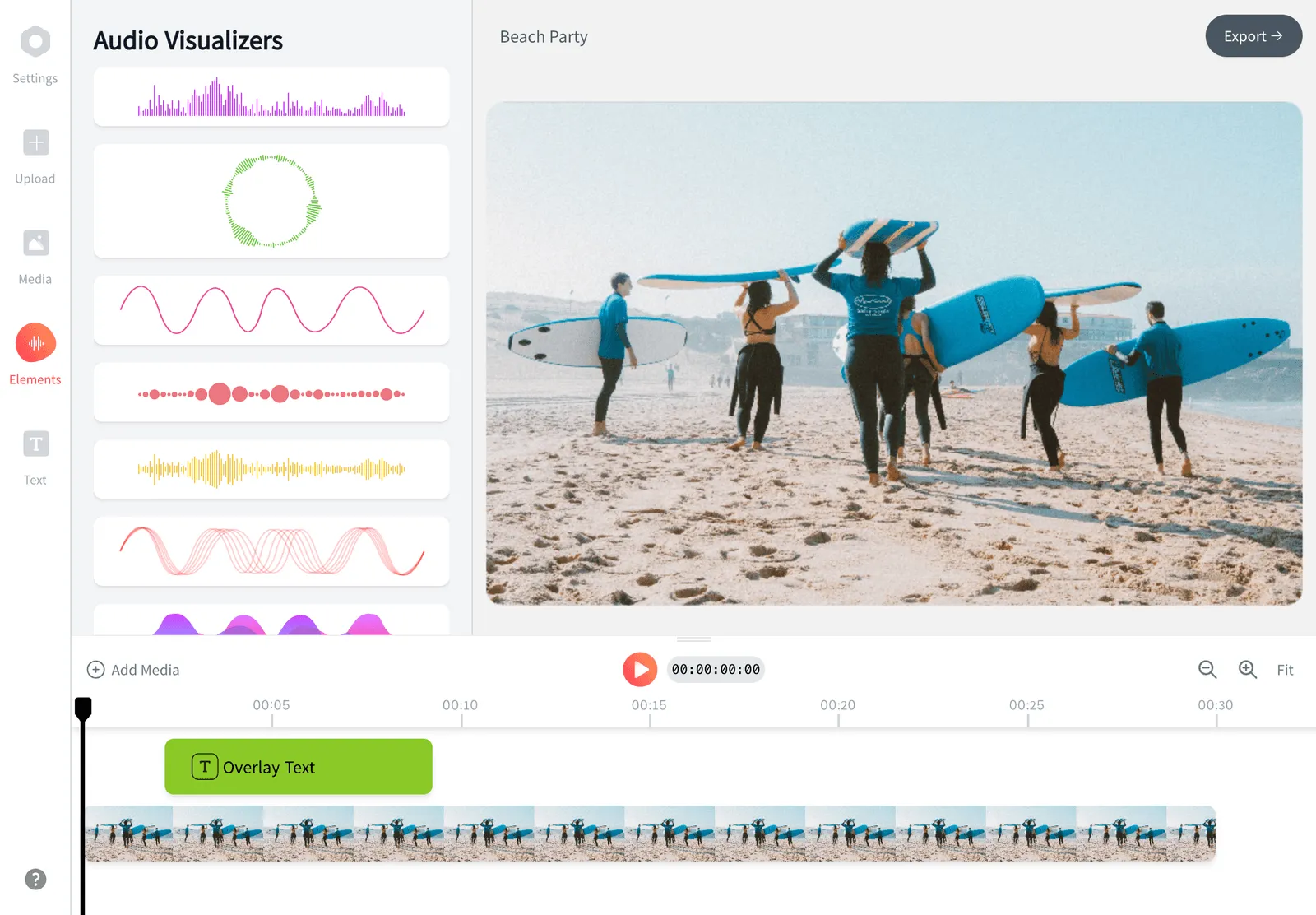
Keep converting